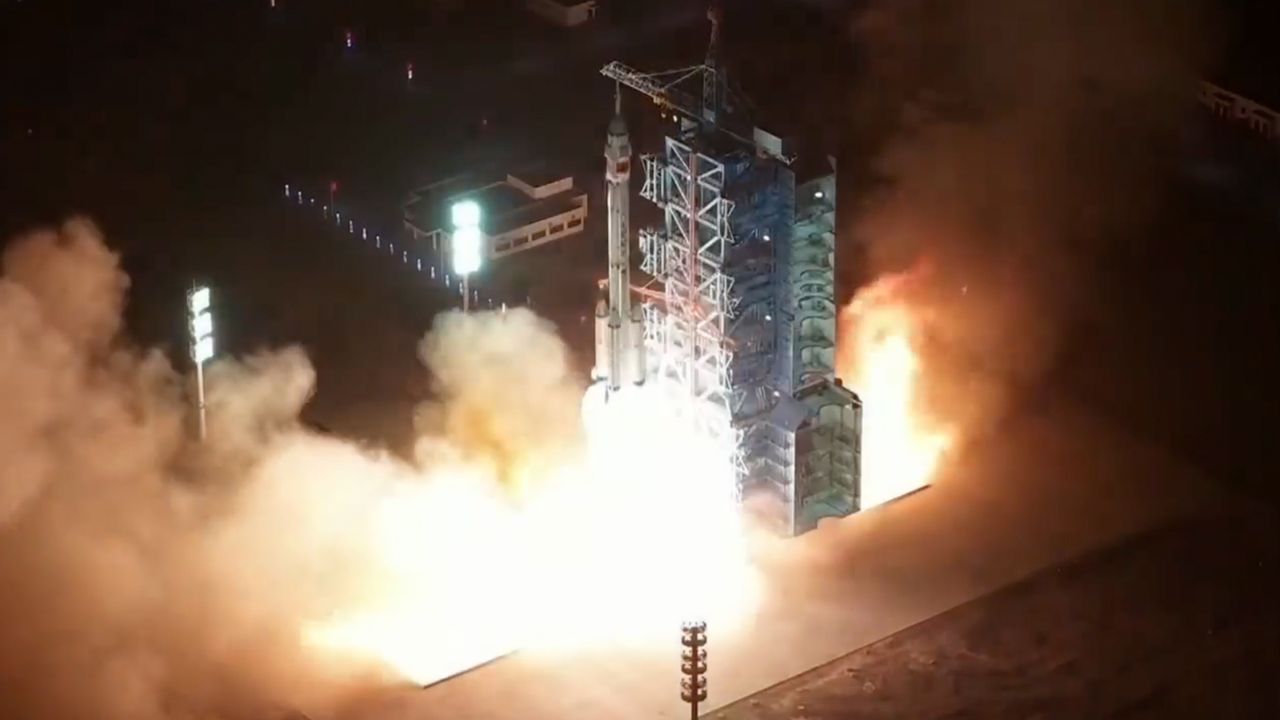
China launched three astronauts toward its Tiangong space station on May 24, with the mission marking a historic milestone. Zhai Zhigang, Wang Haoyu, and Gui Haichao departed aboard the Shenzhou 23 spacecraft. Gui Haichao became the first astronaut from Hong Kong to travel to the station.
The crew's arrival relieves an overdue rotation of astronauts already on the Tiangong station. China's crewed space program has accelerated its timeline in recent years, establishing regular crew exchanges at its orbital laboratory. The station, launched in 2021, represents China's answer to the International Space Station and serves as the centerpiece of the country's human spaceflight ambitions.
Shenzhou 23 conducted an automated rendezvous and docking with Tiangong following standard procedures developed across multiple crewed missions. The rotation model mirrors practices established by NASA and Roscosmos on the ISS, though Chinese crews typically spend longer periods in orbit than their Western counterparts.
Gui's assignment carries symbolic weight for China's space program. Hong Kong's inclusion in crewed spaceflight demonstrates Beijing's integration of the territory into its technological initiatives, though the political context remains complex. Previous Hong Kong residents participated in Chinese spaceflights, but Gui represents the first official designation as a Hong Kong astronaut by CNSA, China's National Space Administration.
Zhai Zhigang, commanding the mission, previously flew on Shenzhou 7 in 2008, making him an experienced veteran. The mission underscores China's commitment to continuous station operations and its plan to conduct regular crew exchanges through at least 2030.
The Tiangong station currently hosts experiments in materials science, fluid physics, and life sciences. China has opened its station to international partnerships