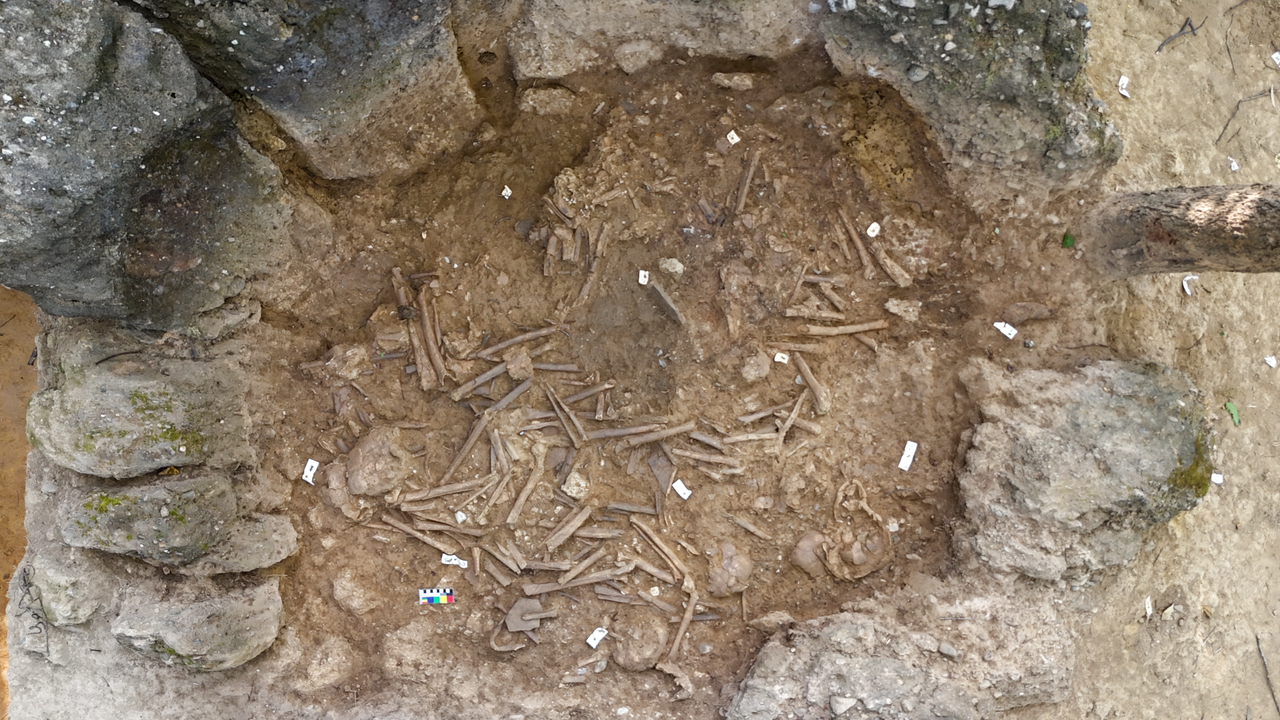
Archaeologists excavating a massive stone vessel in Laos have confirmed it served as a communal burial chamber for multiple generations of people. The jar, discovered in the Plain of Jars, dates back roughly 1,200 years and contained the skeletal remains of numerous individuals.
The Plain of Jars, located in northeastern Laos, contains thousands of stone vessels scattered across the landscape. Their original purpose has long puzzled researchers. This excavation provides direct evidence that the jars functioned as repositories for the dead, supporting theories that the site served as a funerary complex for an ancient population.
The vessel itself measures several meters across and required substantial labor to construct and position. Inside, researchers discovered human skeletal material representing individuals from different age groups and time periods. The presence of multiple bodies at various stages of decomposition indicates the jar was used repeatedly over an extended timeframe, suggesting it held cultural significance as a burial location for a specific community or family group.
The discovery adds important data to understanding the Plain of Jars' function and the culture of the people who created it. Previous theories about the jars ranged from ritual or ceremonial purposes to defensive structures or storage containers. This archaeological evidence now points definitively toward funerary use.
The Plain of Jars remains one of Southeast Asia's most enigmatic archaeological sites. Dating the vessels and understanding the civilization responsible for their construction and use continues to challenge researchers. The region experienced significant upheaval during the Iron Age and later periods, and excavation work has been complicated by the area's history of unexploded ordnance from conflicts in the late 20th century.
This particular excavation contributes to a growing body of evidence characterizing the site as a burial ground with distinct cultural practices. Future investigations of additional jars may reveal variations in burial methods, timeframes, and the identity of the populations interred within them. Each excav