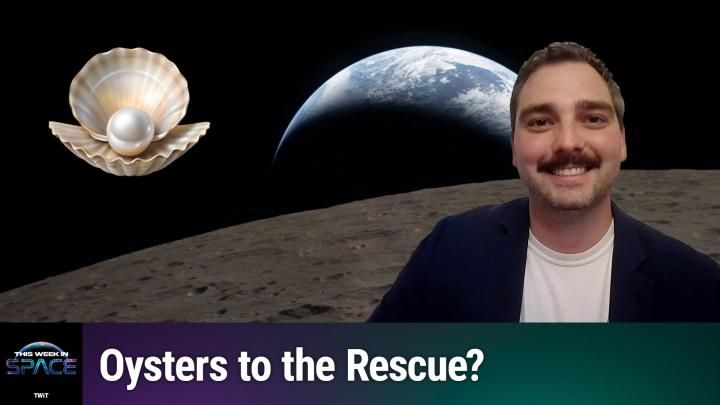
Jacob Scoccimerra of Monolith Space joined hosts Rod Pyle and Tariq Malik on Episode 211 of This Week In Space to discuss an unconventional research project. The podcast explores how oysters are being studied in space environments, a line of inquiry that bridges marine biology with aerospace research.
Oysters serve as biological indicators of water quality and environmental stress on Earth. Researchers have extended this application to understand how organisms respond to microgravity and the unique conditions aboard spacecraft. The project leverages the International Space Station as a laboratory to observe how shellfish physiology adapts when gravity is removed.
This type of research has practical applications beyond pure curiosity. Oysters are sensitive to changes in their environment, making them useful organisms for detecting shifts in conditions that might affect other life forms. In space, where the absence of gravity fundamentally alters fluid dynamics and cellular processes, studying oyster responses provides insights into how biological systems function under extreme conditions.
Scoccimerra's work at Monolith Space represents the growing intersection of commercial spaceflight and biological research. As private companies gain greater access to orbital platforms, opportunities expand for conducting experiments that would be impossible or prohibitively expensive in traditional terrestrial laboratories.
The episode demonstrates how space-based research extends far beyond physics and astronomy. By examining organisms like oysters in microgravity, scientists gather data applicable to understanding life's fundamental processes. This research also informs long-duration spaceflight planning, as understanding how various organisms respond to microgravity becomes essential for future human missions to the Moon and Mars.