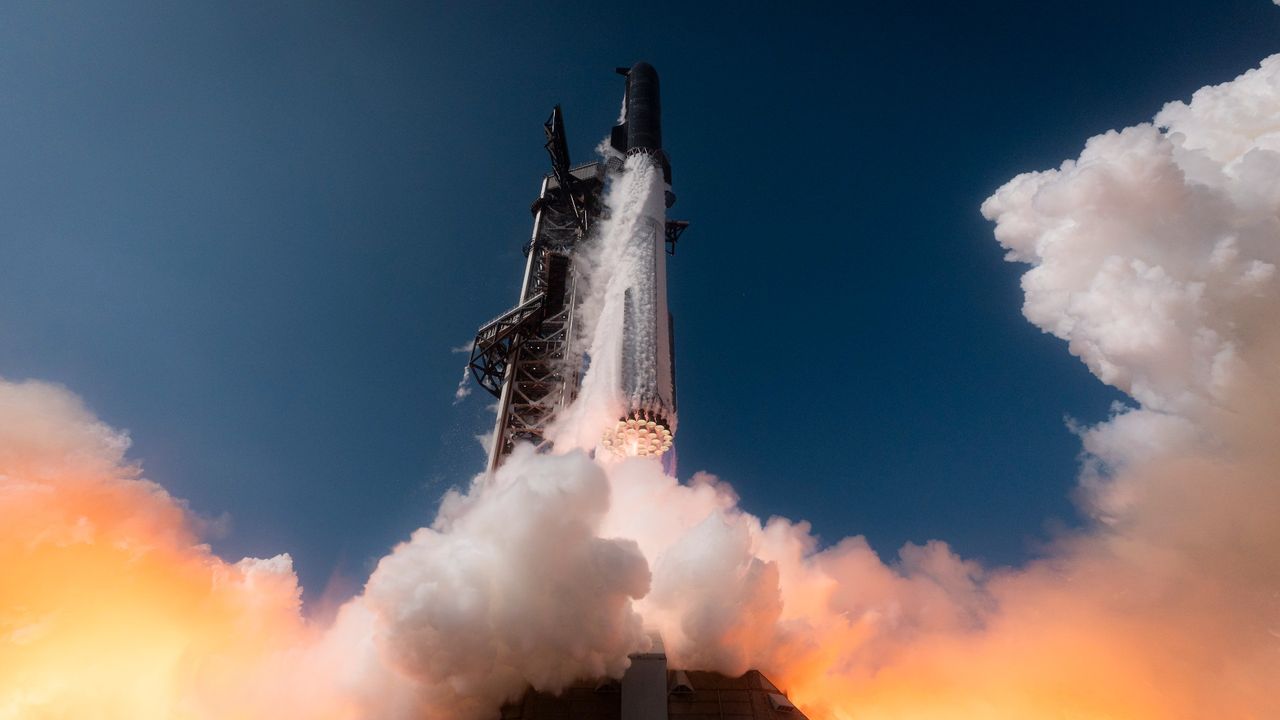
SpaceX completed its twelfth Starship flight test on Tuesday with a successful launch of Starship V3 from Starbase in Boca Chica, Texas. The flight represented the company's most powerful iteration of the fully integrated rocket system to date.
The launch generated striking aerial photography as the 400-foot-tall vehicle lifted off into the Texas sky. Starship V3 incorporates design refinements from previous test flights, building toward SpaceX's ultimate objective of landing astronauts on the lunar surface as part of NASA's Artemis program.
SpaceX has accelerated its flight test cadence dramatically over the past year. The company moved from Flight 11 in April 2024 to Flight 12 after conducting rapid modifications and testing at its Starbase facility. Each successive flight tests new hardware configurations and pushes vehicle capabilities further. Flight 12 marked another engineering milestone in demonstrating Starship's readiness for deep space missions.
The rocket's enormous scale continues to generate public interest. Standing taller than the Statue of Liberty, Starship V3 combines SpaceX's Super Heavy booster with the Starship upper stage. The integrated system generates over 17 million pounds of thrust at liftoff, making it the most powerful operational rocket ever built.
NASA selected Starship as the lunar lander for Artemis missions targeting the moon's south polar region. The program requires a vehicle capable of carrying crew and cargo to the lunar surface and returning them safely to Earth. SpaceX's rapid testing approach aims to demonstrate Starship can meet those demanding requirements within NASA's timeline.
Previous flight tests gathered data on structural performance, thermal management, and engine behavior during ascent and reentry. Flight 12 continued this validation process while testing upgraded components and systems. The company has not released detailed technical results yet, but