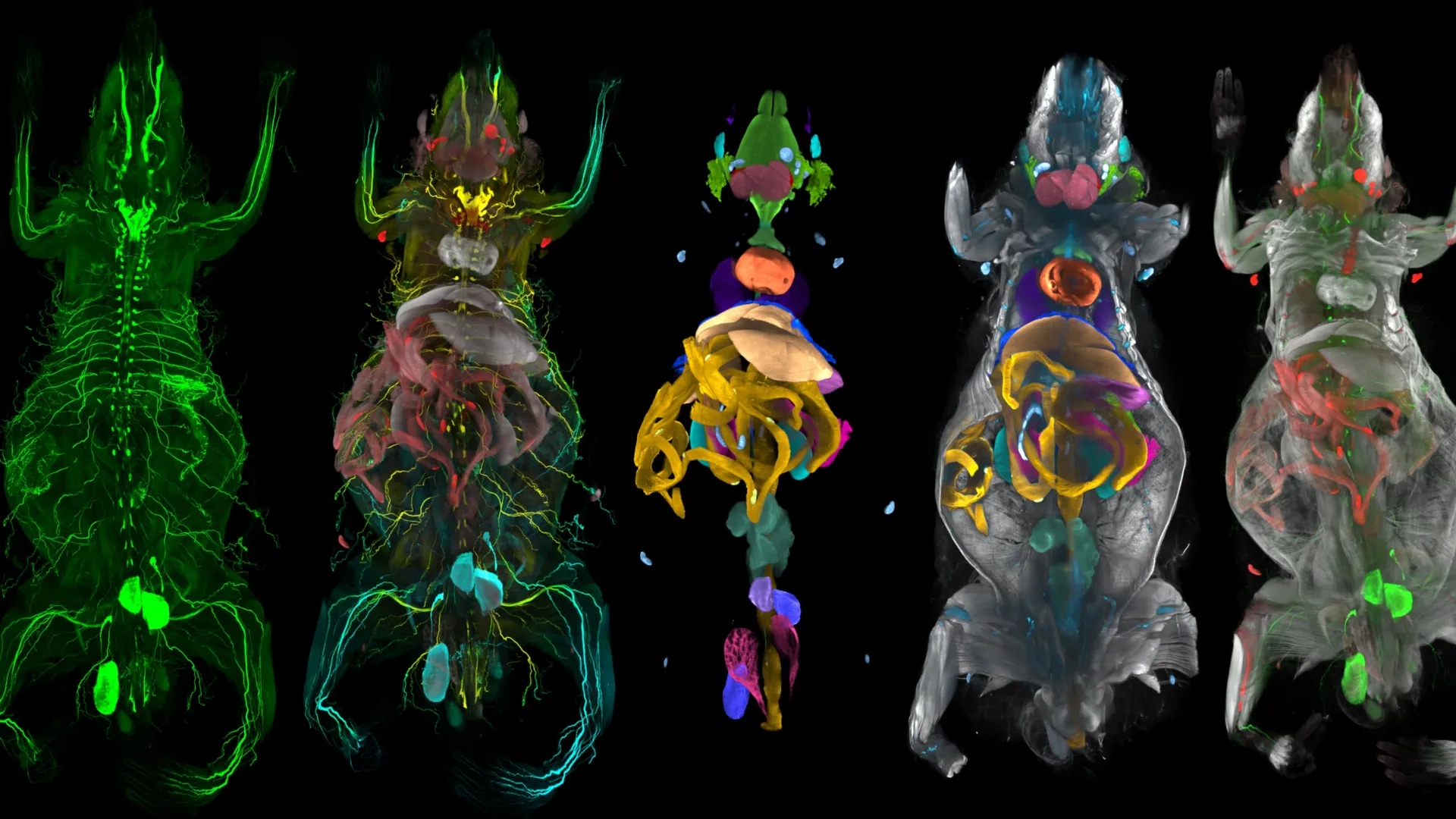
Researchers developed an artificial intelligence imaging system that maps entire mouse bodies at cellular resolution, revealing that obesity damages facial sensory nerves while triggering systemic inflammation. The AI-powered scanning technology identified previously unknown pathological changes in the trigeminal nerve, which carries sensory information from the face.
The team trained deep learning models to process volumetric imaging data across whole organisms, enabling automated detection of structural damage invisible to traditional analysis methods. When applied to obese mice, the system revealed significant degradation in nerve fibers responsible for facial touch and temperature sensation.
Beyond nerve damage, the AI mapping uncovered widespread inflammatory responses throughout obese animals' bodies. These findings suggest obesity exerts more extensive tissue-level consequences than previously documented in metabolic research.
The study adds to growing evidence that obesity operates as a systemic disease affecting multiple organ systems. While metabolic dysfunction remains the primary focus of obesity research, this work demonstrates that peripheral nerve damage represents an underappreciated complication.
Several limitations warrant consideration. Mouse models do not always translate directly to human biology. The mechanisms driving obesity-related nerve damage remain unclear from this study alone. Researchers have not yet determined whether nerve damage occurs early in obesity development or only after prolonged weight gain, nor whether damage reverses with weight loss.
The AI mapping technology itself opens broader research possibilities. Automating whole-body pathology assessment could accelerate discovery across other disease models, reducing reliance on manual expert inspection. The system's ability to detect subtle tissue changes at scale addresses a longstanding bottleneck in comparative physiology.
Future work should focus on whether these findings apply to human obesity, the timeline of nerve degeneration, and potential therapeutic interventions. Understanding how excess weight damages sensory nerves could eventually inform treatment strategies targeting both metabolic and neurological aspects of obesity.