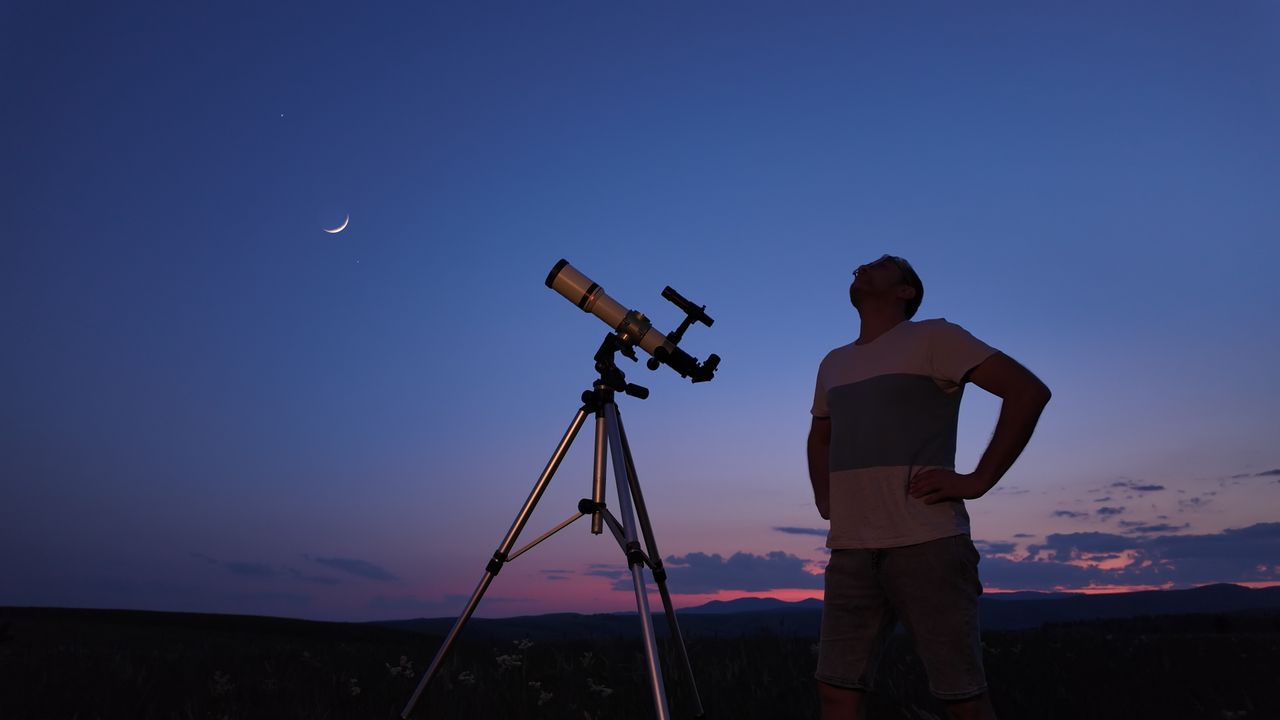
The full moon, while visually striking to the naked eye, actually presents one of the worst opportunities for telescope observation. Astronomers and moon enthusiasts achieve superior results by observing during the lunar crescent and quarter phases, when sunlight hits the moon at an angle rather than head-on.
The key lies in how lunar terrain reveals itself under oblique lighting. When the sun shines directly on the full moon, shadows flatten across the surface, washing out topographical detail. The entire lunar disk appears uniformly bright and washed out through a telescope, obscuring craters, mountains, and valleys that make the moon scientifically interesting and visually stunning.
During crescent and quarter phases, the terminator line—the boundary between lunar day and night—creates dramatic shadows that accentuate surface features. Crater walls cast long shadows, making even small formations visible at modest magnifications. Mountain ranges appear three-dimensional and distinct. The contrast between illuminated highlands and shadowed lowlands reveals the moon's complex geology with remarkable clarity.
The optimal observing window occurs within two or three days of first quarter or three days before last quarter. During these periods, the terminator sweeps across fresh terrain daily, offering changing perspectives of different regions. Patient observers can watch the same crater transform as the sun angle shifts hour by hour.
Practical telescope users benefit from another advantage during non-full phases. The reduced brightness requires less magnification and smaller apertures, making observation comfortable without specialized filters that full moon observation often demands. Standard eyepieces work effectively without overwhelming glare.
Weather and atmospheric conditions also favor non-full observations. The moon appears lower in the sky during crescent phases, reducing atmospheric distortion compared to when a full moon rides high overhead at night.
This principle applies regardless of telescope size or quality. A small six-inch reflector under optimal lunar phase conditions outperforms a large professional instrument observing