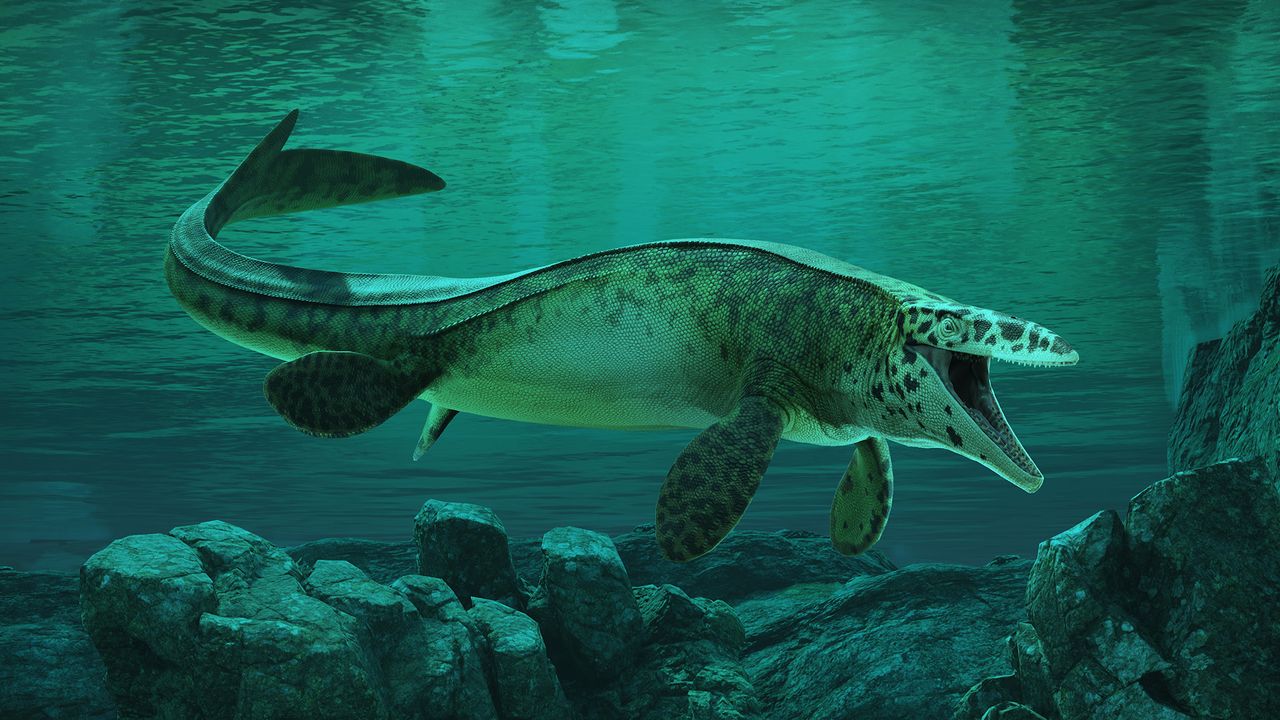
Paleontologists have identified a newly described mosasaur species, Tylosaurus rex, that dominated the seas during the dinosaur age with a devastating bite force. The creature reached lengths of up to 43 feet (13 meters), making it one of the ocean's most formidable predators millions of years ago.
Mosasaurs were apex marine reptiles that thrived in the Late Cretaceous period, before the mass extinction event 66 million years ago. Tylosaurus rex represents a particularly large and powerful member of this extinct group. The species name references the famous terrestrial predator Tyrannosaurus rex, reflecting the mosasaur's role as a top ocean hunter with comparable ecological dominance in its environment.
The creature's skull-crushing bite delivered the power necessary to consume large marine prey. Unlike the terrestrial T. rex, which hunted dinosaurs on land, Tylosaurus rex patrolled ancient seas filled with other marine reptiles, fish, and invertebrates. Its size and bite force positioned it at the apex of marine food chains during the Late Cretaceous.
Mosasaurs like Tylosaurus rex possessed flexible jaws capable of swallowing prey whole, similar to modern monitor lizards but on a vastly larger scale. Their streamlined bodies and powerful tail flukes made them efficient swimmers, allowing them to pursue swift prey through warm, shallow seas that covered much of North America and other continents during this period.
The description of Tylosaurus rex adds to our understanding of Late Cretaceous marine ecosystems and predator diversity. Such discoveries help paleontologists reconstruct ancient food webs and understand how different apex predators partitioned their environments. Mosasaurs vanished alongside non-avian dinosaurs at the end of the Cretaceous, likely due to the asteroid impact and