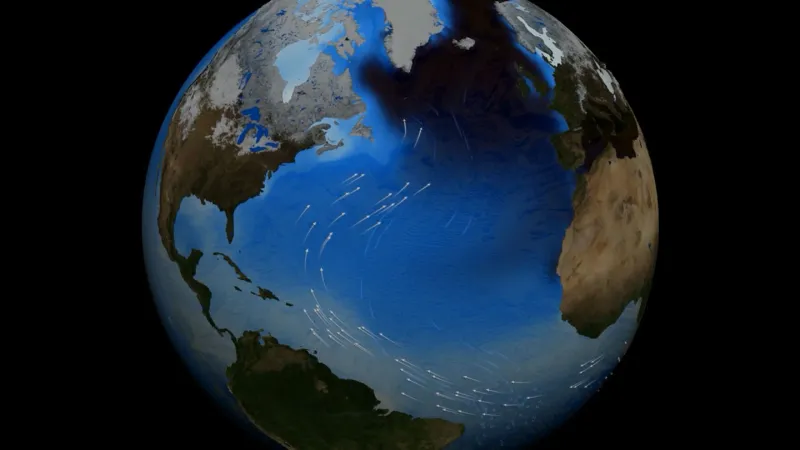
Scientists project the Atlantic Meridional Overturning Circulation (AMOC) to weaken by half by the end of this century, according to research published in Science News. AMOC, a crucial system of currents that distributes heat across the Atlantic Ocean, has already slowed by 15 percent since the mid-twentieth century.
The circulation works like a conveyor belt, moving warm surface water northward from the tropics and sinking cold water back south at higher latitudes. This process regulates regional climate patterns across Europe, Africa, and the Americas. The gulf stream, perhaps the most famous component of AMOC, depends on dense, salty water sinking in the North Atlantic, but freshwater from melting ice sheets and increased rainfall dilutes the salt content, reducing density and slowing the current.
Research teams analyzing sea-surface temperature patterns and salinity data have documented this acceleration in AMOC's decline. The 50 percent reduction projected by 2100 assumes current greenhouse gas emission trends continue. A weakened AMOC would produce cooler temperatures in Europe, disrupt monsoon patterns in Africa, and alter marine ecosystems throughout the Atlantic basin.
The mechanism driving this collapse remains straightforward. Anthropogenic climate change warms the North Atlantic faster than other ocean regions, while melting Greenland ice sheets add freshwater that blocks the sinking process essential for AMOC's function. These two factors combine to reduce the density contrast needed to maintain the circulation.
Scientists have proposed various interventions, from reducing greenhouse gas emissions (the most effective long-term solution) to theoretical geoengineering approaches involving artificial upwelling systems. None offer quick fixes. The carbon-intensive path forward leaves little room for reversing AMOC's decline without dramatic emissions cuts within the next decade.
The research underscores how ocean circulation systems respond to climate forcing on tim