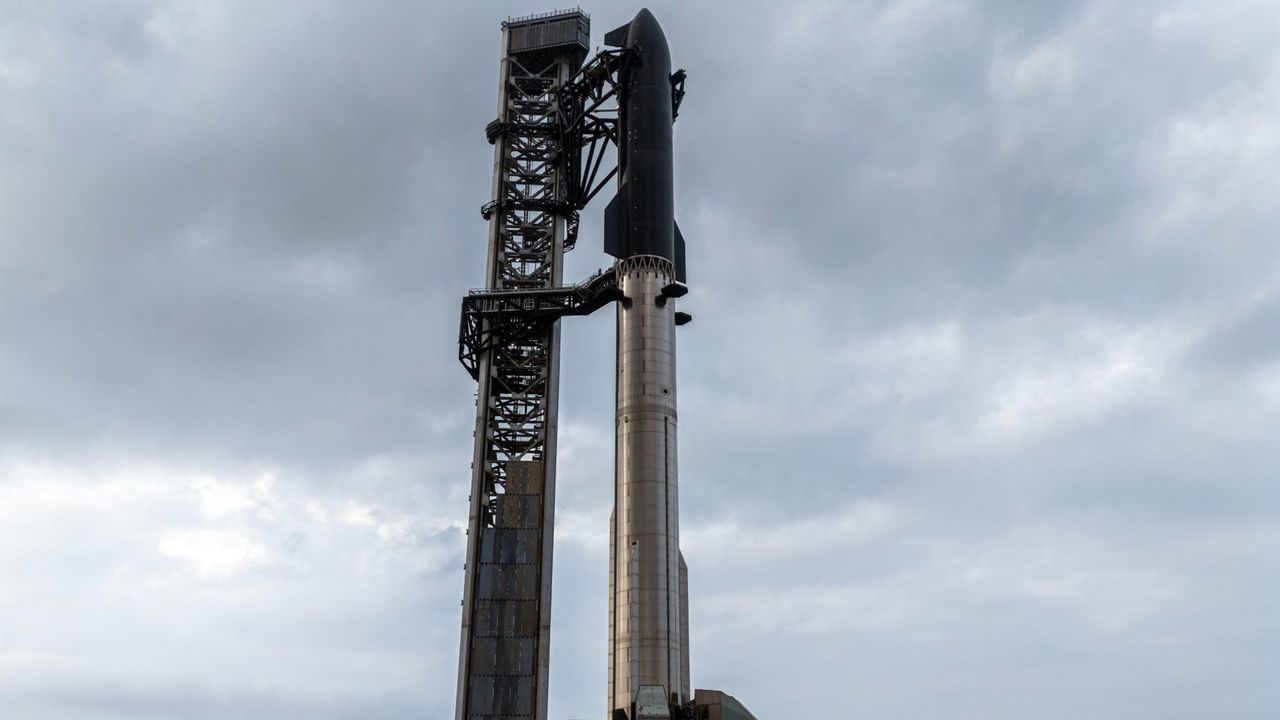
SpaceX is launching its first Starship V3 megarocket today, with consequences extending well beyond the company's own spaceflight ambitions. NASA's plans to return astronauts to the Moon depend partly on this vehicle's success.
Starship V3 represents a significant evolution in SpaceX's fully reusable launch system. The rocket stands taller and more powerful than its predecessors, designed to carry unprecedented payload capacities to orbit and beyond. Today's inaugural flight will test whether the upgraded configuration performs as engineers predict.
The stakes involve NASA directly. The space agency selected SpaceX's Starship as one of two lunar lander options for the Artemis program, which aims to land humans on the Moon in the coming years. For that mission to proceed on schedule, Starship must demonstrate reliable performance across multiple test flights. A successful debut builds confidence in the vehicle's path toward that lunar role.
SpaceX has conducted several uncrewed Starship tests previously, with mixed results. Early flights experienced explosive failures, though recent attempts have achieved greater milestones, including successful booster catches and controlled splashdowns of the upper stage. These incremental successes informed the Starship V3 design.
Today's flight will measure multiple factors: whether the integrated V3 systems function together, how the upgraded engines perform, and whether the vehicle achieves its target altitude and velocity. Engineers will scrutinize data from separation events, stage transitions, and reentry dynamics.
The broader spaceflight community watches closely. Starship's development path influences not just NASA's timeline but commercial space station plans, deep space exploration concepts, and international competitive dynamics with other nations' launch programs. A successful V3 debut accelerates multiple downstream projects that depend on heavy-lift capability.
SpaceX has consistently advanced through rapid iteration, accepting test failures as data points toward eventual success