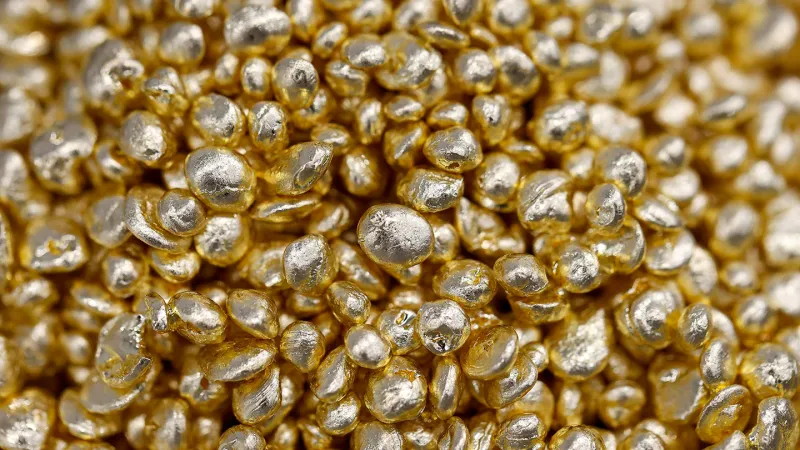
Gold's resistance to oxidation stems from a rapid atomic restructuring that occurs on its surface, according to new research explaining a phenomenon that has puzzled scientists for centuries.
Unlike copper and other reactive metals, gold atoms rearrange themselves at the surface level when exposed to oxygen, preventing the corrosive chemical reactions that tarnish other materials. This protective mechanism happens nearly instantaneously, creating a barrier that blocks oxidation before it can begin.
The research reveals that gold's surface atoms shift into a denser configuration when oxygen approaches, fundamentally changing the chemical environment. This atomic reorganization makes it energetically unfavorable for oxygen to bind to the gold, effectively repelling the oxidative process. The speed of this rearrangement is critical to gold's protection, occurring faster than oxidation can take hold.
This discovery has implications beyond explaining why gold jewelry remains lustrous and why gold-plated electronic components resist corrosion. Understanding the atomic mechanisms behind gold's stability could inform the design of other corrosion-resistant materials or coatings for industrial applications. Engineers working with alloys and surface treatments could potentially mimic gold's protective surface behavior in less expensive metals.
The finding also highlights why gold has been valued for millennia not just for its aesthetic appeal but for its practical durability. Ancient gold artifacts remain virtually unchanged after thousands of years, unlike silver or copper pieces that require constant polishing to maintain their shine.
This atomic-level explanation represents a shift from earlier understandings of gold's inertness, moving beyond simple descriptions of gold as "noble" to identifying the specific physical mechanism responsible for its stability. The research contributes to a growing body of work examining how atomic structures govern material properties at scales invisible to the naked eye.