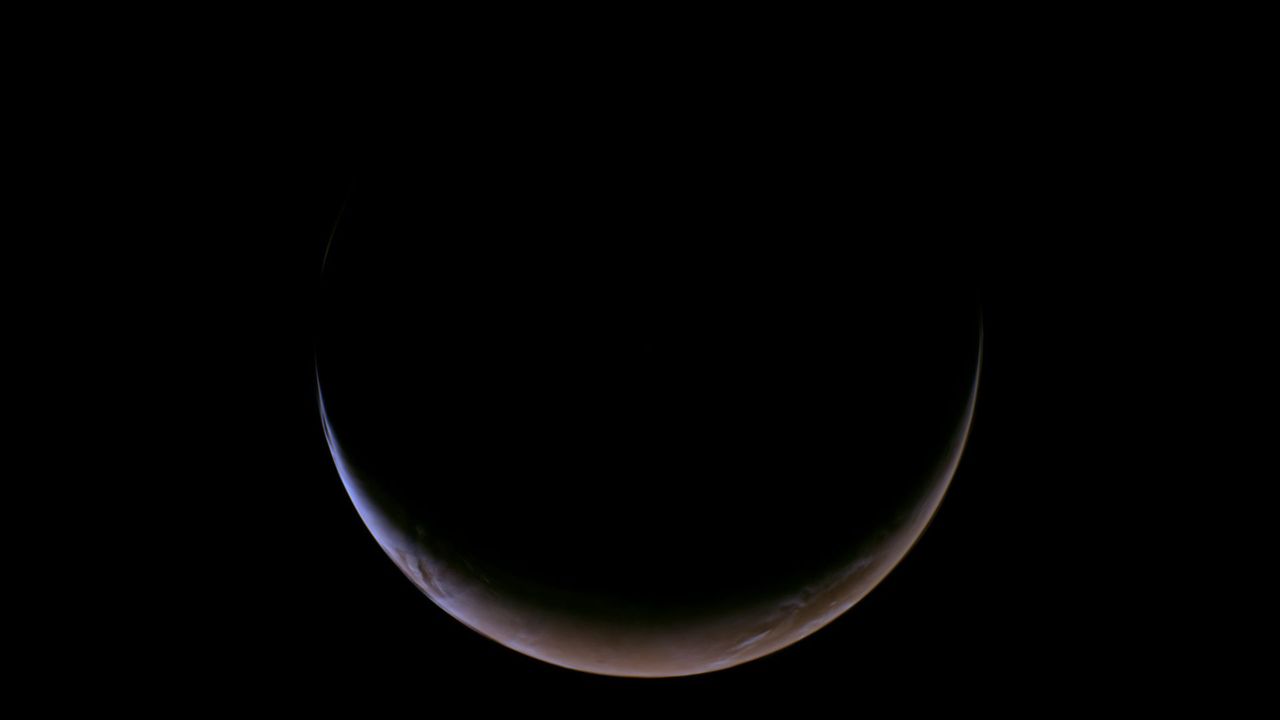
NASA's Psyche spacecraft captured detailed images of Mars during a gravity assist flyby, using the planet's gravitational pull to accelerate toward its ultimate destination. The mission, managed by NASA's Jet Propulsion Laboratory, demonstrated the probe's camera systems while performing a crucial trajectory correction maneuver that will propel it toward the asteroid 16 Psyche in the outer solar system.
The Psyche spacecraft, launched in October 2023, relies on gravity assists to reach distant targets efficiently. By passing close to Mars, the probe gained the necessary velocity boost to continue its journey without expending additional fuel. The close-approach images provide scientists with a chance to validate the spacecraft's imaging instruments before they begin their primary scientific observations at the asteroid.
The asteroid 16 Psyche orbits between Mars and Jupiter in the main asteroid belt. Scientists believe the 140-mile-wide object may contain an unusually high concentration of iron and nickel, potentially representing the exposed iron core of a protoplanet. Understanding its composition could reveal details about planetary formation in the early solar system. The spacecraft will arrive at the asteroid in 2026.
The Psyche mission carries a multispectral imager, magnetometer, and radio science experiment. These instruments will characterize the asteroid's geology, composition, and magnetic properties. The gravity assist maneuver past Mars tested whether these systems functioned correctly in the space environment before reaching the main scientific target.
NASA designed the mission to address fundamental questions about planetary cores and metallic asteroids. The data collected could inform future resource extraction technologies and deepen understanding of how terrestrial planets developed their internal structures. The spacecraft's successful flyby and imaging sequence confirmed mission systems remained operational after months in space.