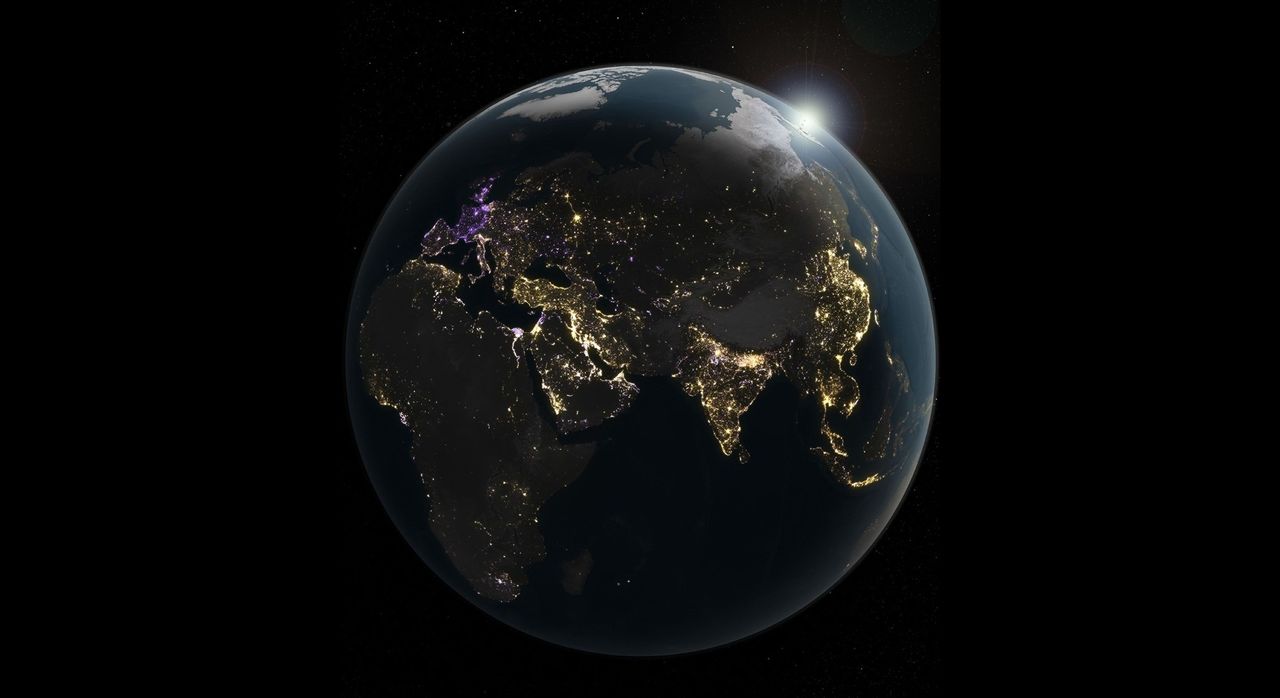
NASA's Black Marble project has tracked dramatic shifts in Earth's nighttime illumination over nearly a decade, painting a dynamic picture of human activity visible from space. Researchers analyzed satellite observations to map global light emissions with unprecedented detail, revealing how cities, regions, and entire nations alter their nighttime brightness patterns.
The project employs advanced imaging technology to detect faint light signals from populated areas, infrastructure, and human settlements across the planet. Unlike earlier nighttime imagery that suffered from saturation and blooming effects, Black Marble data captures fine-scale variations in light intensity, enabling scientists to distinguish between different types of light sources and urban features.
The findings demonstrate that nighttime light patterns shift constantly in response to economic activity, population growth, energy use, and infrastructure development. Some regions show dramatic increases in illumination as cities expand and electrification spreads. Others exhibit decreases tied to economic changes, energy policy shifts, or disaster recovery efforts. These patterns reflect real-world transformations in how humans occupy and develop space.
The data carries implications for multiple scientific fields. Ecologists use nighttime light maps to assess light pollution's effects on wildlife and ecosystems. Energy researchers track electrification rates and power consumption patterns in developing regions. Urban planners leverage the information to understand city growth trajectories. Climate scientists incorporate the data into models examining energy use and emissions.
The nearly decade-long observational record provides baseline data for monitoring long-term trends in human development and energy patterns. By documenting how light emissions change over time, researchers can identify regions experiencing rapid urbanization, assess the effectiveness of energy-efficiency programs, and detect socioeconomic shifts invisible to traditional statistical methods.
Black Marble data remains freely available to the scientific community, enabling diverse research applications. The project demonstrates how space-based observations transform abstract global data into tangible insights about human civilization's footprint on Earth. As the satellite continues collecting observations, the temporal