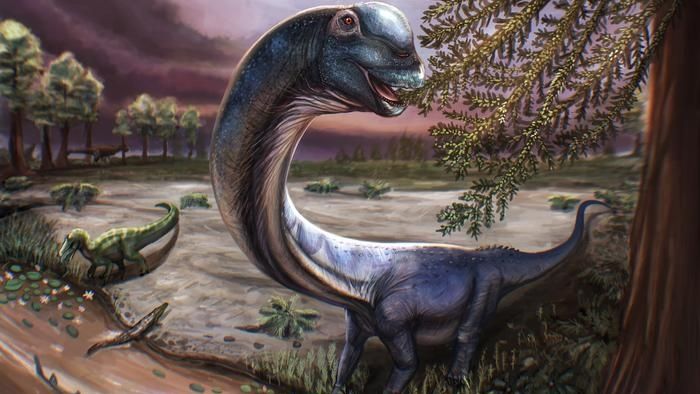
Paleontologists have identified a new species of long-necked dinosaur from Thailand that represents the largest sauropod ever discovered in Southeast Asia. The creature, which lived approximately 120 million years ago during the Early Cretaceous period, exceeds all previously known sauropods from the region in both neck length and overall body size.
The discovery adds another piece to the incomplete puzzle of Cretaceous life in Southeast Asia, a region where sauropod fossils remain comparatively rare compared to other parts of the world. Sauropods, characterized by their elongated necks and massive bodies, dominated many ecosystems during the Mesozoic Era. This new Thai specimen pushes the boundaries of what scientists understood about the maximum dimensions these animals could achieve in that geographic area.
The nickname "last titan" reflects the animal's position as one of the final sauropods to inhabit Southeast Asia before the group's global decline. By the Late Cretaceous, these giants had become increasingly uncommon, eventually disappearing alongside most dinosaurs 66 million years ago.
The fossil evidence that enabled this identification likely includes vertebrae, limb bones, or other skeletal material characteristic of sauropods. Such remains allow paleontologists to estimate body size and reconstruct evolutionary relationships within the group. The 120-million-year dating places this species in the Aptian stage of the Early Cretaceous, a period of significant environmental change.
This discovery carries implications for understanding sauropod distribution and adaptation across different continents. By documenting the largest specimens from each region, researchers can track how body size constraints varied with local climate, vegetation, and predation pressure. Southeast Asia's tropical environment during the Cretaceous differed substantially from other sauropod-bearing regions, potentially influencing how large these animals grew there.
The finding underscores ongoing paleontological work in Thailand and