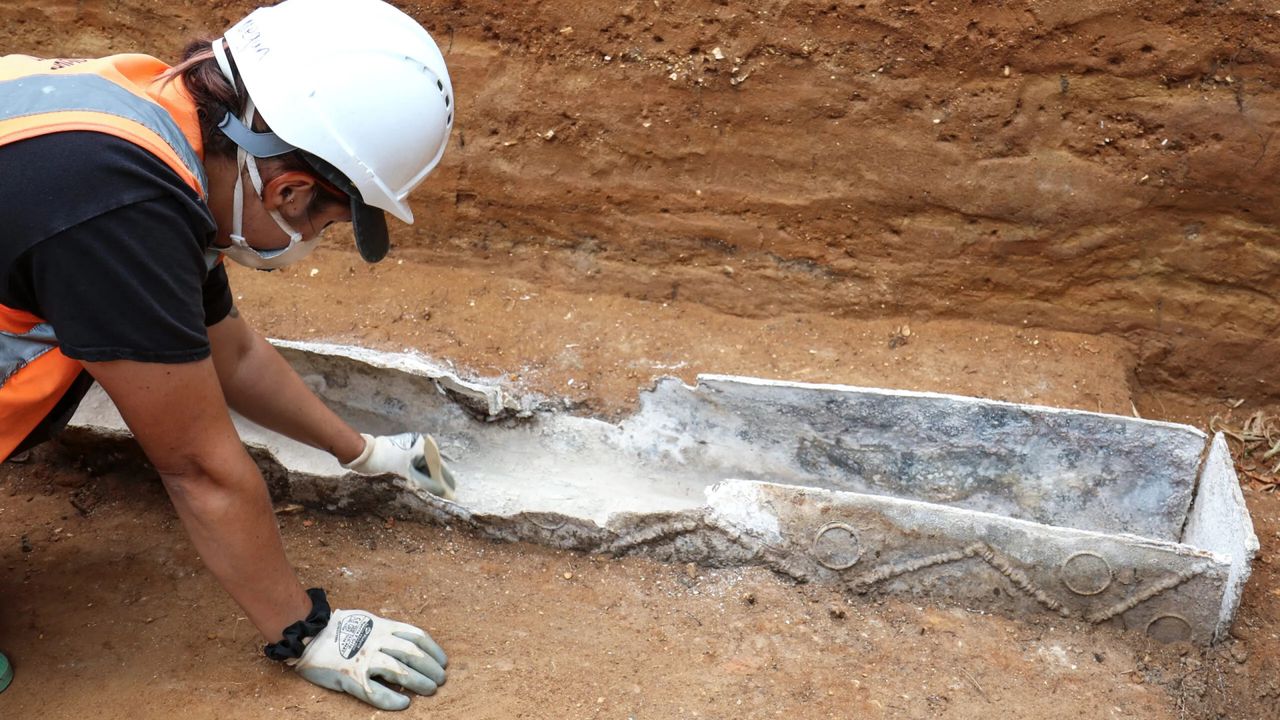
Archaeologists excavating in Colchester have uncovered the remains of a high-status Roman woman interred in a lead coffin alongside jet hairpins and exotic resins, revealing the wealth and social standing of her family in Roman Britain.
The discovery points to a woman of considerable importance during the Roman occupation of Britain. Lead coffins represented a luxury reserved for the elite, as the metal was expensive and required significant resources to obtain and work. The burial goods found alongside her remains underscore her elevated position.
Jet hairpins recovered from the grave offer clues about Roman fashion and personal adornment. Jet, a fossilized wood prized in antiquity, was imported into Britain and worked into ornamental objects that signaled wealth and taste. The presence of multiple hairpins suggests careful grooming standards among the Roman elite.
The exotic resins buried with the woman point to long-distance trade networks operating across the Roman Empire. These aromatic substances, likely imported from the Mediterranean or beyond, held both practical and ceremonial value. They may have been used in funerary rites or placed in the coffin to perfume and preserve the body, reflecting Roman burial customs for the elite.
Colchester held particular importance in Roman Britain as one of the earliest centers of Roman rule, established as a settlement and later fortified as a town. Burials of this caliber from Colchester provide direct evidence of how Roman material culture, wealth, and social hierarchies became established in Britain following the invasion in 43 CE.
The find illustrates how archaeologists reconstruct individual lives from grave goods. The combination of the lead coffin, jet accessories, and imported resins tells a story of a woman whose family possessed both wealth and access to goods moving through imperial trade routes. Such burials remain rare, making each discovery valuable for understanding social stratification and daily life among Roman-era Britons