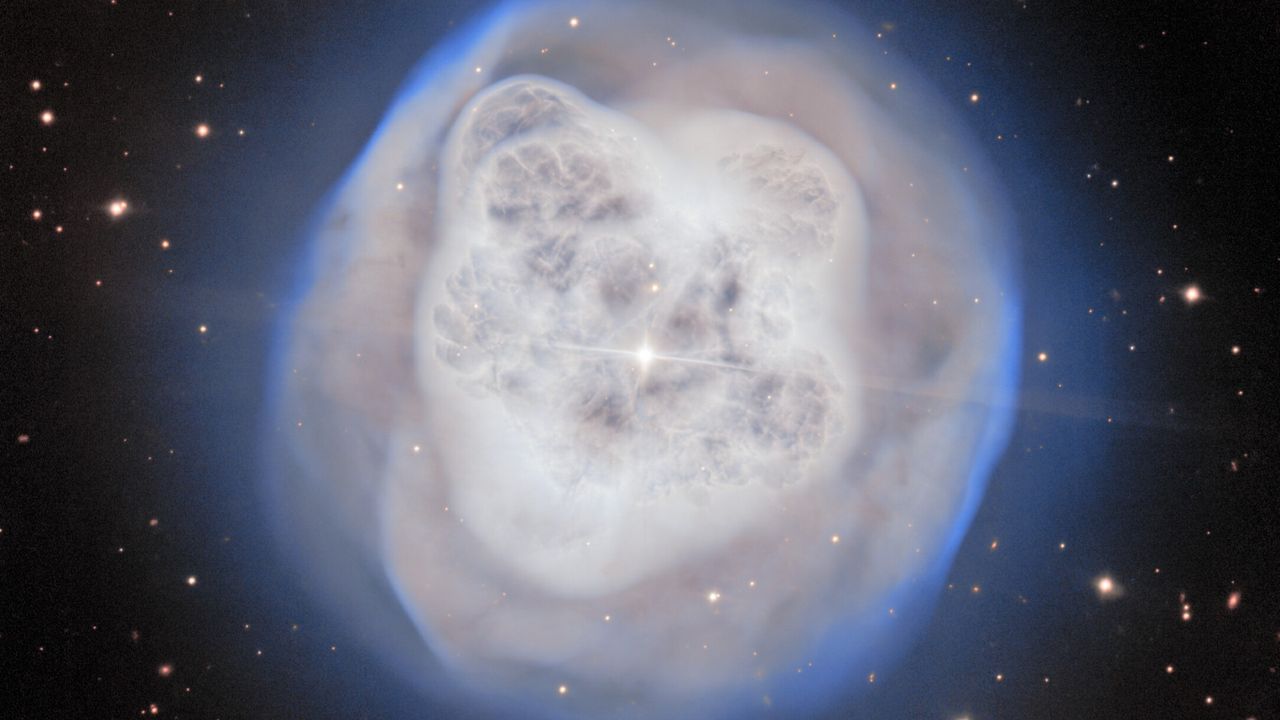
The Crystal Ball Nebula, captured in stunning new detail, shows the final stages of stellar death in the constellation Taurus. This nebula represents the ejected material from a star that exhausted its nuclear fuel and shed its outer layers into space.
The image reveals intricate structures within the nebula that astronomers use to understand how massive stars end their lives. As stars age, they expand and cool, eventually casting off their atmospheres in violent outbursts. The ejected gas and dust form shells and filaments that glow when energized by radiation from the remaining stellar core.
Such observations help researchers map the chemical composition of nebulae and trace how elements disperse across galaxies. Stars in this stage seed interstellar space with heavy elements like carbon, nitrogen, and oxygen. These materials eventually collect into new stars and planetary systems, making stellar death cycles essential to cosmic chemistry.
The Taurus nebula's crystalline appearance gives it its distinctive name, though the structure results from physical processes rather than actual crystal formation. Astronomers study these objects to refine models of stellar evolution and understand how a star's initial mass determines its final fate. A star like our Sun will eventually shed its outer layers similarly, though on a much more modest scale.
Modern telescopes capture progressively finer details in planetary nebulae, revealing the violent and complex dynamics at work during these cosmic transitions. Each image adds data points that help researchers understand the life cycles governing the universe's stellar population.