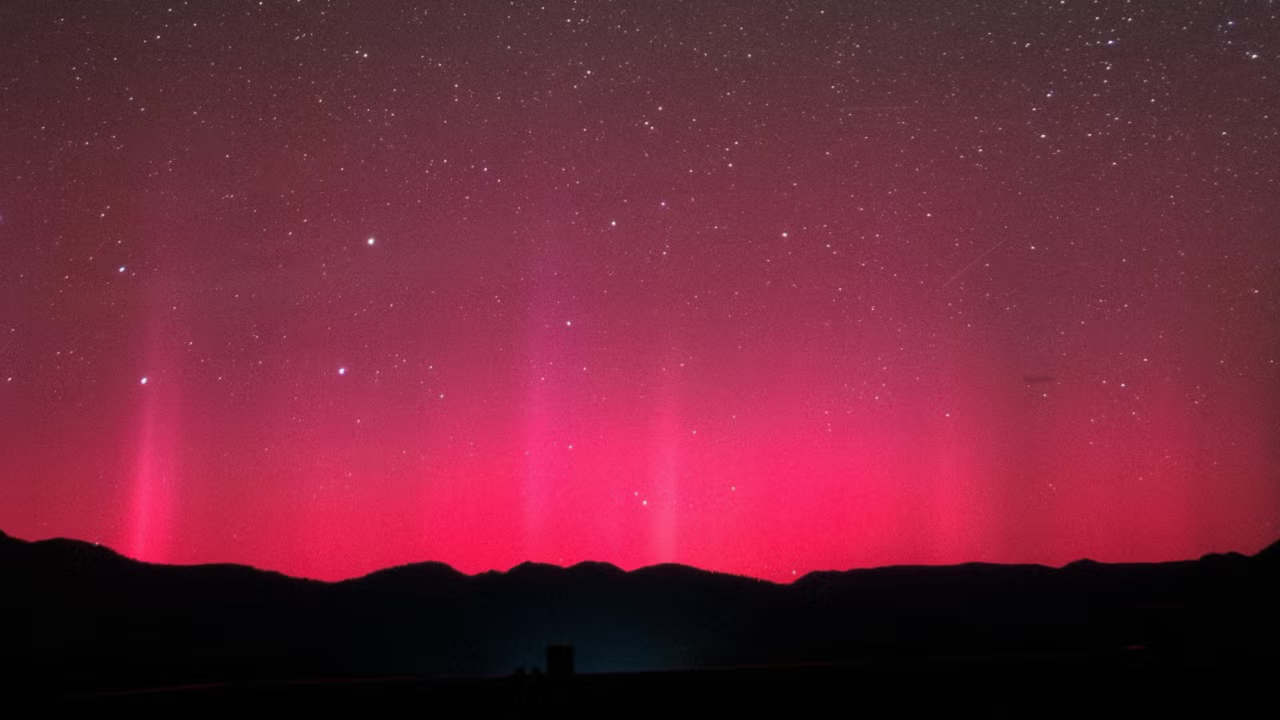
Scientists have identified evidence of a massive solar storm that struck Earth centuries ago, combining historical records with climate data to pinpoint the event. Japanese poet Ichijo Kanera documented witnessing "red lights in the northern sky" over Kyoto in his diary, an observation researchers now link to an extreme geomagnetic storm around 1460.
The analysis relied on radiocarbon dating of tree rings, which reveal sudden spikes in carbon-14 levels triggered by cosmic radiation during powerful solar events. Tree rings worldwide preserve a record of these atmospheric changes, allowing researchers to identify the exact years when major solar storms occurred. The 1460 event appears among the most intense solar storms captured in the tree ring record over the past millennium.
Solar storms occur when the sun ejects massive bursts of plasma and magnetic fields toward Earth. When these reach our planet's magnetosphere, they trigger auroras visible at lower latitudes than typical. The reddish auroras Kanera witnessed align with what occurs during extreme geomagnetic storms, when high-energy particles penetrate deeper into Earth's atmosphere and create unusual colors in the sky.
This discovery adds Kanera's eyewitness account to a growing body of evidence documenting historical solar storms. Other records exist from similar periods, including observations from European and Korean sources. The combination of historical documentation and scientific data from tree rings provides researchers with precise dating and confirmation of these rare events.
The research carries implications for understanding solar activity patterns and predicting future space weather. Modern society depends heavily on power grids and satellites vulnerable to extreme solar storms. By studying historical events, scientists refine models of solar behavior and improve forecasts for potentially catastrophic geomagnetic storms. The 1460 event offers a natural laboratory for understanding how Earth's magnetic field responds to extreme space weather conditions, knowledge essential for protecting critical infrastructure in an increasingly technology-dependent world.