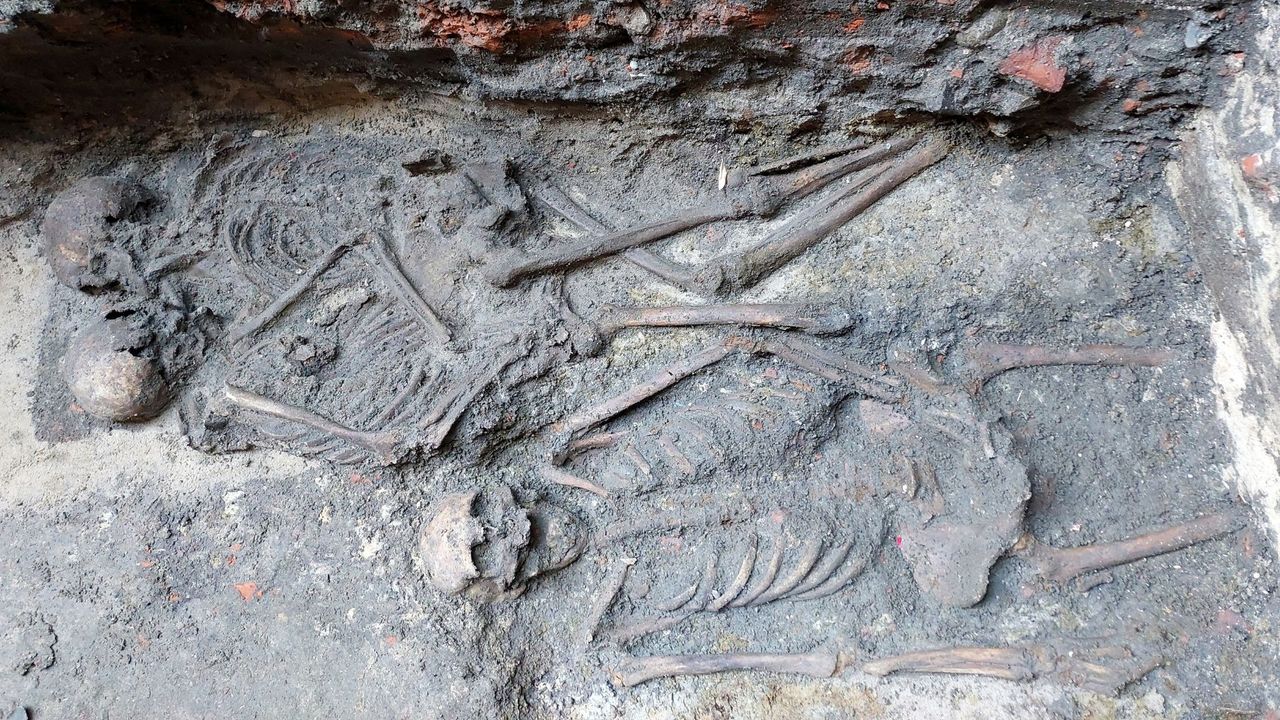
Researchers used ancient DNA analysis to confirm that two skeletons found in an 800-year-old embrace beside a 13th-century Polish cathedral belonged to women, making this Poland's only known medieval same-sex double burial.
The two individuals were discovered positioned together in what appeared to be an intimate arrangement near a cathedral in Poland. The positioning suggested a close relationship, but their exact connection remained unclear until geneticists examined their remains. DNA testing definitively established both skeletons as female, ruling out the possibility that one individual was male.
The discovery raises questions about medieval attitudes toward same-sex relationships and burial practices. Double burials from this period were uncommon and typically reserved for spouses, family members, or individuals with close social bonds. The deliberate placement of these two women together suggests their relationship held enough significance for community members to inter them as a pair, a notable practice for 13th-century Poland.
The analysis represents an important archaeological finding for understanding medieval European social structures and gender relations. Historical records from this era rarely document same-sex relationships explicitly, making physical evidence like this burial particularly valuable for scholars studying the past. The genetic confirmation removes ambiguity about the biological sex of both individuals.
However, the exact nature of the women's relationship cannot be determined from skeletal remains alone. They may have been life partners, close relatives, or individuals bound by deep friendship or community status. Without written records or additional archaeological context, researchers cannot definitively establish whether their burial together reflects a romantic partnership or another form of profound social connection recognized by their medieval community.
This discovery adds to growing archaeological evidence that same-sex relationships existed in medieval Europe, despite historical narratives that have often minimized or erased such connections. The finding contributes to a more complete understanding of medieval Polish society and human relationships across centuries.