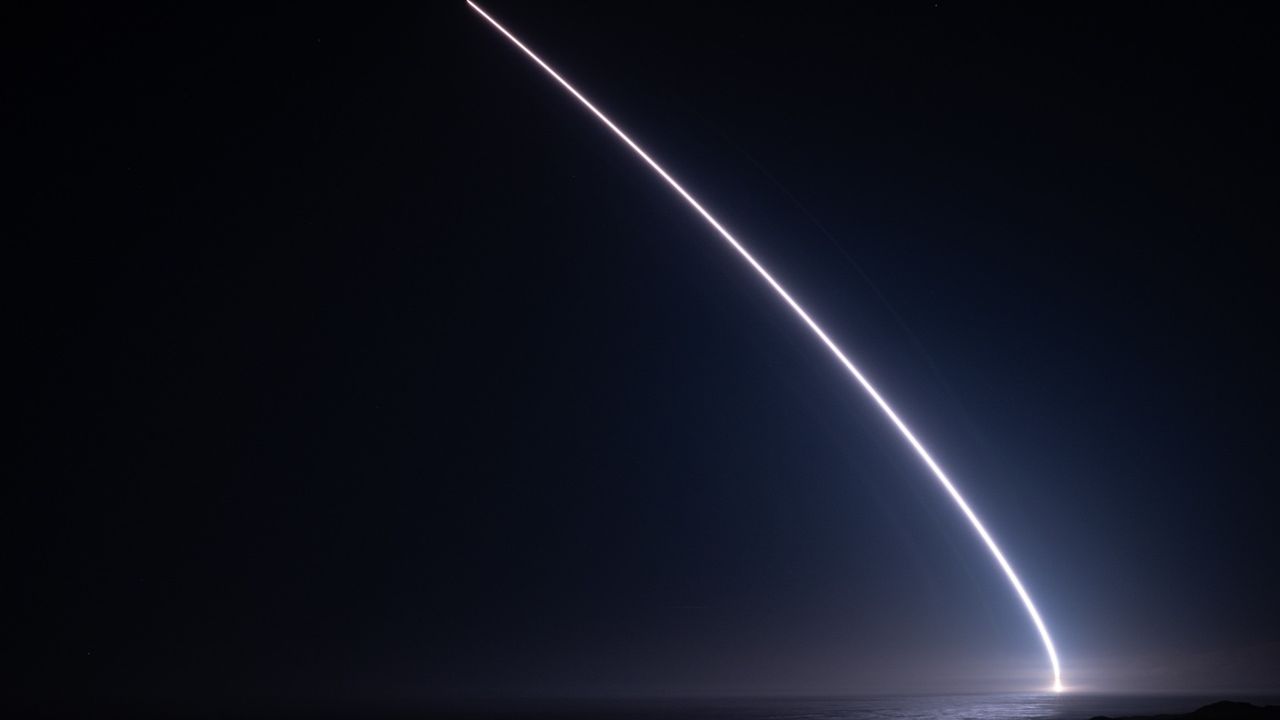
The U.S. military successfully conducted an unarmed test launch of an intercontinental ballistic missile from Vandenberg Space Force Base in California on May 20, 2026. The weapon system tested carries a nuclear warhead capability, though no warhead was present during the demonstration.
Test launches of ICBMs occur routinely as part of strategic deterrence operations. They verify the reliability and functionality of these weapons without deploying live nuclear payloads. Vandenberg Space Force Base, located on California's central coast, serves as the primary test site for U.S. long-range missile systems.
The test represents standard military protocol for maintaining nuclear arsenal readiness. The U.S. military conducts periodic tests to ensure ballistic missile systems remain operational and accurate. These demonstrations help sustain strategic deterrence capabilities and validate modernization efforts across the nuclear arsenal.
Such tests often draw international attention given their connection to nuclear weapons. The U.S. military typically notifies relevant international partners about scheduled test launches to prevent misunderstandings or unintended escalation. The transparent announcement of these tests reflects longstanding practice in strategic military operations.
ICBM testing programs support broader military readiness objectives. They generate technical data on missile performance, trajectory accuracy, and system integration without environmental consequences of armed detonations. The information collected helps military engineers assess whether existing systems require upgrades or maintenance.
Vandenberg hosts several missile test facilities and remains critical to U.S. nuclear deterrence infrastructure. The base has conducted thousands of missile tests since its establishment as a launch site decades ago.