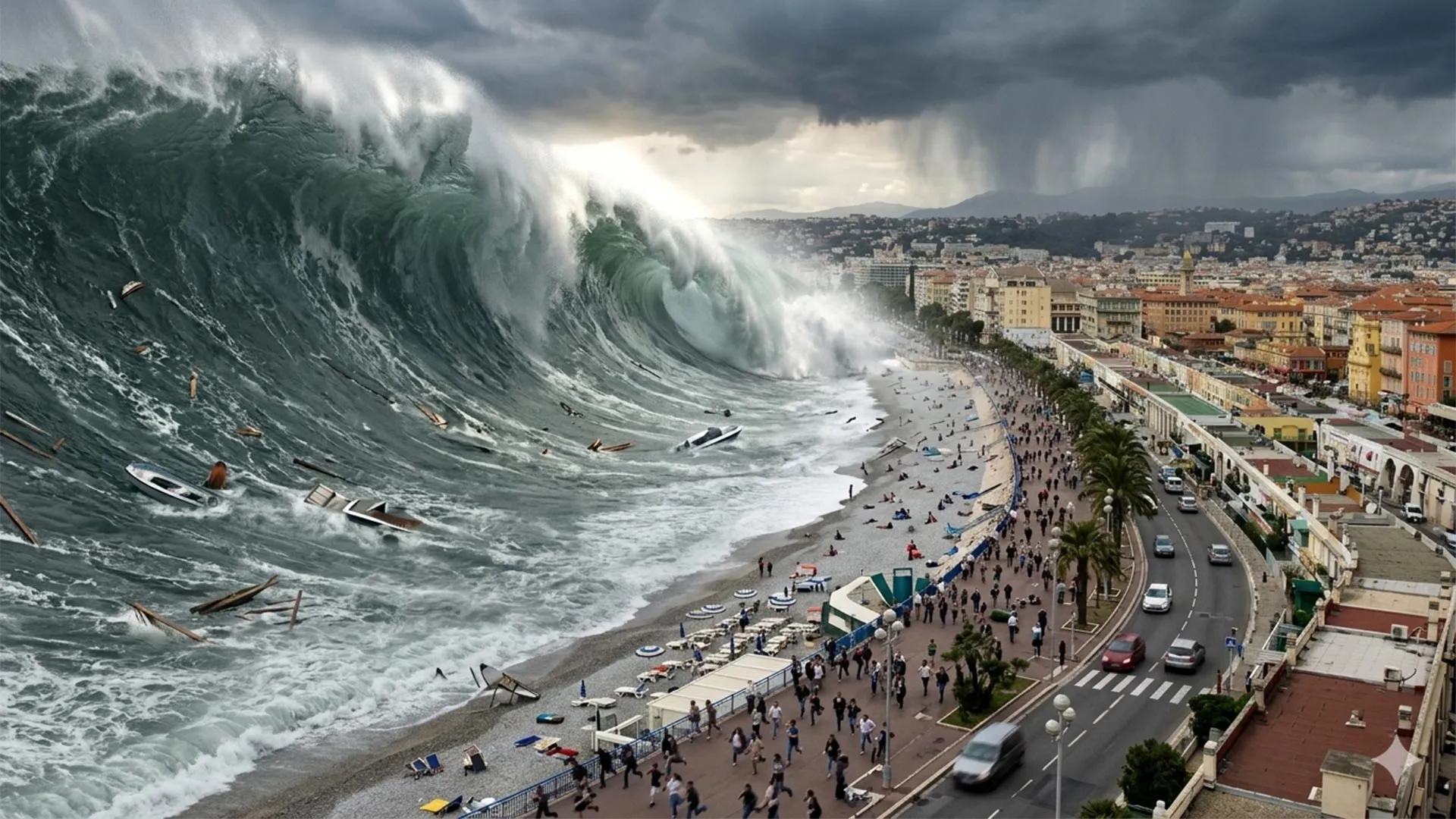
Scientists at UNESCO warn that Mediterranean coastal communities face an imminent tsunami threat backed by historical precedent and new predictive modeling. The French Riviera, despite its reputation as a leisure destination, sits in genuine danger from destructive waves that have already impacted the region multiple times.
The modeling shows that certain tsunami scenarios could reach Mediterranean beaches in under 10 minutes. This compressed timeline poses a critical challenge for emergency response systems relying on traditional alert mechanisms, which typically require longer lead times to evacuate populations effectively.
UNESCO's assessment draws on historical tsunami events documented in Mediterranean records. These past occurrences demonstrate that large waves are not hypothetical risks but recurring natural phenomena in the region. The research indicates these events remain possible with minimal advance warning.
The threat stems from multiple potential sources including submarine earthquakes, underwater landslides, and volcanic activity along the Mediterranean basin. The complex geology of the region creates conditions favorable for tsunami generation. Previous events, while less frequent than in the Pacific Ring of Fire, have caused measurable damage and loss of life.
The research highlights a significant gap between public perception and actual risk. Most Mediterranean residents and tourists consider tsunamis a distant concern, yet the scientific evidence suggests otherwise. Communities along the French Riviera and other vulnerable coastlines have limited evacuation windows compared to regions with better-established tsunami early warning systems.
UNESCO's warning emphasizes the need for enhanced preparedness measures including improved detection networks, updated emergency protocols, and public education campaigns. Countries bordering the Mediterranean lack the coordinated warning infrastructure that protects Pacific communities facing similar threats.
The modeling data provides towns and cities with specific scenarios to use for emergency planning. Some evacuation procedures may require residents to move inland without waiting for formal alerts, relying instead on natural warning signs like unusual water behavior.
This research underscores how tsunamis represent an underappreciated hazard in regions with longer historical intervals between major events.