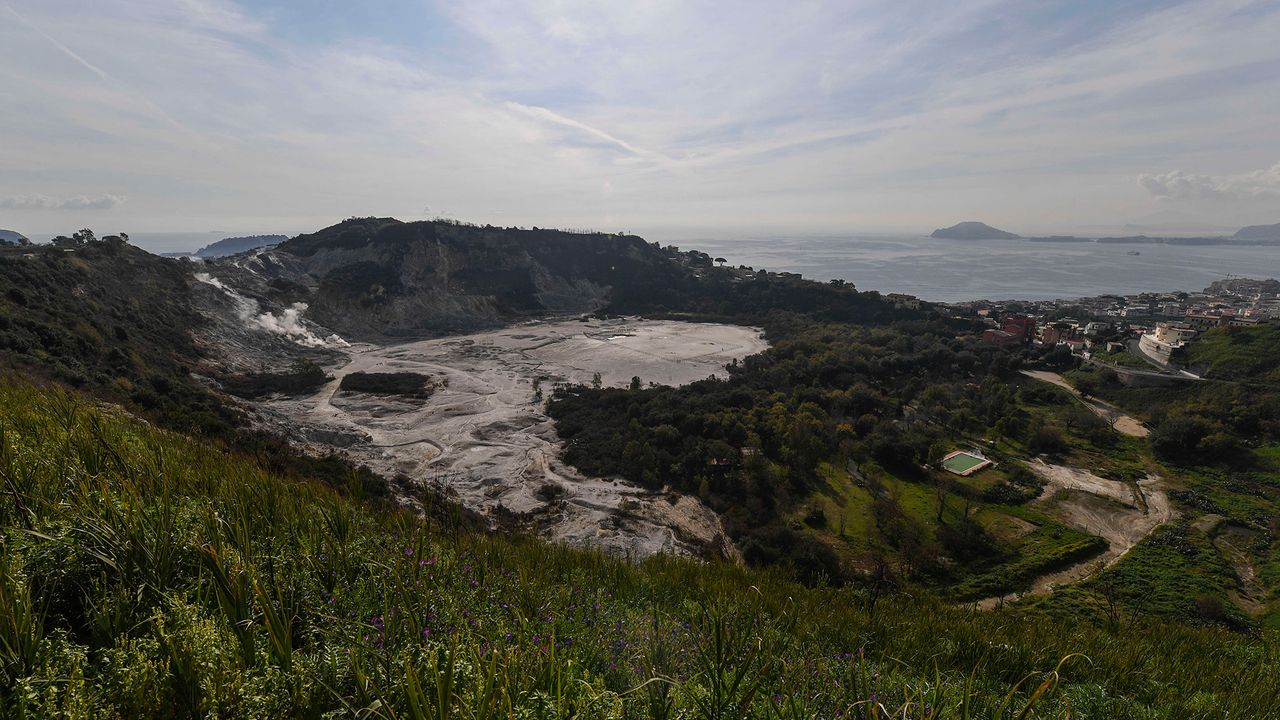
Campi Flegrei, a volcanic caldera near Naples, Italy, shows accelerating signs of instability that could presage a major eruption, according to new research. The volcano has entered a phase of rapid change that researchers warn may push it toward a critical transition.
The caldera, one of Europe's most dangerous volcanoes, sits beneath densely populated areas and has generated considerable concern among volcanologists. Recent data reveals increasing deformation of the ground, elevated gas emissions, and seismic activity concentrated in the volcanic system. These markers suggest the volcano is transitioning toward a state where eruption becomes more probable.
However, scientists emphasize significant uncertainty remains about timing and outcome. The study identifies warning signals consistent with approaching a tipping point, but does not provide a definitive prediction of when or whether an eruption will occur. Campi Flegrei's complex behavior defies simple forecasting. The volcano has shown similar patterns of unrest multiple times in recent decades without culminating in eruption.
The research carries weight given the volcano's history and location. The last eruption occurred in 1538. Before that, Campi Flegrei lay quiet for centuries. The caldera's proximity to nearly three million residents in the Naples metropolitan area means any major eruption poses severe risks to public safety, infrastructure, and the broader region.
Volcanologists continue monitoring the system closely through networks of seismometers, GPS stations, and gas analysis equipment. Italian authorities have prepared evacuation protocols, though implementing such plans at scale presents logistical challenges unprecedented in modern times.
The findings underscore both the power of volcanic systems to generate hazardous transitions and the limitations of predictive science. Researchers cannot yet determine whether Campi Flegrei will cross into full eruptive behavior or stabilize at current elevated activity levels. Understanding these thresholds remains a central goal