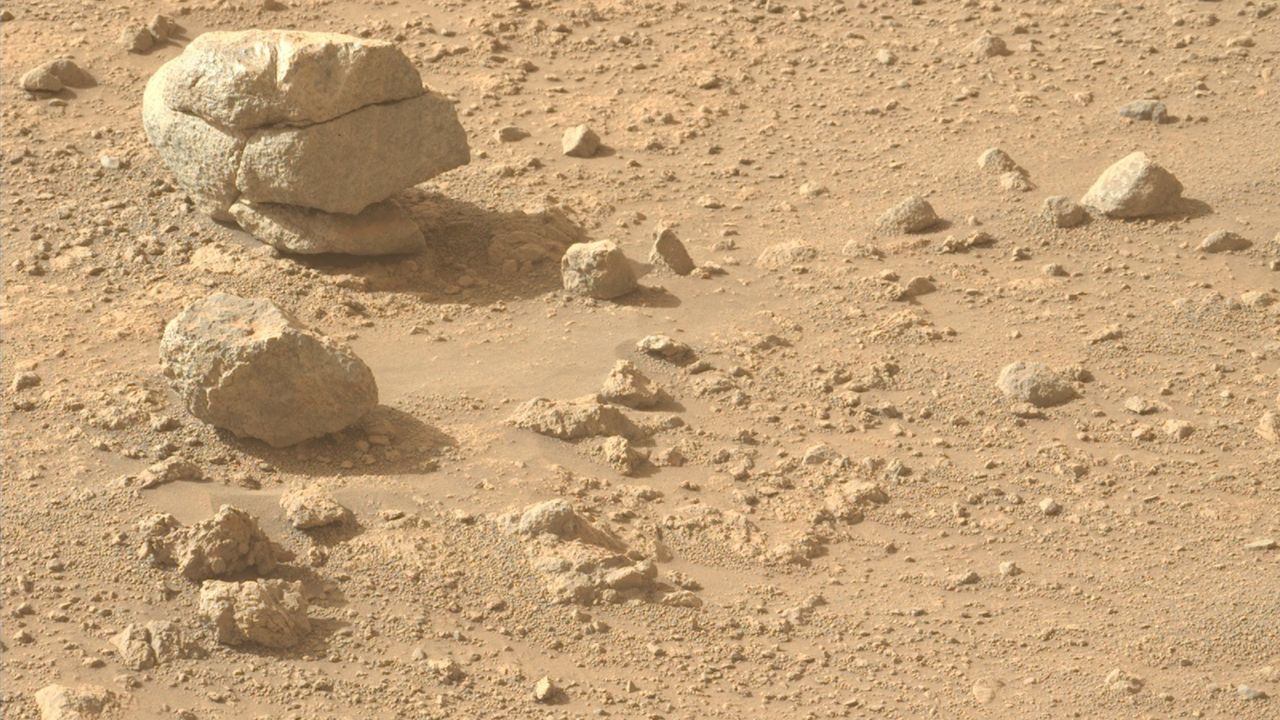
NASA's Perseverance rover has discovered an unusual formation of stacked rocks on Mars, raising questions about how such a precise arrangement could form on the Red Planet.
The rover captured images of multiple stones balanced atop one another in what appears to be an intentional stack. On Earth, such formations typically result from human activity or specific geological processes. On Mars, where wind patterns differ substantially from Earth's atmosphere and no human presence exists, the discovery warrants closer investigation.
Perseverance's science team has begun analyzing the rock stack to determine its origin. Possible explanations include natural processes such as erosion that left the underlying rocks exposed in a stacked manner, or rockfall events that created the arrangement by chance. Martian winds, though weaker than Earth's due to the planet's thin atmosphere, could theoretically have contributed to the configuration over time.
The rover's instruments, including its high-resolution cameras and spectrometers, will help researchers examine the composition and arrangement of the stones. Understanding how rocks stack on Mars provides insight into local geological processes and weathering patterns on the planet's surface.
This discovery adds to the growing list of peculiar formations Perseverance has documented since landing in Jezero Crater in February 2021. The rover's primary mission focuses on searching for signs of ancient microbial life and collecting rock samples for eventual return to Earth. Secondary observations like this rock stack contribute to the broader understanding of Martian geology and surface dynamics.
The find demonstrates how exploration rovers generate unexpected discoveries that expand scientific knowledge beyond their primary objectives. While the stacked rocks may have a mundane explanation, each unusual formation studied in detail refines our comprehension of planetary processes on worlds beyond Earth.