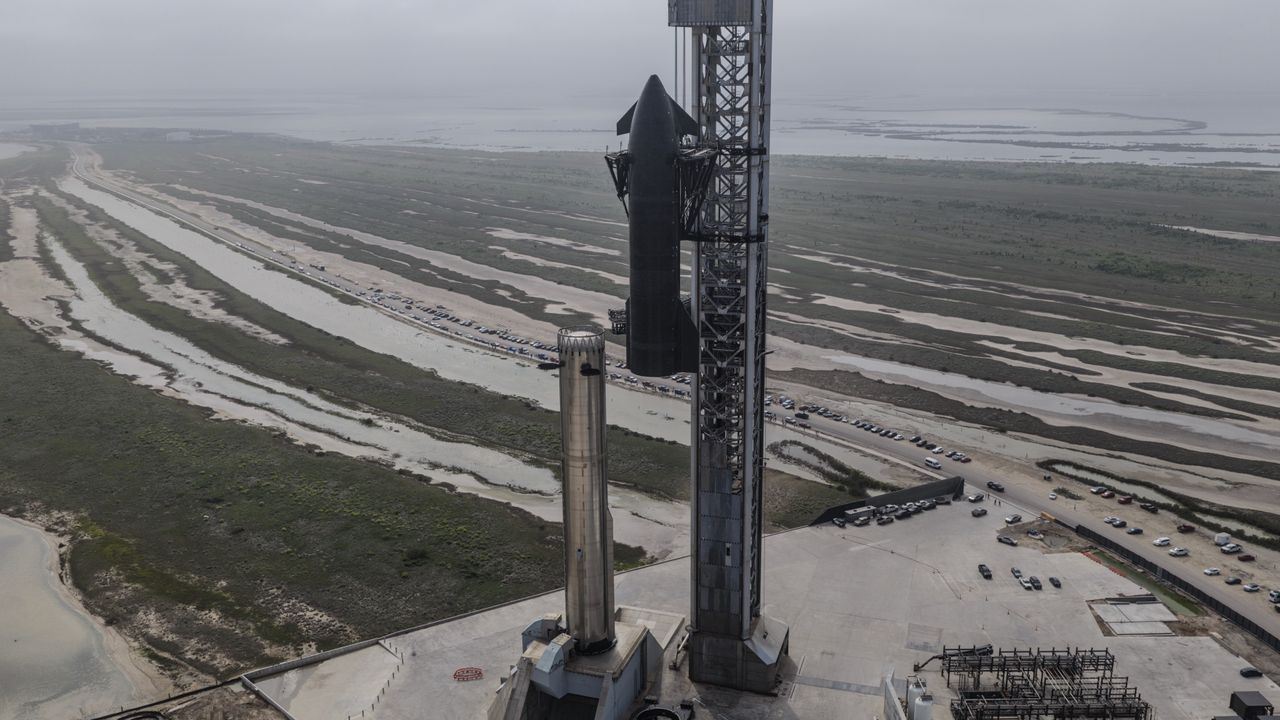
SpaceX has completed the stacking of Starship atop its Super Heavy booster at the company's Starbase facility in Boca Chica, Texas, marking a critical step toward the rocket's 12th integrated flight test. The stacked configuration represents the full assembled vehicle that SpaceX will use for the upcoming launch attempt.
The stacking process involves precisely aligning and mating the Starship upper stage with the Super Heavy first-stage booster. This assembly must meet exacting tolerances to ensure structural integrity and proper functioning during launch operations. The completion of this major milestone demonstrates SpaceX's continued progress in preparing the next test flight of its fully reusable super-heavy launch system.
SpaceX has also conducted a major fueling test with the stacked vehicle, validating critical systems and procedures ahead of the actual launch. These wet dress rehearsals, as they are called, allow engineers to verify that propellant loading mechanisms, pressure systems, venting procedures, and other fueling-related equipment function correctly before flight. The successful completion of this test reduces technical risk for the upcoming launch attempt.
The 12th test flight follows previous integrated flight tests that have progressively advanced SpaceX's capabilities. Earlier flights have tested booster catch procedures, upper-stage reentry and landing systems, and in-space engine restarts. Each test generates data that informs improvements to vehicle design and operations.
Starship represents SpaceX's most ambitious rocket development effort to date. The fully stacked system stands approximately 400 feet tall and is designed to become the world's most powerful launch vehicle. SpaceX intends to use Starship for NASA's Artemis lunar program, national security launches, and eventual Mars missions, making its development central to multiple space exploration objectives.
The timing of stacking and fueling tests suggests SpaceX aims to conduct the