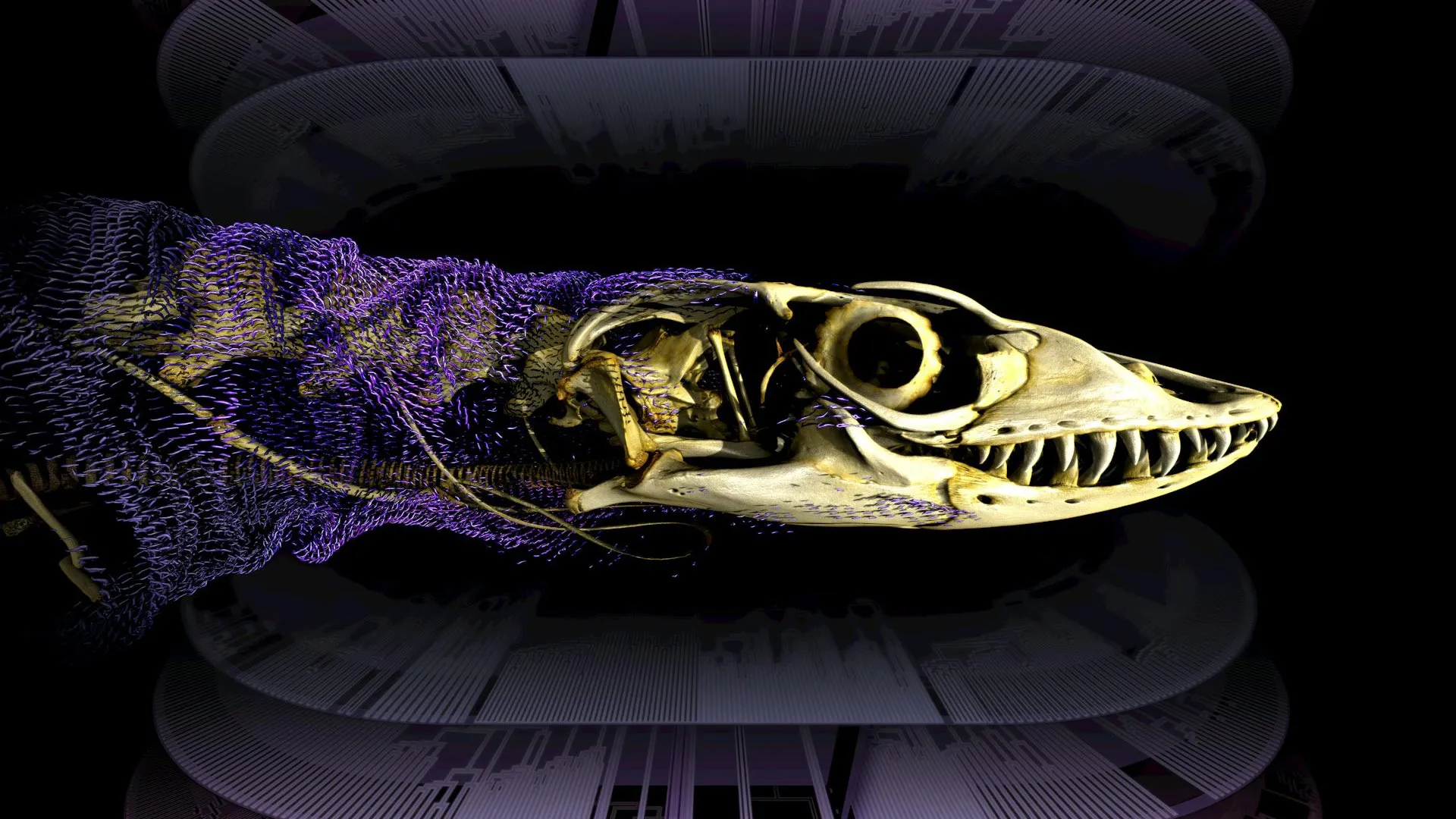
Researchers have solved a longstanding puzzle about how reptiles evolved protective bone plates embedded in their skin, revealing a pattern of repeated independent evolution across different groups over 320 million years.
The study found that armored skin, called osteoderm, did not originate from a single common ancestor as scientists previously believed. Instead, multiple lizard lineages developed this protective adaptation separately throughout evolutionary history. This demonstrates a phenomenon called convergent evolution, where unrelated species solve similar environmental problems through different genetic pathways.
The research uncovered an even more remarkable finding: Australian goannas lost their dermal bone armor millions of years ago, then independently re-evolved it at a later point in time. This "reacquired" trait suggests the genetic machinery for producing these bones remained available in their genome even after the physical structures disappeared from their bodies.
The team analyzed skeletal anatomy and genetic data across numerous reptile species to map when and how osteoderm appeared and disappeared throughout the fossil record and modern populations. By comparing bone structure patterns and molecular evidence, researchers could distinguish between inherited traits from common ancestors and those that evolved independently.
This work challenges the assumption that complex evolutionary adaptations, once lost, cannot resurface. The goanna case suggests that while natural selection might eliminate a trait when it becomes disadvantageous, the underlying genetic blueprint persists in a dormant state, potentially available for reactivation if conditions favor it again.
The findings have implications for understanding how evolution works at both large and small timescales. They show that similar structures can emerge through different mechanisms, complicating assumptions about what fossils reveal about ancestral relationships. The research also highlights how environmental pressures and genetic constraints shape the toolkit available to different species for survival.