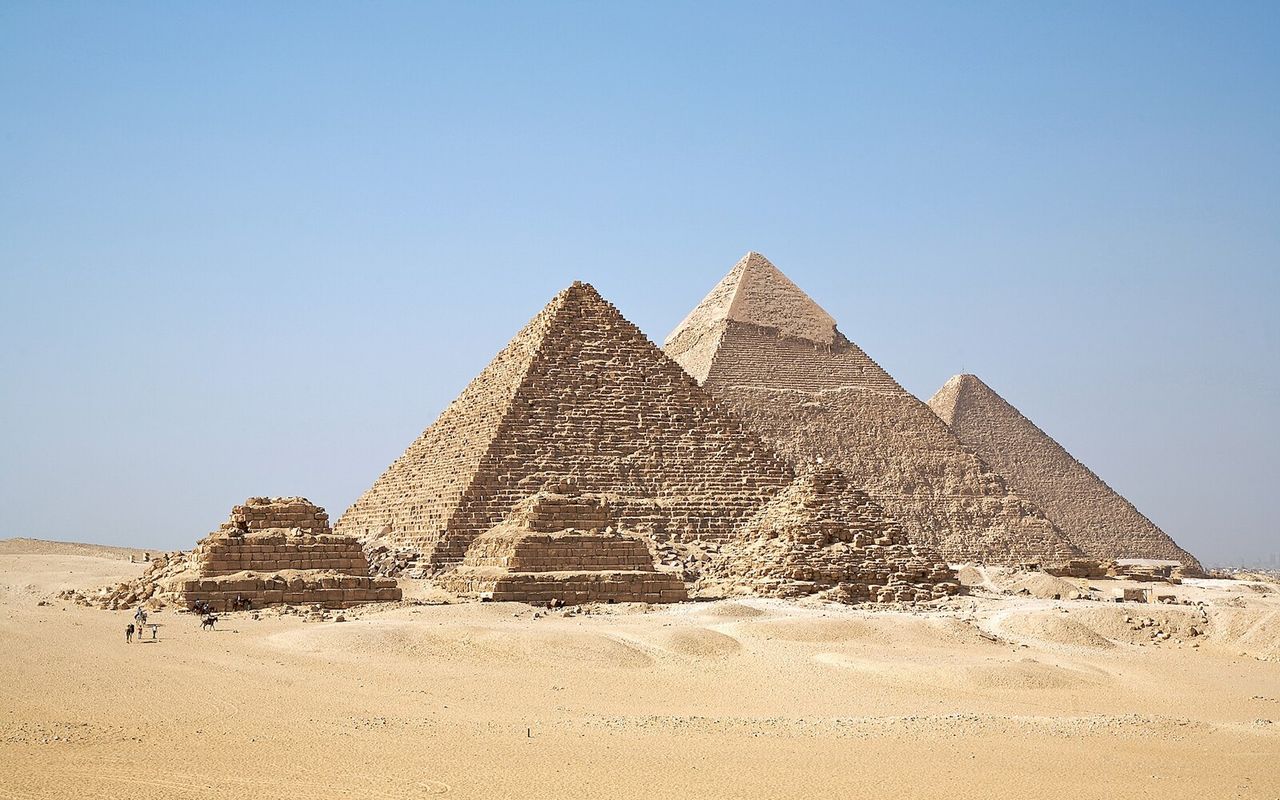
The Great Pyramid of Giza owes its remarkable survival through earthquakes to sophisticated engineering techniques employed by ancient Egyptian builders, according to recent research. The structure has withstood more than 4,600 years of seismic activity near Giza, an achievement researchers attribute to design choices that suggest extraordinary knowledge of how to build earthquake-resistant monuments.
The pyramid's resilience stems from several interconnected factors in its construction. Ancient engineers used precisely cut limestone blocks that fit together with minimal gaps, creating a structure that distributes stress evenly rather than concentrating it at weak points. The internal passage systems and chambers, contrary to intuition, actually enhance stability by allowing the monument to flex slightly during seismic events rather than resist them rigidly. This flexibility absorbs earthquake energy without causing catastrophic failure.
The pyramid's geometry itself contributes to its survival. Its broad base and tapering profile create a low center of gravity, making it inherently stable against lateral ground movement. The angle of the sides was calculated to maximize structural integrity, with each limestone block precisely positioned to support the enormous weight above it.
Researchers studying the pyramid's construction techniques have found that the builders understood weight distribution and stress analysis at a level that would not be formally documented in European engineering texts for thousands of years. The positioning of stones, the size gradations between chambers, and the careful alignment all reflect deliberate choices designed to enhance durability.
The Great Pyramid sits in a geologically active region where earthquakes occur regularly, making its 4,600-year survival span a remarkable testament to construction principles. Other structures built during the same era in Egypt and the Mediterranean collapsed or suffered severe damage from comparable seismic events, making the pyramid's endurance even more striking.
This engineering insight holds modern implications. Contemporary researchers examining the pyramid's seismic performance identify principles applicable to earthquake-resistant construction today, suggesting that ancient Egyptian knowledge offers