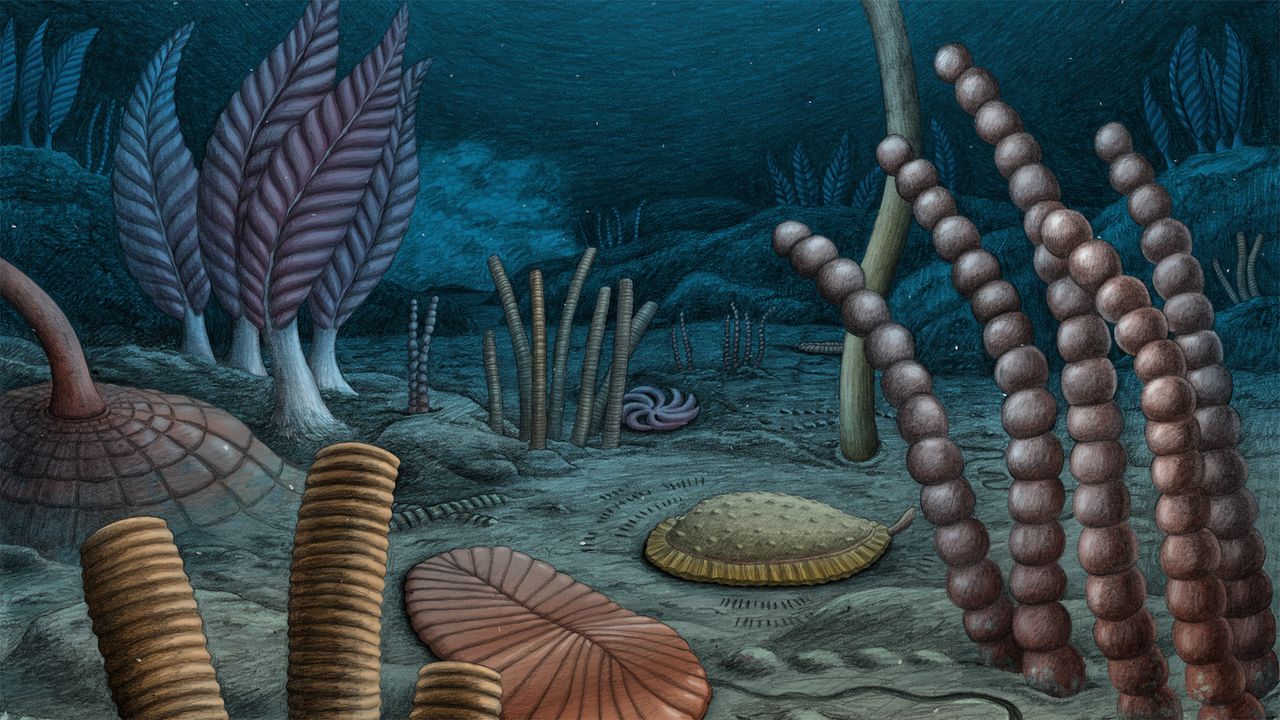
A cache of fossils unearthed in Canada has pushed back the timeline for the emergence of complex animals by as much as 10 million years, researchers report. The discovery challenges long-held assumptions about when life first transitioned from simple to sophisticated forms.
The fossils, found in Canadian rock formations, reveal evidence of large, structurally intricate organisms that predate previously documented complex life. This finding extends the known history of animal complexity deeper into Earth's past than earlier fossil records indicated.
The research comes from paleontologists studying Ediacaran-period deposits, a critical window in evolutionary history roughly 635 to 541 million years ago. During this era, life underwent radical transformation from microscopic organisms to creatures with recognizable body plans and tissues. The newly discovered specimens appear to represent organisms with genuine animal characteristics, not merely bacterial mats or simple colonial structures that dominated earlier periods.
The significance lies in understanding how rapidly evolution assembled the basic components of animal life. A 10-million-year shift may seem modest in geological terms, yet it compresses the timeline for developing body plans, sensory organs, and feeding mechanisms into an even tighter evolutionary window. This accelerated timeline raises questions about the mechanisms driving such rapid diversification.
The fossils provide direct evidence rather than relying solely on molecular clock calculations, which estimate divergence times based on genetic differences between modern species. Physical specimens offer concrete reference points for dating evolutionary transitions. However, the fossil record remains incomplete, and these Canadian deposits likely represent only a fraction of organisms present at that time. Many soft-bodied creatures leave no trace, creating gaps in our understanding.
The discovery also highlights the importance of preserving and studying geological formations in remote regions. Canada's Ediacaran exposures have proven remarkably productive for revealing life's ancient diversity. Continued paleontological work in similar deposits worldwide may yield additional specimens that further refine our picture