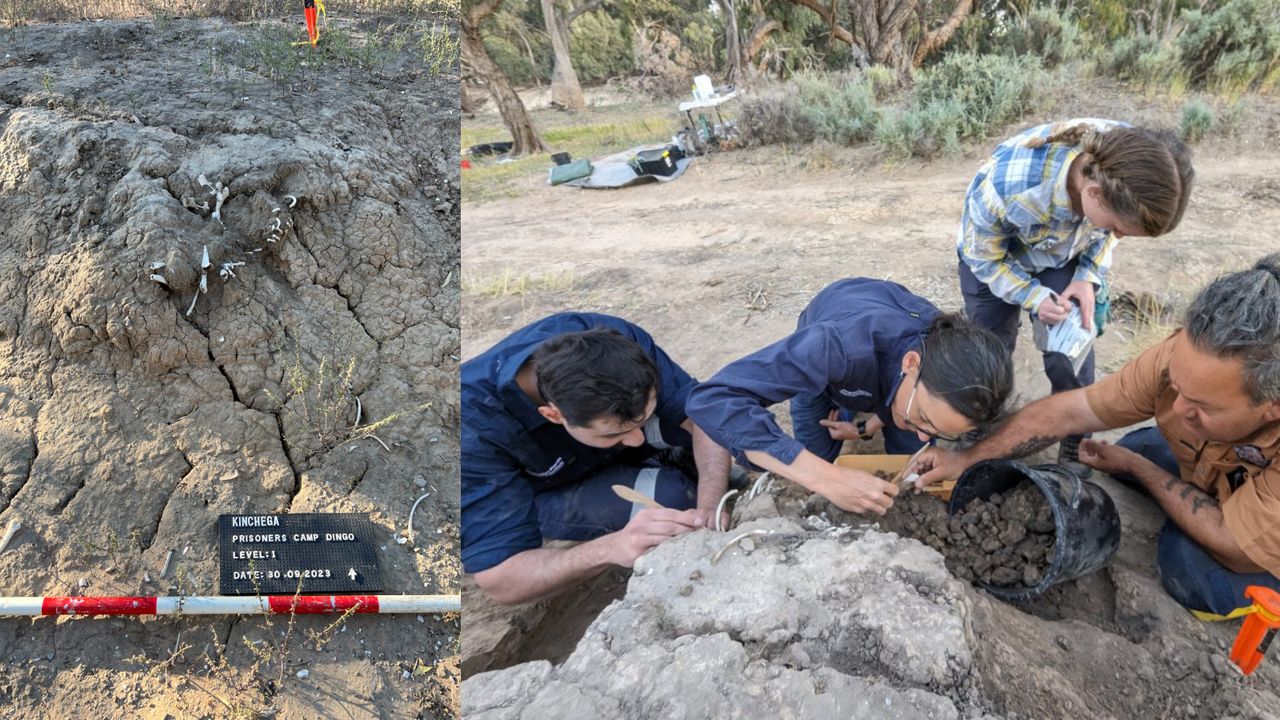
Archaeologists working in Australia have uncovered a 950-year-old dingo burial that reveals an extraordinary ritual practice. The remains of the dingo, buried by ancestors of the Barkindji people, show evidence of deliberate feeding with river mussels that continued for approximately 500 years after the animal's death.
The excavation discovered shells deposited repeatedly in the grave over centuries, suggesting the Barkindji maintained an active relationship with their deceased pet long after burial. This practice represents one of the earliest known examples of sustained ritual engagement with an animal grave in the archaeological record.
The significance lies in what the ritual reveals about Aboriginal cultures' relationship with animals and death. Rather than treating burial as a singular event, the Barkindji returned to the grave repeatedly, depositing food offerings. This indicates the dingo held considerable spiritual or emotional value to the community, warranting ongoing ceremonial attention.
Dingos, which arrived in Australia roughly 3,500 years ago, became integrated into Aboriginal life and culture. Previous archaeological evidence has documented Aboriginal use of dingos for hunting and companionship, but this burial offers direct evidence of the animals' status within ritual and spiritual frameworks.
The persistence of the practice across five centuries demonstrates cultural continuity and stability within the Barkindji community. The use of river mussels as offerings suggests symbolic or practical significance, though the exact nature remains subject to interpretation.
The discovery adds to growing evidence that Aboriginal Australians maintained complex spiritual practices and deep emotional bonds with animals. It challenges narratives that position such relationships as merely utilitarian. The deliberate, sustained nature of the feeding ritual indicates sophisticated beliefs about death, remembrance, and the afterlife.
Archaeological context places the initial burial around 950 years ago, during a period well-documented in Aboriginal Australian history. The methodical recording of shell deposits allows researchers to track cultural