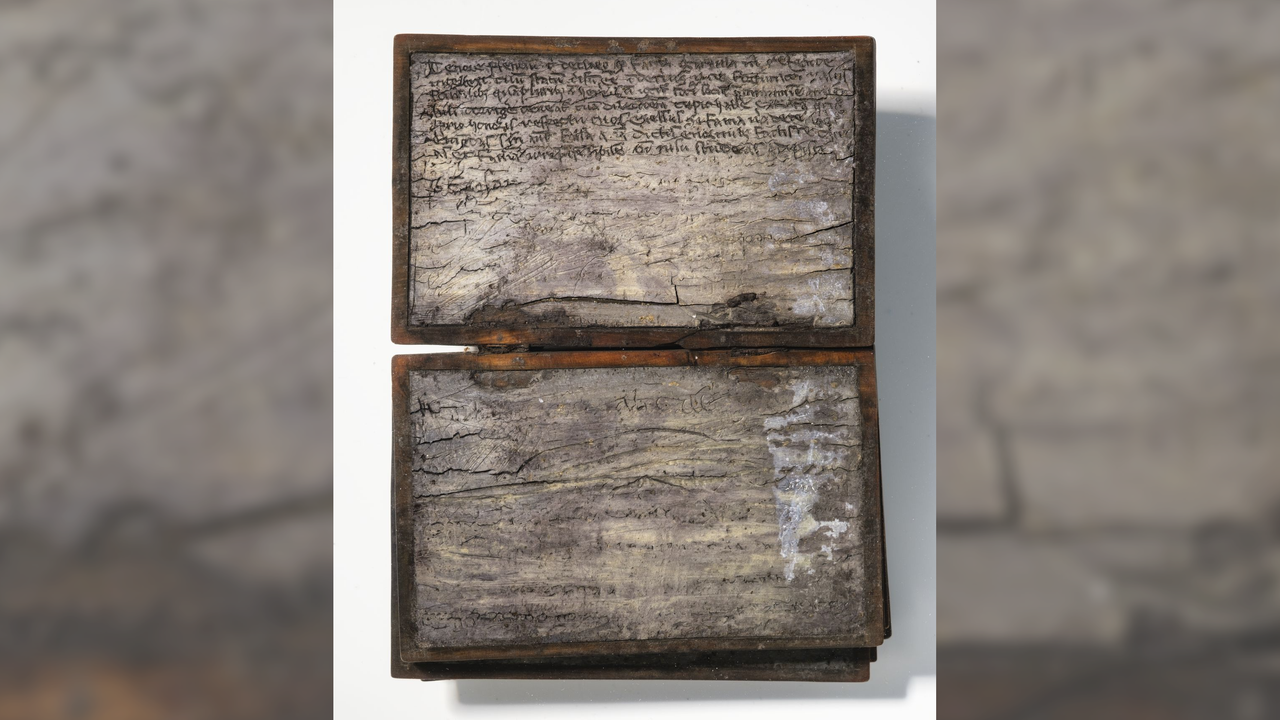
Archaeologists in Germany have unearthed a 10-page wax notebook and its leather case from a medieval latrine, offering rare insight into daily life and literacy practices during the Middle Ages. The notebook contains Latin writing and dates back approximately 800 years.
The discovery came during excavation of a medieval latrine, where anaerobic conditions preserved the organic materials in exceptional detail. Wax tablets served as reusable writing surfaces in medieval Europe, with scribes using styluses to inscribe letters onto the wax layer. Users could erase and rewrite on the same tablet by smoothing the wax surface, making them practical for temporary notes, calculations, or drafting before committing text to parchment.
The leather case protected the fragile notebook during its centuries underground. Its recovery suggests the owner valued the tablet enough to carry it in a dedicated container, indicating the notebook likely held important information rather than casual jottings.
The Latin text provides evidence of written communication and record-keeping at the local level during the medieval period. Most surviving medieval documents come from monasteries, churches, and noble households, leaving substantial gaps in understanding how ordinary townspeople documented information. This latrine find offers a window into that overlooked world.
Latrines provide exceptional archaeological contexts for preservation. Their anaerobic, waterlogged environments inhibit bacterial growth that typically degrades wood, leather, and other organic materials. Archaeologists increasingly recognize medieval latrines as treasure troves of discarded personal items, from textiles to household objects.
The German excavation also recovered fancy silk toilet paper, reflecting trade networks and wealth distribution in the medieval period. The combination of objects suggests the latrine belonged to a relatively prosperous household with access to luxury imported goods.
The notebook's contents now face careful conservation and paleographic analysis to fully decipher its contents and historical context. Such discoveries reshape understanding of medieval literacy