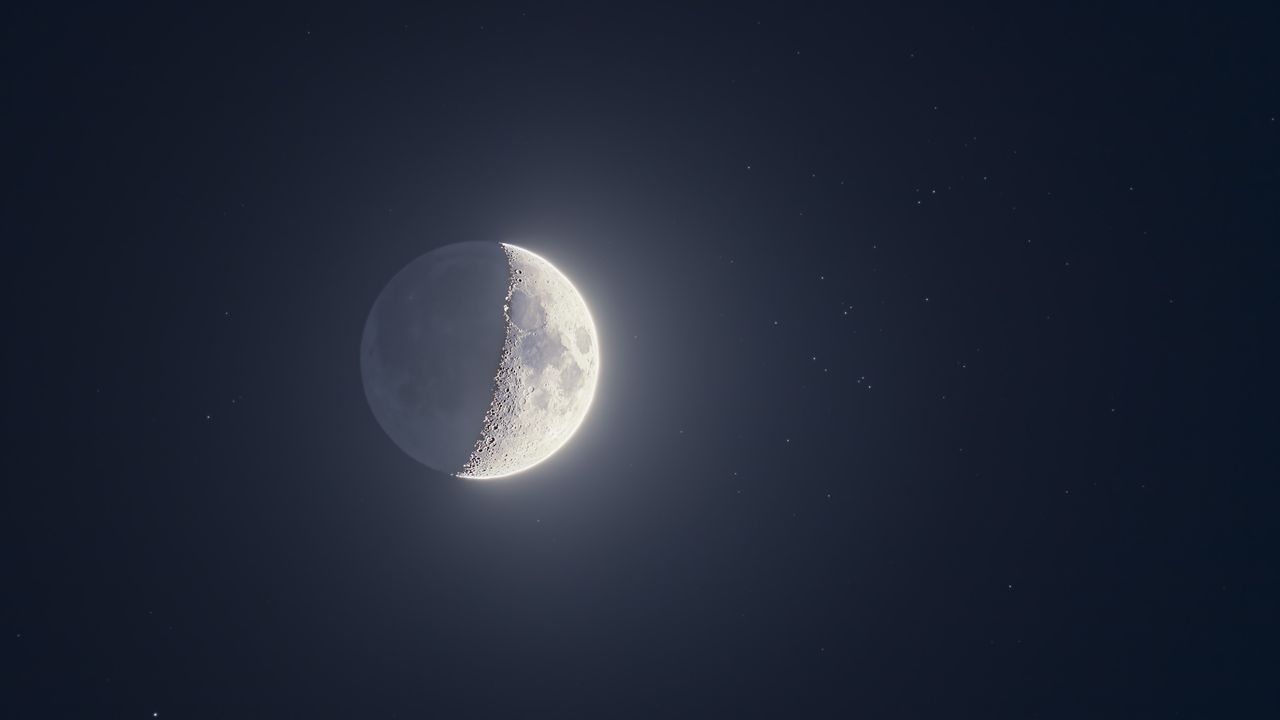
On May 21, stargazers will witness the moon passing in front of the Beehive Cluster, an open star cluster located roughly 600 light-years away in the constellation Cancer. This occultation event occurs when the moon's orbital path carries it directly between Earth and the distant star group, temporarily obscuring the cluster from view.
The same evening brings an additional celestial arrangement. Jupiter, Venus, and Mercury will congregate in the western sky after sunset, creating what astronomers call a planetary conjunction. These three inner solar system bodies will appear close together from Earth's vantage point, though they remain millions of kilometers apart in space. Venus, the brightest planet visible from Earth, will likely dominate the grouping, while Mercury and Jupiter complete the trio.
The Beehive Cluster, also known as Messier 44 or Praesepe, contains around 1,000 stars bound together by gravity. Though invisible to the naked eye as individual stars, the cluster appears as a fuzzy patch through binoculars or telescopes. The cluster formed roughly 600 million years ago and drifts through space as a coherent group.
Occultations like this happen regularly when the moon passes through zodiacal regions where star clusters reside. The event provides an opportunity to observe the moon's topography in detail. As the lunar edge passes across the cluster, observers can watch individual stars wink out and reappear as the moon's jagged limb crosses in front of them, revealing craters and mountains along the lunar surface.
Visibility depends on geographic location and weather conditions. Observers in North America, Europe, and parts of Asia will have the best viewing opportunities. The exact timing varies by latitude and longitude, requiring observers to consult local astronomical forecasts for precise start and end times.
The combination of the Beehive Cluster