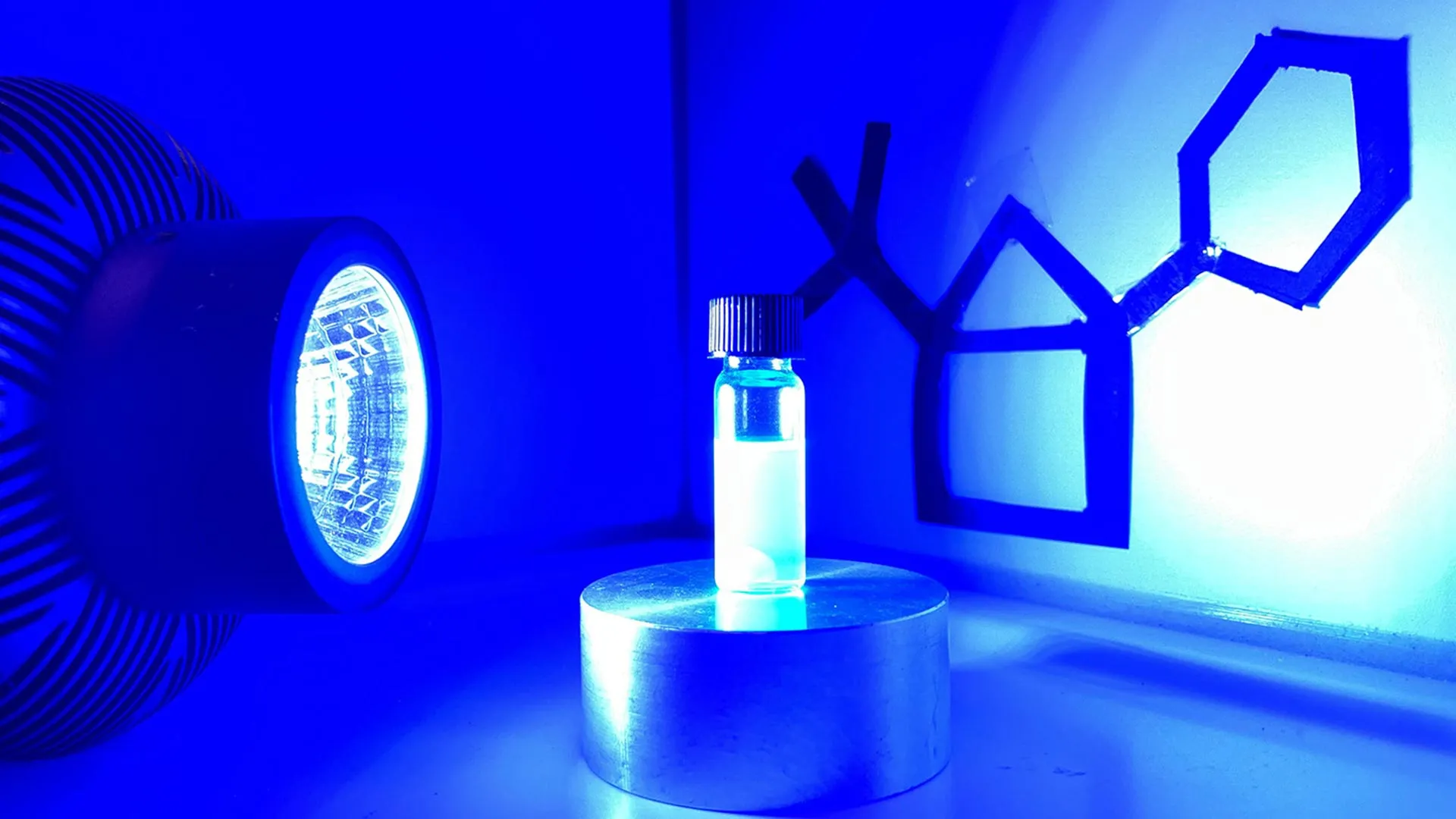
Researchers have developed a photocatalytic method to synthesize strained ring molecules called housanes, structures that pack enormous internal strain into compact forms and hold promise for pharmaceutical and materials applications.
Traditional synthesis of housanes faces a major obstacle: their cage-like geometry creates intense mechanical stress within the molecular structure, making them collapse or react unpredictably during assembly. The research team solved this by harnessing light energy to drive the reaction forward selectively. The photocatalytic approach allows chemists to steer reactants along a controlled pathway that avoids the usual decomposition and side reactions that plague housane synthesis.
The method works by absorbing photons that excite electrons in catalyst molecules, which then facilitate bond formation in the starting materials. By fine-tuning the molecular precursors and reaction conditions, researchers created conditions where housane formation becomes the dominant pathway rather than a rare byproduct. This represents a shift from trial-and-error synthetic strategies to rational design based on light-driven chemistry principles.
Housanes belong to a broader family of strained hydrocarbons prized for their unusual reactivity and compact three-dimensional architecture. These properties make them valuable as building blocks for complex pharmaceuticals and advanced materials. Their extreme ring strain also makes them stored reservoirs of energy that can be released through specific reactions, opening applications in drug activation and molecular switches.
The significance extends beyond synthesis convenience. Light-driven chemistry offers scalability advantages over traditional heating or chemical reagents, with lower environmental impact and the potential for precise spatial and temporal control. Photocatalytic methods increasingly enable transformations previously considered impossible or impractical.
The work advances the toolkit for synthetic chemists developing new medicines and materials. However, the translation from laboratory synthesis to pharmaceutical manufacturing requires additional optimization for cost, safety, and reproducibility at scale. Future research will likely focus on adapting this photochemical approach to production environments and