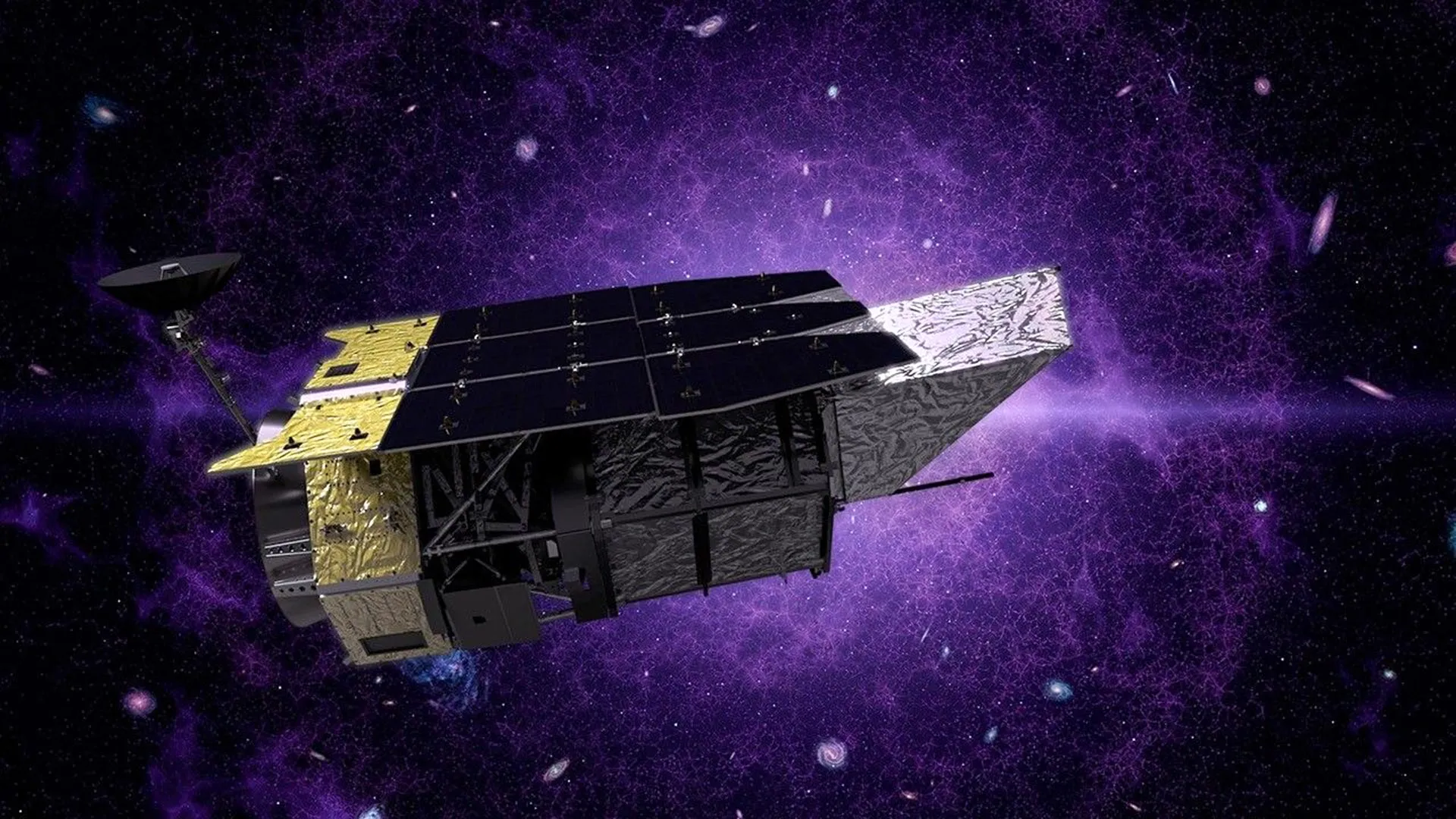
NASA's Nancy Grace Roman Space Telescope will launch in September 2026, accelerating its original timeline and positioning the observatory to revolutionize astrophysics. The mission represents one of the most ambitious astronomical surveys ever attempted.
Roman operates in infrared wavelengths and carries instruments engineered to map the universe at unprecedented scale and detail. The telescope will conduct wide-field surveys capable of cataloging hundreds of millions of galaxies in a single observing campaign. This scope far exceeds what previous space telescopes achieved through targeted observations.
The science priorities center on three interconnected mysteries. Dark energy, the force accelerating cosmic expansion, remains one of physics' deepest puzzles. Roman will measure how dark energy's strength evolved across cosmic history by mapping supernova distances and galaxy distributions. Dark matter, the invisible substance comprising most of the universe's mass, requires complementary observations that Roman will provide through gravitational lensing studies. The telescope will also identify and characterize exoplanets using its powerful imaging capabilities and new coronagraph technology designed to block starlight and reveal orbiting worlds.
The accelerated launch timeline reflects NASA's confidence in the mission's readiness and the scientific community's hunger for the data Roman will generate. The telescope's data archive will dwarf those of previous observatories, potentially enabling discoveries scientists have not yet conceived. This archive model positions Roman similarly to how the Hubble Space Telescope transformed astronomy through decades of unexpected findings.
Roman carries no specific mission duration limit in its design, suggesting operational returns spanning well beyond its primary science goals. The combination of infrared sensitivity, wide-field coverage, and high angular resolution creates an instrument uniquely suited to answer foundational cosmology questions while discovering phenomena that emerge only from surveying billions of celestial objects simultaneously.
The earlier 2026 launch date reflects resolved technical challenges and completed hardware integration milestones. Roman's arrival in space will mark