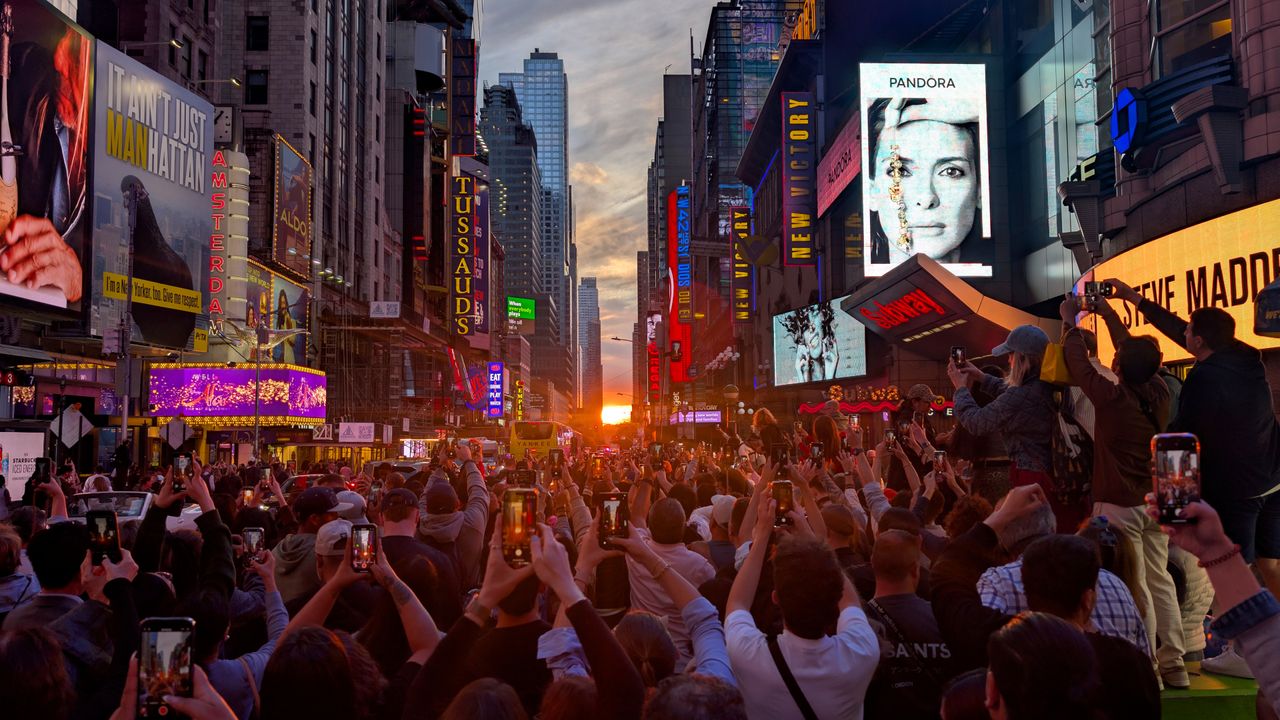
Twice yearly, the setting sun aligns precisely with Manhattan's east-west street grid, creating a striking optical phenomenon known as Manhattanhenge. This January 2026 edition offers New York City residents and visitors a chance to witness the sun sinking directly down one of the city's canyon-like avenues at sunset.
The event occurs because Manhattan's street grid runs at roughly a 29-degree angle from true east-west. This geometric quirk means that on two specific dates near the winter and summer solstices, the sun's position at sunset places it directly above the street corridors. Observers standing on streets like 14th, 23rd, 34th, and 42nd Avenue experience the sun framed perfectly between building facades as it descends toward the horizon.
Neil deGrasse Tyson, director of the Hayden Planetarium at the American Museum of Natural History in New York, coined the term "Manhattanhenge" and has become the public face of explaining this phenomenon. The event draws photographers and astronomy enthusiasts to vantage points across the city seeking the perfect shot of the sun's rays flooding the streets.
The 2026 winter Manhattanhenge occurs this month, with the exact date and time varying slightly year to year based on the precise solar position. For optimal viewing, observers should position themselves on the numbered streets running east-west, away from tall buildings that might obstruct the view. Early arrival helps secure good viewing spots, particularly on major streets where crowds gather.
Clear skies are essential for witnessing Manhattanhenge. Cloud cover or haze can obscure the phenomenon entirely, making weather conditions the primary variable determining visibility. The event lasts only minutes as the sun crosses below the skyline.
Unlike celestial events requiring telescopes or specialized equipment, Manhattanhenge requires only location and timing. The