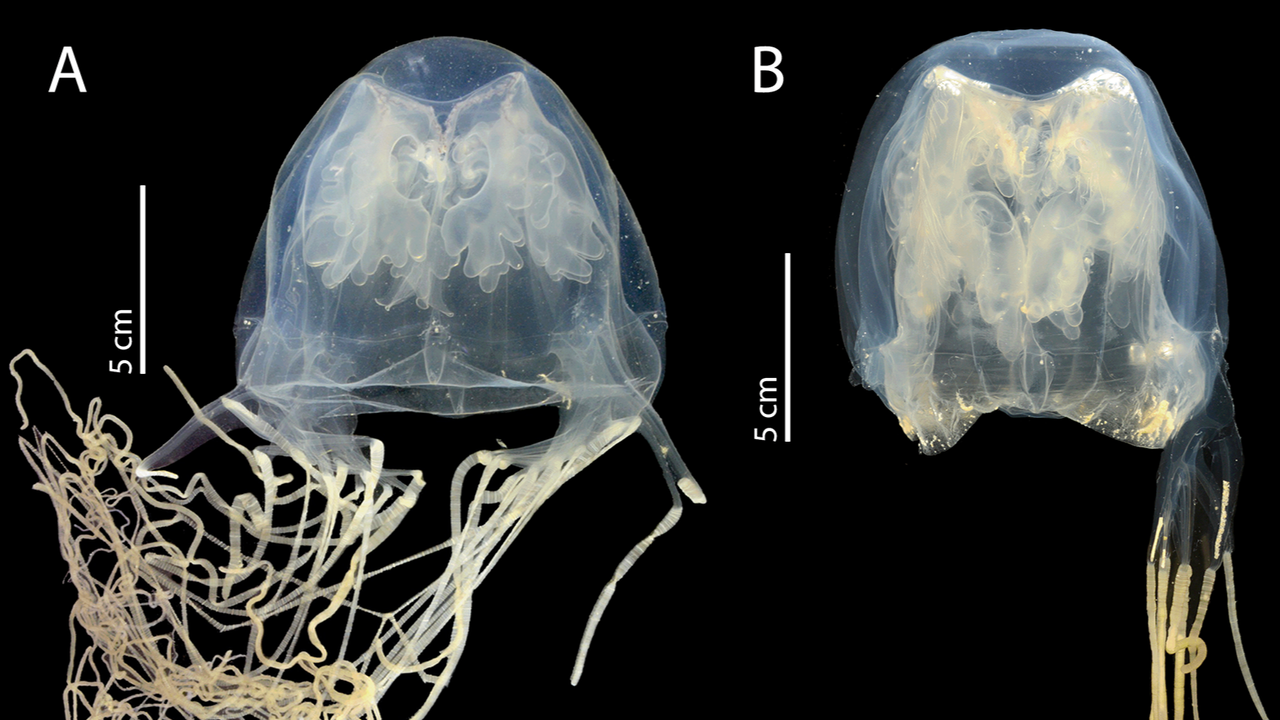
A team of researchers has identified a previously unknown species of box jellyfish collected near Singapore, expanding our understanding of these dangerous marine animals in Southeast Asian waters.
Scientists analyzed the morphology and genetic material of several jellyfish specimens to characterize the new species. The work revealed not only a previously undescribed box jellyfish but also documented an unexpected geographic expansion of the Thai sea wasp, a highly venomous species known for its lethal sting.
Box jellyfish belong to the genus Chironex and related groups, representing some of the ocean's most dangerous creatures. The Thai sea wasp causes severe tissue damage through nematocysts, specialized stinging cells that inject venom. Human encounters can result in serious injury or death. Understanding their distribution and identifying new species in populated waters carries immediate public health implications.
The discovery of a novel species near Singapore, one of the world's busiest ports and most densely populated coastal regions, underscores how much remains unknown about tropical jellyfish diversity. Genetic analysis proved essential to species classification, as jellyfish morphology alone can mask distinct lineages. DNA sequencing allowed researchers to confirm that specimens previously thought to represent known species actually constituted a separate lineage with distinct evolutionary history.
The range expansion of the Thai sea wasp raises questions about factors driving these shifts. Climate change, ocean warming, and altered current patterns may facilitate northward or southwestward movement of tropical species. Ocean connectivity through shipping routes and ballast water transport could also explain unexpected species occurrences in distant waters.
These findings highlight gaps in jellyfish taxonomy and distribution knowledge in high-human-impact regions. Continued monitoring and genetic characterization of jellyfish populations in Southeast Asia remains important for beach safety and marine conservation. Public health officials benefit from precise species identification, since different box jellyfish species vary in venom potency and toxin composition, which affects treatment