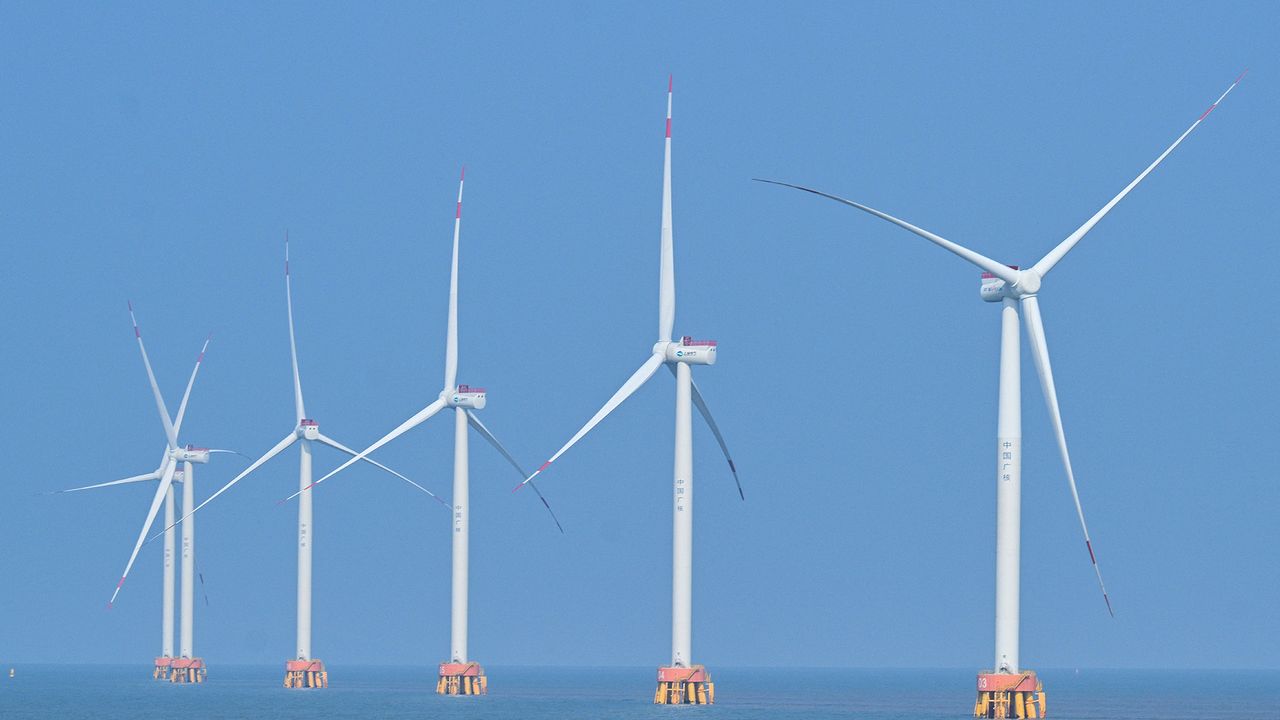
China has installed the world's largest floating wind turbine in deep water, positioning itself at the forefront of offshore renewable energy development. The Three Gorges Pilot, a 16-megawatt turbine, generates enough electricity annually to power 4,200 homes.
The turbine represents a substantial engineering achievement for floating offshore wind technology. Traditional offshore turbines require installation in shallow to moderate depths where fixed foundations work. Floating systems anchor to the seafloor with cables or mooring lines, enabling deployment in deeper waters where wind resources are stronger and more consistent.
This 16-megawatt capacity dwarfs most existing floating turbines currently operational globally. The turbine's scale demonstrates China's manufacturing capabilities and commitment to scaling renewable energy infrastructure. Floating offshore wind farms avoid the environmental and practical constraints of onshore installations, which face land limitations and local opposition.
The Pilot project, developed by China Three Gorges Corporation, tests the turbine's performance in demanding conditions. Deep-water environments present engineering challenges including extreme waves, corrosive saltwater, and the logistics of maintenance at remote locations far from shore. Successfully operating a 16-megawatt system in these conditions validates design principles for larger future installations.
China leads global offshore wind capacity. The country deployed over 16 gigawatts of offshore wind power through 2023 and continues aggressive expansion targets. Floating turbines extend development possibilities beyond fixed-foundation limits, potentially enabling access to deeper waters with superior wind resources.
The technology carries practical limitations. Floating systems cost more to manufacture, install, and maintain than fixed-foundation alternatives. Grid connection in remote deep-water locations requires extensive submarine cable infrastructure. Supply chain development for floating platforms remains underdeveloped compared to traditional offshore wind.
International competitors including Norway, Scotland, and Portugal operate smaller demonstration floating projects. American companies have delayed commercial deployment partly due to regulatory uncertainty and development