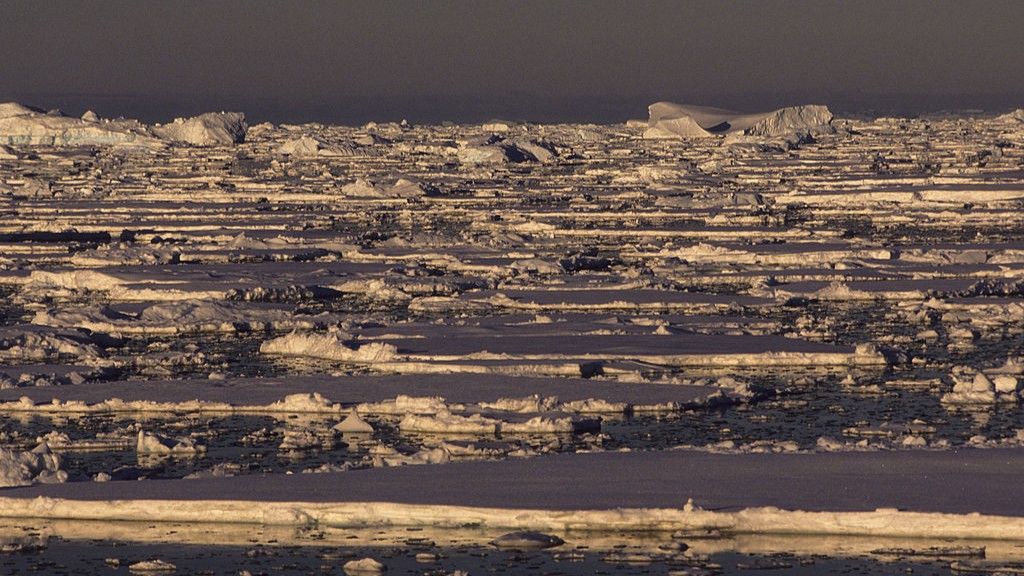
Antarctica's sea ice collapsed dramatically starting in 2015, ending decades of stability and puzzling climate scientists. New research now explains the mysterious disappearance that culminated in record lows by 2023.
The Antarctic sea ice had remained relatively constant for roughly 40 years, defying global warming trends that melted Arctic ice. This stability made the abrupt 2015 decline one of climate science's most perplexing phenomena. Researchers struggled to understand why the Southern Ocean behaved so differently from predictions and from the Arctic's clear warming trajectory.
Scientists have now identified the mechanisms driving the collapse. A combination of factors worked together. Ocean temperatures in the Southern Ocean increased, reducing ice formation and accelerating melting. Wind patterns shifted, disrupting the circulation systems that normally protect Antarctic sea ice. Changes in salinity and ocean stratification weakened the conditions favoring ice growth.
The research also points to natural climate variability playing a role alongside human-caused warming. The interaction between anthropogenic climate change and natural ocean oscillations created conditions hostile to ice persistence. This finding matters because it demonstrates that climate impacts are not uniform or linear. Polar regions respond to global warming through complex regional mechanisms that scientists continue to map.
The Antarctic collapse differs fundamentally from Arctic trends. While Arctic sea ice declined steadily as air temperatures warmed, Antarctic ice had persisted longer due to ocean circulation patterns and the continent's isolation. The 2015 transition represents a shift toward a new state where those protective factors no longer function as they did.
Understanding this process has practical implications for climate models and polar forecasting. Researchers can now better represent Antarctic ice dynamics in simulations, improving predictions for coming decades. The work also underscores how regional climate surprises can emerge from global warming, even in areas that appeared stable.