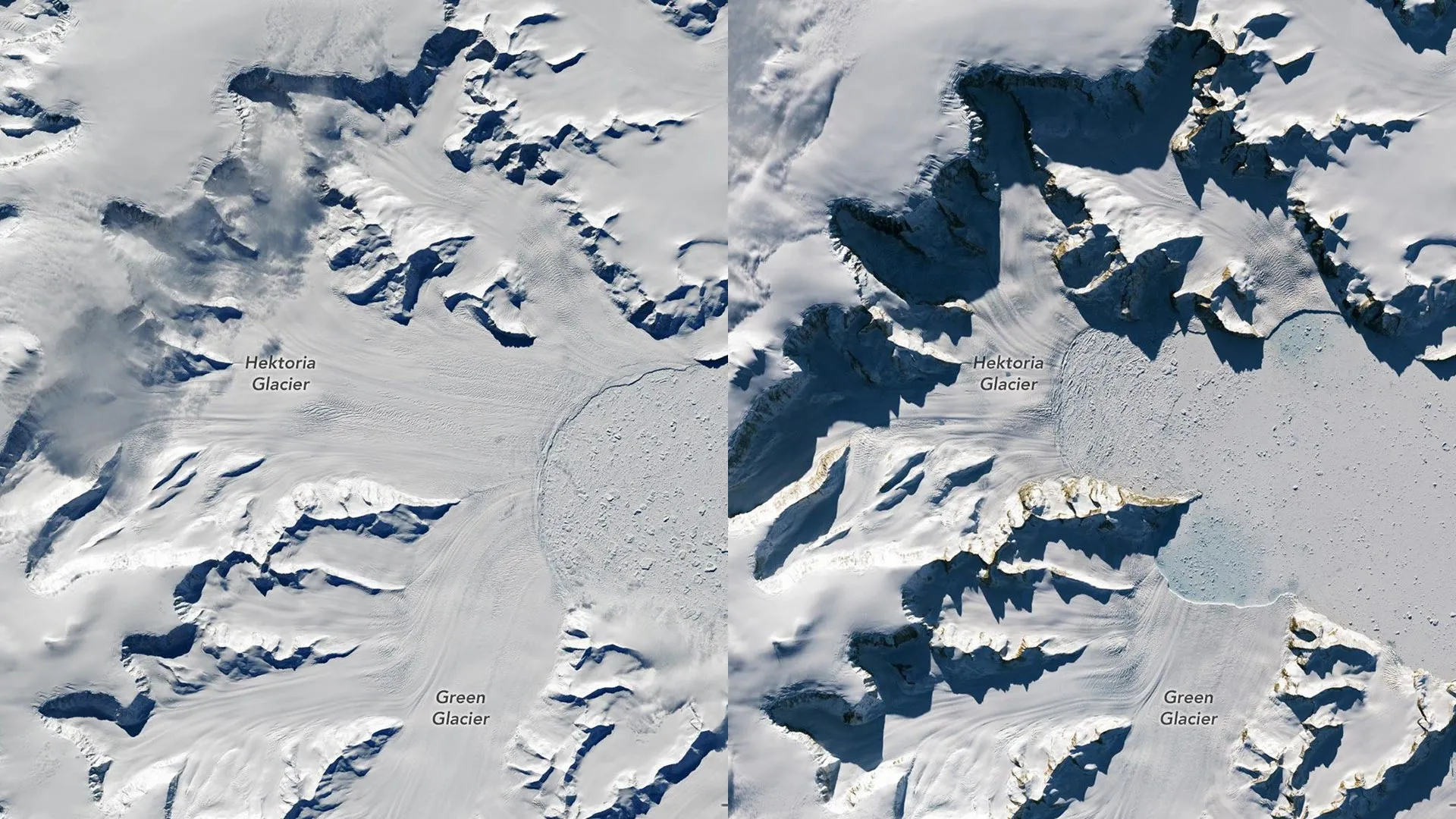
Antarctica's Hektoria Glacier has undergone a dramatic collapse, retreating 15 miles in just 15 months in what researchers describe as a record-breaking pace for grounded ice loss in the modern era. The rapid disintegration reveals how quickly Antarctic glaciers can destabilize when conditions shift.
Scientists attribute the collapse to warming temperatures and ocean-driven instability that fundamentally altered the glacier's dynamics. The glacier, which appeared relatively stable in recent years, unraveled with striking speed once these stressors intensified. The 15-mile retreat in such a compressed timeframe exceeds documented records for comparable grounded ice systems, underscoring the vulnerability of Antarctic glaciers to climate forcing.
Grounded ice, which sits on bedrock rather than floating on water, typically retreats more slowly than floating ice shelves. Hektoria's accelerated collapse therefore represents a departure from historical patterns and signals a threshold response to environmental change. Ocean warming directly affects grounded glaciers by eroding their base and destabilizing the ice shelf that extends from the glacier's terminus. Once this anchoring ice weakens sufficiently, the glacier can accelerate seaward at rates far exceeding previous speeds.
The Hektoria system sits in the Bellingshausen Sea region, an area experiencing pronounced atmospheric and oceanic warming relative to other Antarctic sectors. Rising temperatures drive surface melt and weaken ice-rock contacts that normally hold glaciers in place. Simultaneously, warmer ocean water penetrates beneath ice shelves, melting them from below and removing the buttressing force that slows glacier movement.
The record retreat carries implications for sea level rise. Antarctic glaciers contribute substantially to global ocean level change, and accelerated collapse of multiple glacier systems could dramatically amplify this contribution. Hektoria's rapid behavior serves as an early warning that other Antarctic glaciers could similarly transition from apparent