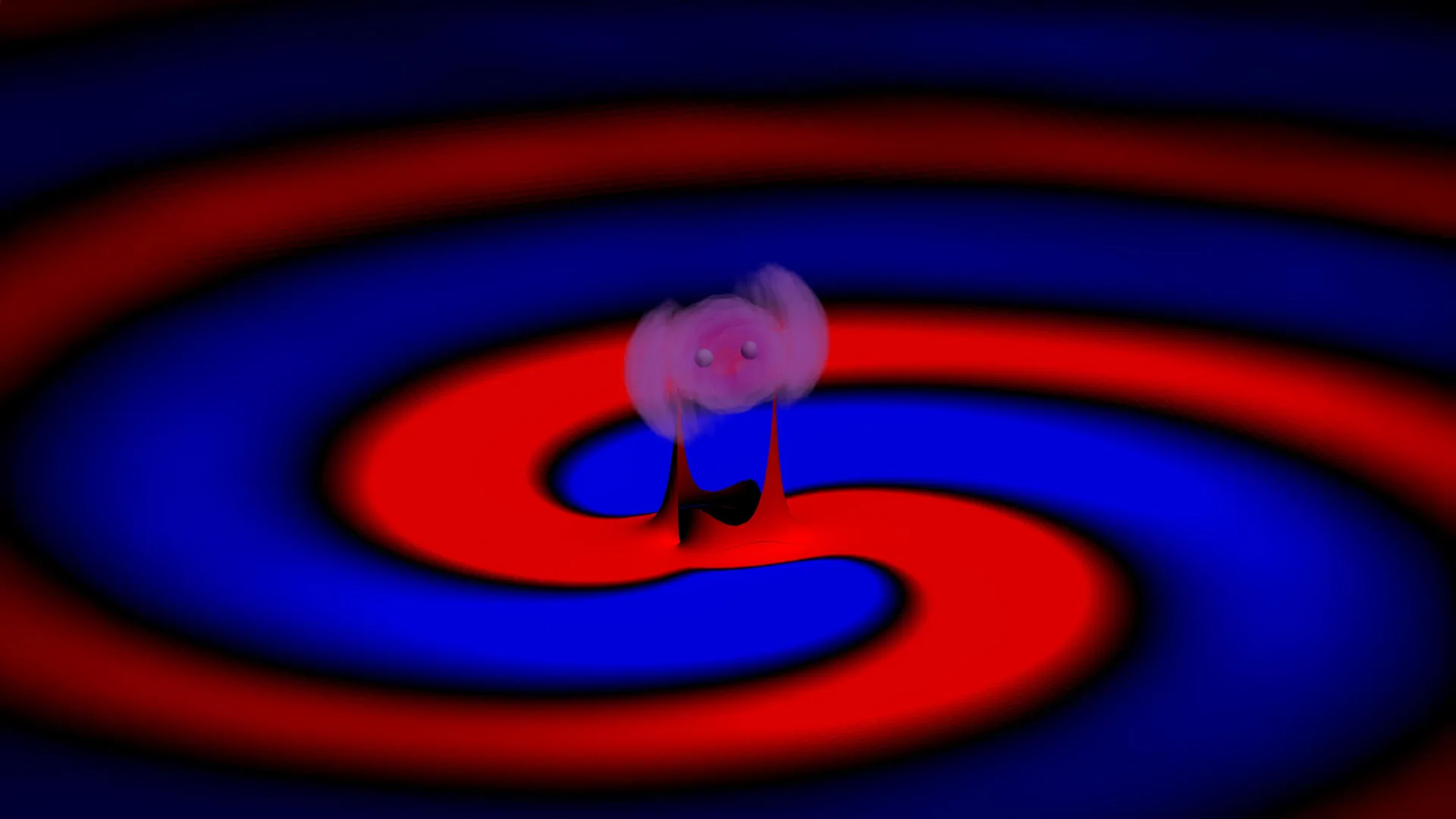
Physicists may have detected the first observable signature of dark matter using gravitational wave data from colliding black holes. Researchers developed a novel model showing how dark matter could leave subtle distortions in gravitational waves generated during black hole mergers. When applied to actual data collected by LIGO (Laser Interferometer Gravitational-Wave Observatory), the analysis flagged one signal as potentially bearing dark matter's fingerprint.
Dark matter comprises roughly 85 percent of the universe's matter but remains invisible and poorly understood. Scientists have long searched for direct detection methods. This approach offers a fresh avenue by using gravitational waves as a messenger system.
The model works by predicting how dark matter particles or structures distributed throughout space could slightly warp the propagation of gravitational waves as they travel billions of light-years to Earth. These distortions would appear as subtle anomalies in the wave patterns recorded by LIGO's twin detectors in Washington and Louisiana.
The team tested their framework against archival LIGO data and identified one merger event showing characteristics consistent with dark matter interference. However, researchers stressed the result requires validation. A single candidate signal lacks the statistical power to constitute definitive discovery. Additional detections from future observations with LIGO and upcoming gravitational wave observatories like VIRGO and KAGRA would be necessary to confirm whether dark matter truly leaves such signatures.
The work represents an innovative shift in dark matter investigation. Rather than relying solely on underground particle detectors or galaxy-scale observations, researchers now leverage the cosmos itself as a detector. Gravitational waves from distant cataclysmic events provide an unexploited testing ground for dark matter theories.
The researchers did not specify their names or affiliated institutions in the available excerpt, but published their findings in peer-reviewed form. Future LIGO observations, enhanced by improved sensitivity and data analysis techniques, should clarify whether this initial signal