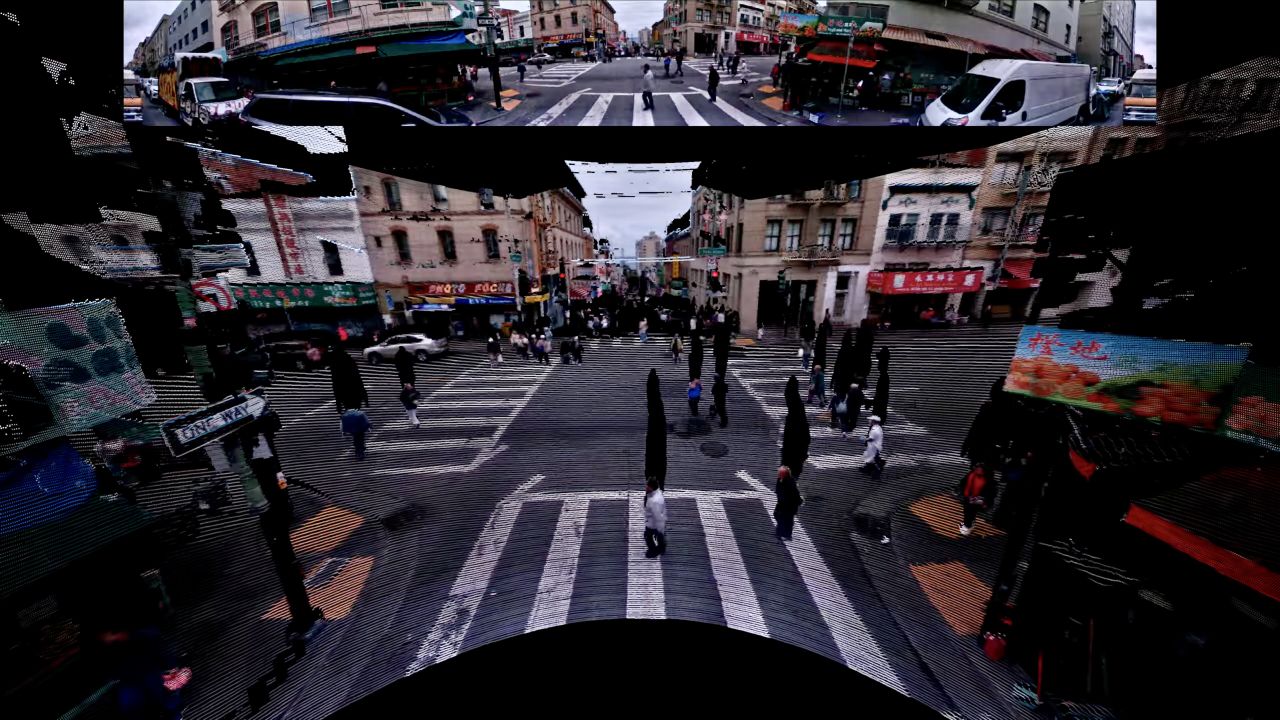
Ouster has unveiled the Rev8, a lidar sensor that simultaneously captures color imagery and three-dimensional mapping data, marking the first "native" color lidar system commercially available. Unlike conventional lidar sensors that generate monochrome point clouds and require separate camera integration for color data, the Rev8 performs both functions within a single device.
The technology works by detecting reflected light across the visible spectrum rather than relying on post-processing or external imaging systems. This integrated approach eliminates synchronization delays between color and depth information, producing spatially aligned imagery and 3D geometry in real time.
The system addresses a persistent limitation in autonomous vehicle and robotics development. Self-driving cars and robots have traditionally struggled to achieve dense, colored 3D maps because standard lidar provides grayscale depth data. Engineers compensated by bolting cameras onto vehicles, then aligning the data through complex software. This approach introduced latency and alignment errors that could compromise navigation and obstacle detection.
Ouster's Rev8 sensors deliver full-color point clouds directly from hardware, potentially improving scene understanding for autonomous systems. Robots could identify colored objects more quickly. Self-driving vehicles could better distinguish between road markings, vegetation, and obstacles. The colored depth information also simplifies downstream processing, reducing computational overhead.
The company has not detailed specific technical specifications regarding the Rev8's range, resolution, or color accuracy in available reports. Industry analysts suggest the innovation could accelerate adoption of lidar in consumer robotics and delivery vehicles, where cost and integration complexity currently limit deployment.
Ouster competes with established lidar manufacturers including Velodyne, Luminar, and emerging startups. The Rev8 launch represents a shift toward more integrated sensor architectures that reduce the hardware footprint of autonomous systems. Whether this approach becomes the industry standard depends on performance validation and pricing compared to traditional camera-plus-lidar stacks.