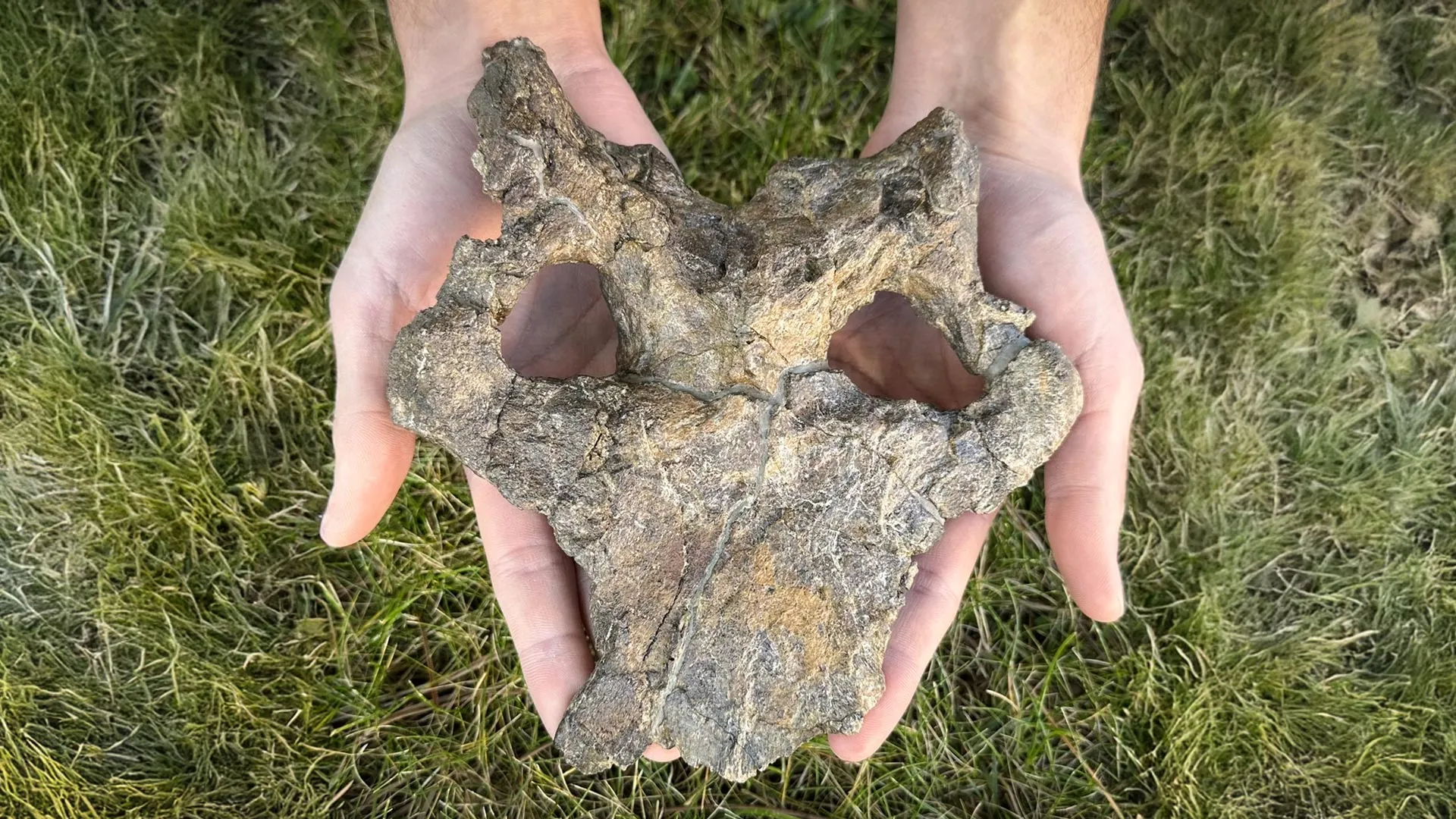
Paleontologists in Spain have recovered the best-preserved stegosaur skull ever discovered in Europe, offering new insights into how these plated dinosaurs evolved. The fossil belongs to Dacentrurus armatus, a stegosaur species that lived approximately 150 million years ago during the Late Jurassic period.
The specimen's exceptional preservation matters because stegosaur skulls rarely survive fossilization intact. Their delicate bone structure makes them highly susceptible to damage and destruction over geological timescales. Most stegosaur remains consist only of postcranial bones, plates, and spikes, leaving their cranial anatomy poorly understood. This nearly complete skull from Spain fills a critical gap in the paleontological record.
The discovery allows researchers to examine anatomical features previously inaccessible in European stegosaur specimens. These details reveal previously unknown aspects of stegosaur evolution, particularly regarding skull morphology and how it changed across different species and time periods. Such information helps scientists reconstruct the evolutionary relationships within Stegosauria and understand how environmental pressures shaped their development.
Dacentrurus armatus represents one of the few stegosaurs known from the European fossil record. Most well-studied stegosaurs come from North America, particularly the Morrison Formation, or from Asia. This Spanish find provides a crucial European perspective on stegosaur diversity and adaptation during the Jurassic.
The research demonstrates that exceptional fossils still emerge from well-explored regions, offering fresh perspectives on dinosaur biology. Cranial remains allow paleontologists to study brain morphology, sensory capabilities, feeding mechanics, and jaw structure. All these factors influence how scientists understand stegosaur behavior and ecology.
However, this single specimen, while extraordinary, cannot fully resolve all questions about stegosaur evolution. Researchers still lack sufficient skull material from other species to make