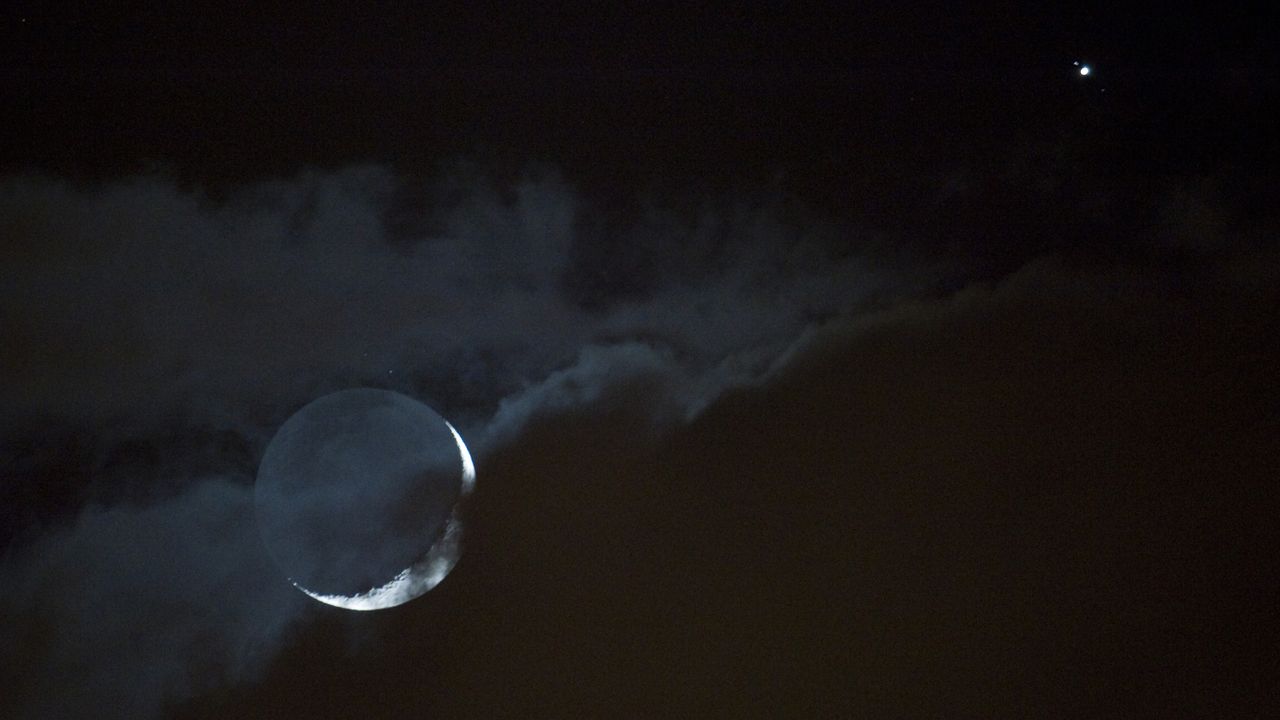
Jupiter and the waxing moon converge in the evening sky on May 20, creating a striking astronomical event visible to the naked eye after sunset. The two brightest objects in the night sky will appear in close proximity as the moon continues its monthly orbit, positioning itself near the gas giant.
This celestial pairing occurs as the moon waxes, meaning it grows in illumination between new moon and full moon phases. Jupiter, with its thick cloud layers and reflected sunlight, shines with its characteristic bright, steady glow. The contrast between Jupiter's steady luminosity and the moon's variable brightness makes such conjunctions visually engaging for casual observers and photographers alike.
No special equipment is required to view the event. Observers simply need clear skies and an unobstructed view of the western or southwestern horizon after sunset, depending on their geographic location. The exact timing and position will vary across different latitudes and longitudes, but the conjunction remains visible across most populated regions.
Lunar-planetary conjunctions like this occur regularly as the moon completes its monthly 29.5-day cycle around Earth. Jupiter, moving more slowly against the backdrop of stars, intersects with the moon's path multiple times per year. These events serve as useful naked-eye reference points for amateur astronomers tracking planetary positions and moon phases.
The conjunction on May 20 offers an opportunity for people to locate Jupiter in the evening sky, which helps identify the planet's position for future observation. Jupiter remains visible for several hours after sunset during this period of its orbital cycle.