Researchers have developed a novel mathematical solution to a decades-old challenge in space mission planning: determining the most efficient path for spacecraft to visit multiple asteroids.
The problem belongs to a class of computational challenges known as the Traveling Salesperson Problem, where a vehicle must visit multiple locations while minimizing distance or fuel consumption. For asteroid missions, this becomes exponentially harder because spacecraft must account for orbital mechanics, gravitational assists, and the three-dimensional trajectories required to intercept moving celestial bodies.
Traditional optimization methods struggle with this scale of complexity. The number of possible routes grows factorially with each additional asteroid, making brute-force computation impractical for realistic missions visiting dozens of targets.
The new approach represents a breakthrough in trajectory optimization, though Space.com's reporting does not specify which research institution or journal published the findings. The method likely combines elements from operations research, orbital mechanics, and advanced algorithms to prune the solution space efficiently.
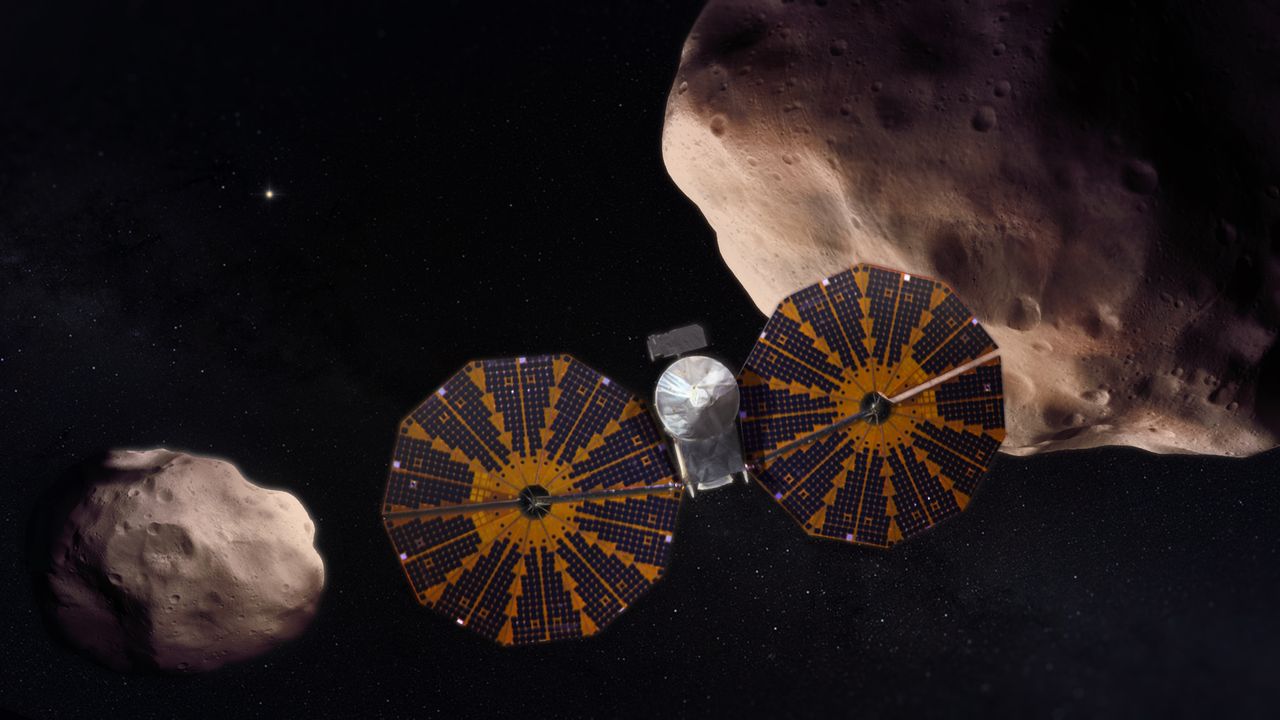
This advance holds practical implications for future space exploration. Missions like NASA's Lucy spacecraft, which visited multiple asteroids, required months of computational planning by teams of engineers. A generalized solution could accelerate planning for upcoming missions to the asteroid belt and reduce mission design costs.
The challenge extends beyond mere academic interest. As space agencies and private companies pursue asteroid mining and sample-return missions, the ability to efficiently chain multiple asteroid visits becomes economically critical. Fuel savings of even five percent translate to significant cost reductions or extended mission capabilities.
However, the approach likely has limitations. Real-world constraints such as instrument calibration windows, communication windows with Earth, and thermal management requirements add complexity beyond the mathematical model. The solution probably works best when applied to the initial trajectory design phase, with engineers then refining paths based on mission-specific operational constraints.
Future implementations could incorporate machine learning to identify promising trajectory families before applying rigorous optimization, further accelerating mission planning.
CATEGORY