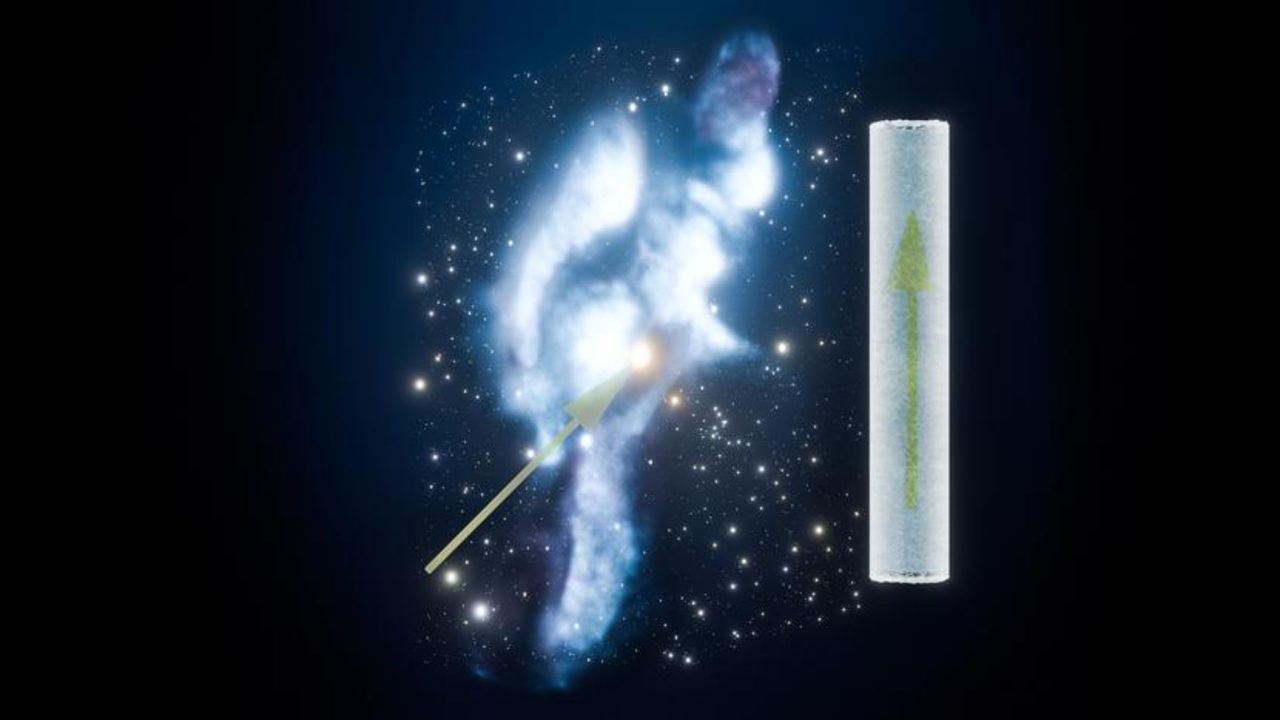
Researchers have recovered extraterrestrial dust particles preserved in Antarctic ice, offering a rare window into the composition and history of our solar system. The stardust trapped in ice cores represents material that traveled from beyond our planetary neighborhood and successfully penetrated the Sun's protective heliosphere before settling on Earth.
The discovery matters because interstellar dust carries chemical signatures from distant star systems. By analyzing these particles, scientists can determine what elements exist in other parts of the galaxy and understand how material moves through space. Antarctic ice provides an ideal preservation medium. The frozen environment protects these microscopic grains from contamination and degradation that would occur elsewhere on Earth's surface.
The solar system maintains a protective bubble called the heliosphere, created by the solar wind. Most interstellar dust remains blocked by this shield. The particles found in Antarctic ice represent material that somehow breached this barrier, making them exceptionally valuable for study. Understanding how dust penetrates this shield reveals details about solar wind dynamics and the boundaries of our cosmic neighborhood.
This research connects to broader questions about how planets acquire their composition and how material circulates through galaxies. Stardust falling to Earth contributes to planetary geology, though in minuscule amounts. Examining these particles helps scientists reconstruct the solar system's history and its relationship to the broader galactic environment.
The Antarctic setting offers practical advantages beyond preservation. Ice cores provide chronological records, allowing researchers to determine when dust arrived. This temporal data illuminates whether interstellar dust influx varies over time, potentially linked to the Sun's motion through different regions of the galaxy or changes in solar wind intensity.
Future analysis of these Antarctic dust samples will employ advanced microscopy and spectroscopy techniques to identify elemental composition and crystal structure. Such work builds on decades of studying micrometeorites collected from ocean sediments and atmospheric samples, but ice-preserved particles offer cleaner, better-dated material. The