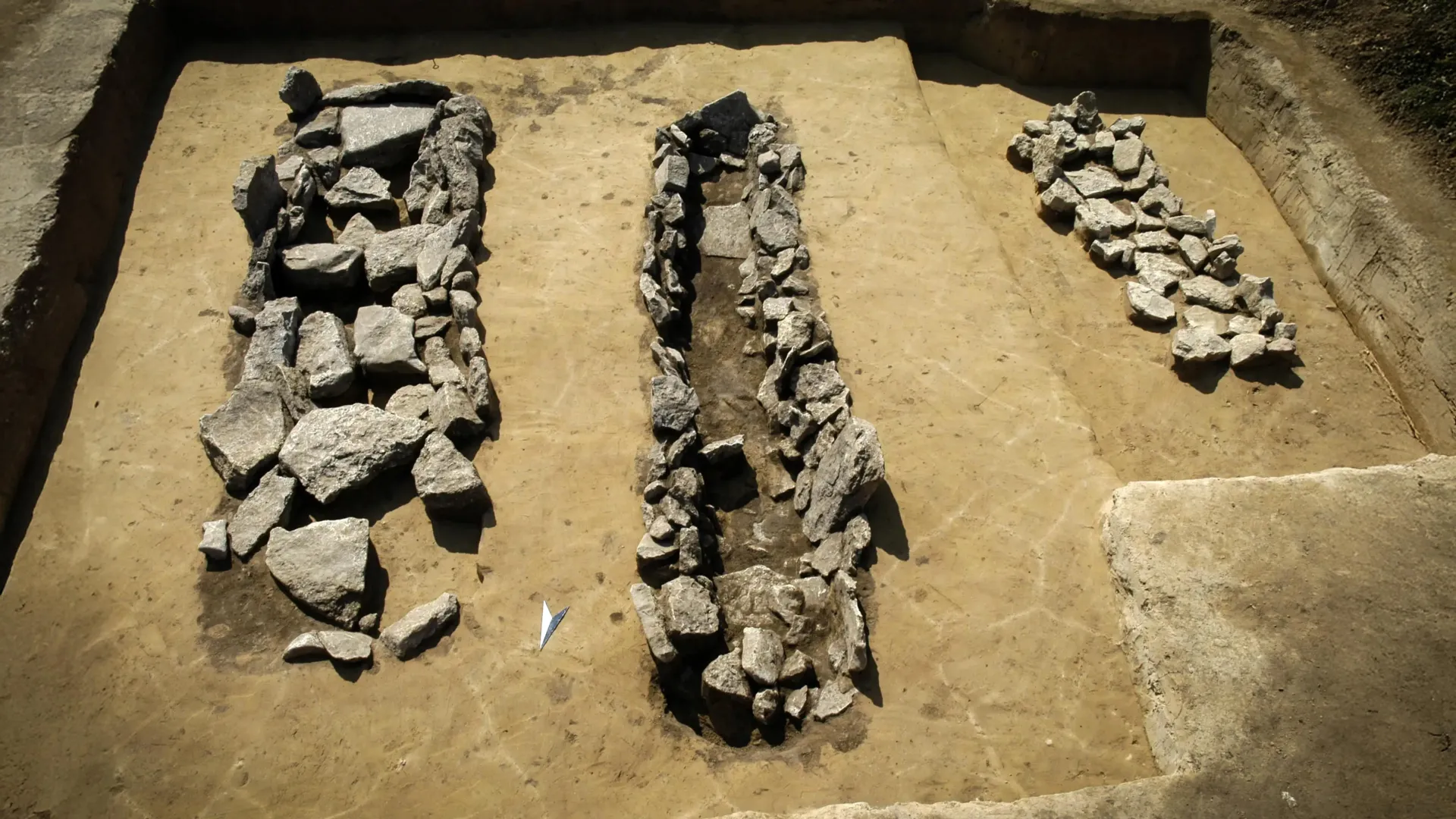
Archaeologists have discovered a window into Bronze Age Central Europe through unusually preserved burials that escaped the region's dominant cremation practices. The findings reveal communities navigating cultural change while maintaining strong local identities between roughly 3,000 and 1,200 years ago.
The graves, which contained inhumed remains rather than cremated bones, offer rare insight into diet, social structure, and ritual practices during this transformative period. Analysis of skeletal remains and grave goods shows these Bronze Age populations experimented with new food sources, likely adopting agricultural innovations and trade goods from neighboring regions. Isotope studies of bones and teeth reveal dietary patterns distinct from earlier Bronze Age groups, suggesting deliberate shifts in subsistence strategies.
Burial practices themselves tell a story of cultural experimentation. While cremation dominated much of Bronze Age Europe, these inhumed individuals received distinct treatment, possibly indicating family choice, ritual specialization, or regional variation. The grave goods accompanying these burials, including pottery, tools, and metal ornaments, reflect both local crafting traditions and contact with distant trading networks. Yet the researchers found limited evidence that these communities underwent wholesale population replacement or migration.
The work demonstrates that Bronze Age Central Europe was not monolithic. Rather than rapid cultural upheaval driven by invading populations, the evidence suggests gradual adoption of new practices by established communities. People maintained roots in specific territories while selectively incorporating innovations from neighboring groups. This pattern challenges older migration-focused models that emphasized sudden population turnovers as the primary driver of cultural change.
The study underscores the value of inhumation burials for understanding past lifeways. Cremated remains, while abundant in Bronze Age sites, preserve far fewer details about individuals and their material surroundings. These exceptional graves, protected in archaeological contexts that prevented disturbance, provide unusually complete snapshots of Bronze Age society.
The research represents ongoing efforts to move