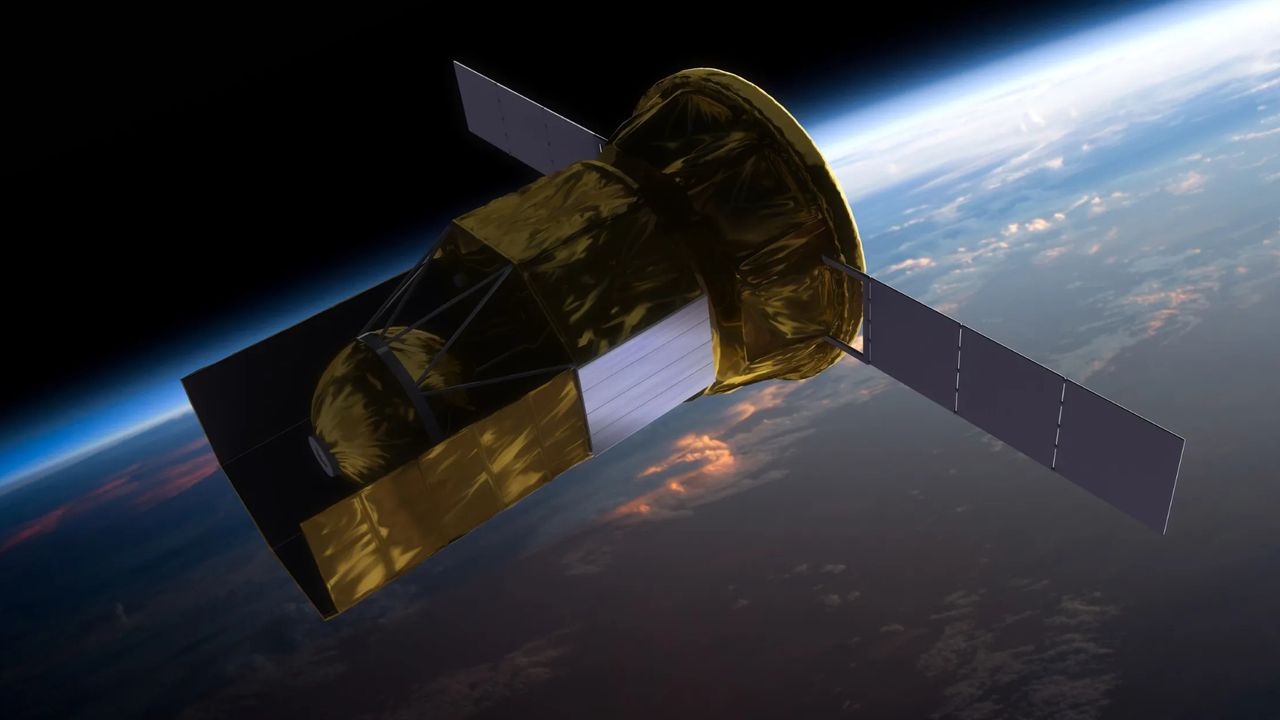
NASA will launch the Liquid Oxygen Flight demonstration (LOXSAT) satellite to test orbital refueling technology essential for lunar and Martian exploration. The mission validates in-space transfer and storage of cryogenic propellants, a capability that underpins the agency's Artemis program to return humans to the moon.
Current spacecraft carry all their fuel from Earth, limiting range and payload capacity. Refueling in orbit—functioning as a "gas station" in space—allows vehicles to launch lighter and refuel once positioned in space. This dramatically extends mission range and reduces the total mass needed to leave Earth's surface.
LOXSAT focuses specifically on liquid oxygen, one of the most critical propellants for deep space missions. Storing cryogenic liquids in the vacuum of space presents engineering challenges. Extreme cold requires insulation to prevent boil-off, and the microgravity environment affects how liquids behave during transfer. The satellite will demonstrate transfer mechanisms, storage techniques, and monitoring systems that keep propellants viable for extended periods.
Success with LOXSAT directly supports Artemis architecture. Lunar Gateway, the planned space station orbiting the moon, will require in-space refueling to sustain operations. Astronauts heading to the lunar surface will depart from Gateway, and missions to Mars will depend entirely on orbital refueling stations as waypoints.
The technology also serves broader space industry goals. Commercial lunar landers and private space stations increasingly rely on refueling capabilities. Blue Origin's Blue Moon program and SpaceX's Starship architecture both incorporate orbital propellant transfer into their designs.
LOXSAT remains one component of NASA's broader in-space servicing strategy. The agency simultaneously develops autonomous refueling systems, pressure regulation equipment, and connectors designed for zero-gravity operations. Each demonstration builds confidence in reliability before human