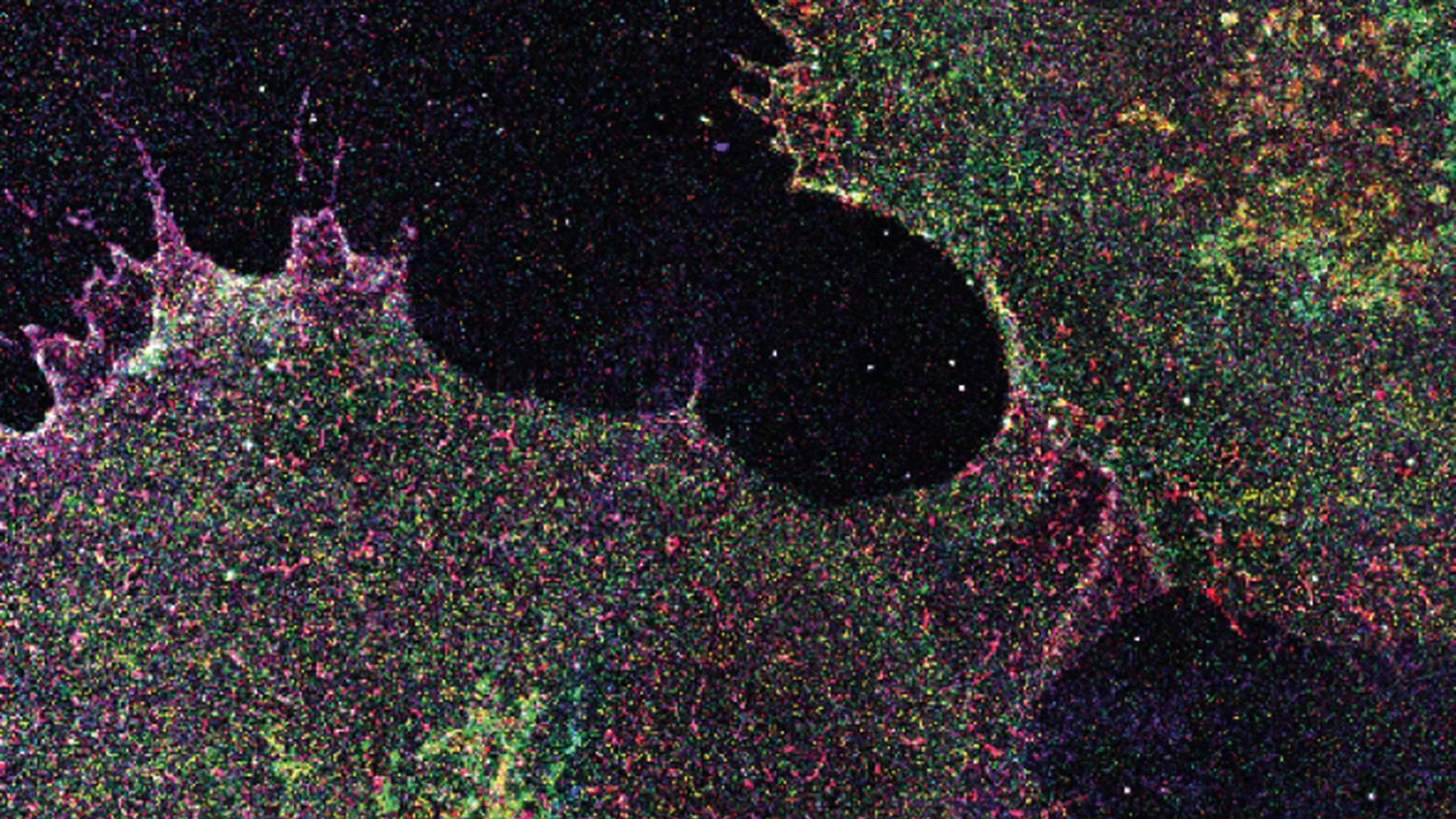
Researchers at the Max Planck Institute have discovered distinct sugar patterns on cell surfaces that vary based on cellular activity and disease state. Using Glycan Atlasing, an advanced imaging technique, scientists mapped glycan structures—tiny sugar molecules that coat cells—and found these patterns shift when immune cells activate and differ markedly between cancerous and healthy tissues.
Glycans are carbohydrate chains attached to proteins and lipids on cell surfaces. They play roles in cell recognition, immune response, and cell-to-cell communication. The Max Planck team's work reveals these sugar signatures are dynamic, not static. When immune cells become activated, their glycan patterns reorganize. Crucially, cancer cells display distinct glycan configurations that differ from normal tissue, suggesting these patterns could serve as early biomarkers for malignancy.
The Glycan Atlasing technique provides high-resolution mapping of these sugar structures, enabling researchers to visualize and catalog glycan patterns across different cell types and states. This capability opens diagnostic possibilities. If cancer cells consistently display recognizable glycan signatures, blood tests or tissue biopsies could detect these patterns before tumors become clinically apparent.
The research addresses a fundamental gap in cell biology. While scientists have long known glycans exist on cell surfaces, comprehensively mapping how these patterns correlate with disease has proven difficult. The Max Planck team's approach generates detailed spatial information about glycan distribution and composition.
Current limitations include the need to validate findings across larger patient populations and different cancer types. The team must also determine whether glycan patterns are cancer-specific or reflect broader cellular stress. Translation from laboratory discovery to clinical diagnostic requires demonstrating that glycan signatures provide advantages over existing cancer detection methods in sensitivity, specificity, and cost.
The implications extend beyond cancer. Understanding how glycan patterns change during immune activation could inform vaccine and immunotherapy development. Researchers could engineer therapies