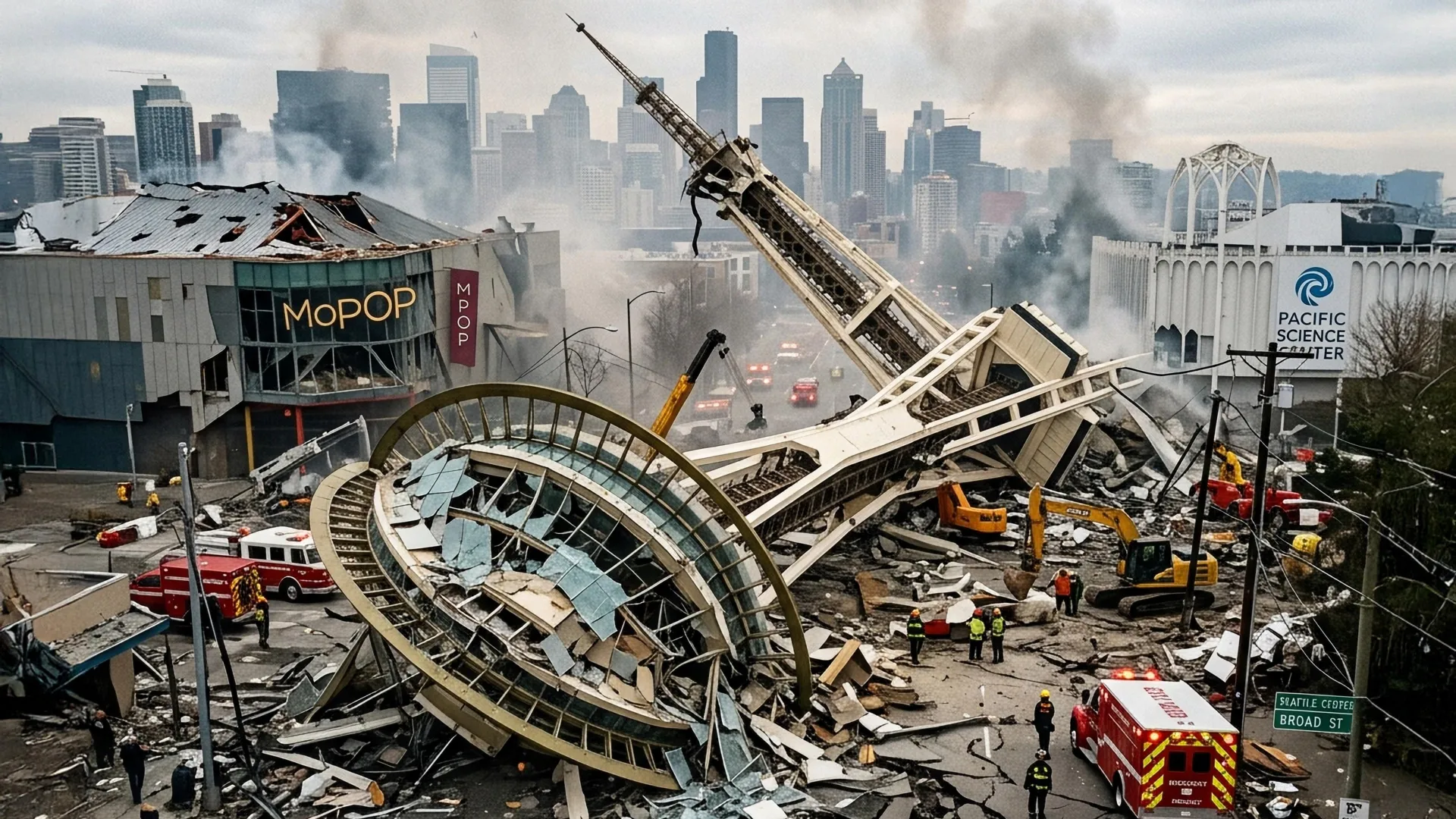
Scientists have discovered that minor earthquake faults running underneath Seattle pose a greater threat than previously thought. Researchers studying the Seattle Fault Zone found that smaller secondary faults rupture approximately every 350 years, far more frequently than the primary fault that has dominated seismic risk assessments for decades.
The finding reshapes understanding of Seattle's earthquake hazards. While the main Seattle Fault produces catastrophic events roughly every 1,400 years, the secondary faults generate damaging quakes at intervals three to four times shorter. This means residents face more frequent seismic activity than conventional models suggested.
The research emerged from detailed geological surveys of fault structures beneath the city and surrounding areas. Scientists examined sediment layers and rock formations to reconstruct past rupture events, using that history to estimate future recurrence intervals. The secondary faults, previously considered minor players in the region's seismic activity, showed clear evidence of regular breaking and displacement.
Seattle sits atop complex geological terrain where three tectonic structures interact: the Seattle Fault, the Tacoma Fault, and subduction zone boundaries. This convergent zone makes the area one of the most seismically active in the contiguous United States despite lying far from a major plate boundary. A 1700 earthquake likely originating from the Seattle Fault caused tsunami damage across the Pacific.
The discovery has implications for building codes and earthquake preparedness planning. Engineers and city planners may need to account for higher frequency seismic events when designing infrastructure. Current seismic hazard maps rely partly on fault recurrence intervals, so more frequent ruptures on secondary faults could increase estimated ground shaking risk across the region.
Researchers emphasize that understanding fault rupture timing remains uncertain. Paleoseismic records span only thousands of years, limiting confidence in long-term averages. Additional work mapping secondary faults and documenting their rupture history could ref