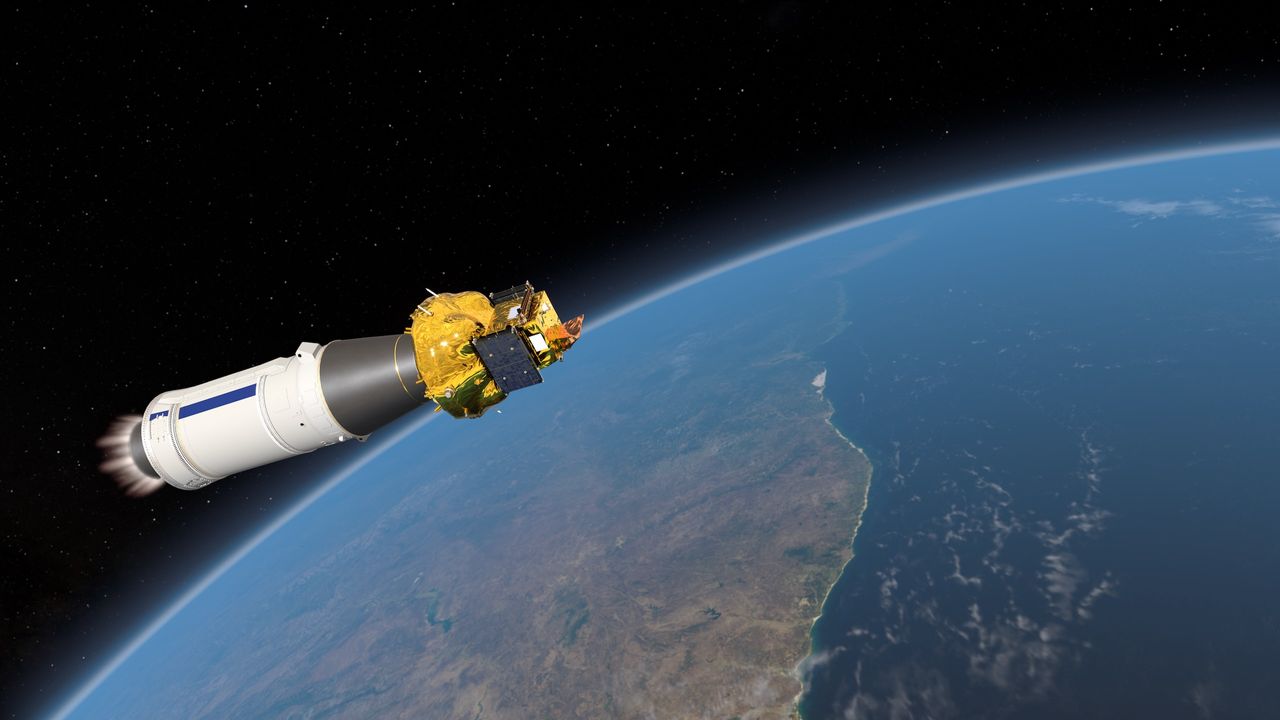
The European Space Agency and China's National Space Administration will launch the SMILE satellite tonight aboard a Vega C rocket from French Guiana. The mission represents a collaboration between Europe and China to study space weather phenomena affecting Earth's magnetosphere.
SMILE stands for Solar wind Magnetosphere Ionosphere Link Explorer. The satellite will observe how solar wind interactions with Earth's magnetic field generate auroras and geomagnetic storms. These events disrupt power grids, damage satellites, and interfere with communications systems.
The Vega C rocket will depart from the Guiana Space Centre in Kourou, French Guiana. This medium-lift launcher belongs to the ESA and has completed several successful missions since its debut in 2020. Tonight's launch marks another step in the Vega C's operational schedule.
SMILE carries advanced imaging instruments developed jointly by European and Chinese institutions. The spacecraft will occupy a unique orbit that provides an optimal vantage point for monitoring Earth's magnetosphere. This position allows continuous observation of the region where solar wind compresses and deforms the planet's magnetic shield.
The mission addresses a gap in current space weather monitoring. While satellites exist that measure solar wind conditions upstream of Earth, few provide direct imagery of magnetosphere dynamics. SMILE's observations will help scientists understand the physical processes that trigger magnetic storms, ultimately improving forecasting accuracy.
Data from SMILE will benefit both European and Asian space agencies responsible for protecting satellites and infrastructure. Better predictions enable operators to adjust spacecraft operations and prepare ground systems before severe events arrive.
Space.com will provide live coverage of the launch. The broadcast begins ahead of the scheduled liftoff, offering viewers real-time updates from mission control and commentary from spaceflight experts. Weather permitting, the Vega C will carry SMILE into the correct orbital altitude for its two-year science mission.