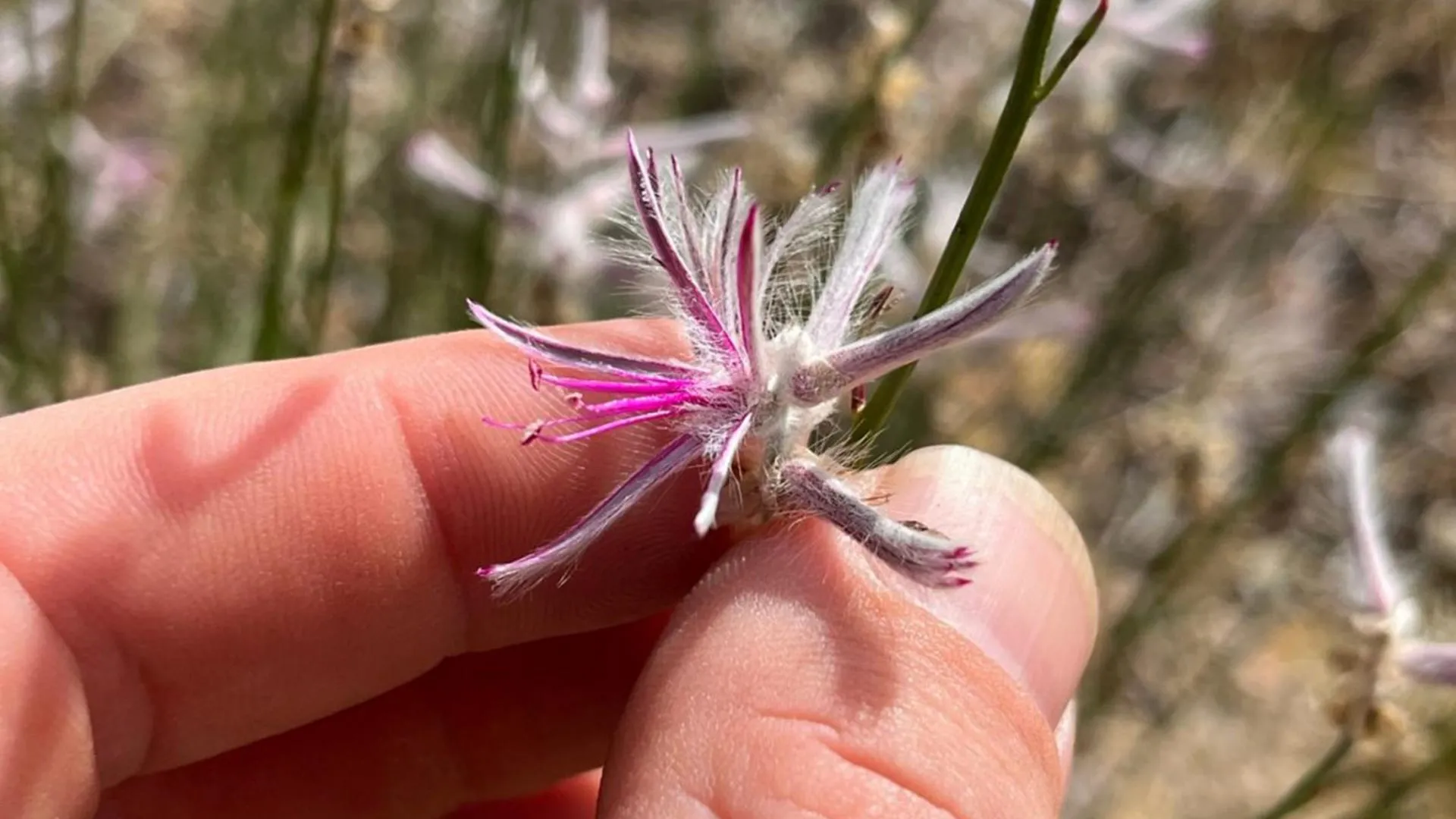
A smartphone photograph taken in the Australian outback has led to the rediscovery of Ptilotus senarius, a rare plant presumed extinct for nearly 60 years. Bird bander Aaron Bean captured images of the unusual shrub and uploaded them to iNaturalist, a crowdsourced biodiversity platform. Botanist Anthony Bean, after reviewing the submission, identified the specimen as the missing species last documented in 1967.
The rediscovery demonstrates how citizen science platforms democratize botanical research. iNaturalist aggregates observations from nonprofessionals worldwide, creating datasets that trained scientists monitor for significant finds. Bean's swift identification highlights the platform's capacity to connect field observations with expert verification systems. The database now contains millions of species observations, enabling researchers to spot patterns and locate organisms previously thought lost.
Ptilotus senarius belongs to the amaranth family and grows in arid Australian regions. Its 57-year absence from scientific records likely reflected the species' rarity, limited habitat, and the practical challenges of surveying remote terrain. The reappearance suggests the plant survived in obscure locations undetected by conventional botanical surveys.
This rediscovery joins a growing list of species recovered through digital platforms and increased public engagement with nature documentation. Similar cases have emerged globally, from insects to plants, often involving amateur naturalists who simply photograph their surroundings. The trend reveals gaps in historical biodiversity assessments and highlights how technology bridges those gaps.
The find carries practical implications for conservation efforts. Confirming Ptilotus senarius still exists allows botanists to locate additional populations, study its ecology, and assess habitat threats. Understanding why the plant vanished from scientific view and what conditions sustained it informs land management decisions across Australia's outback regions.
Anthony Bean's expertise proved essential for validating Aaron Bean's observation. Expert identification remains critical because misident