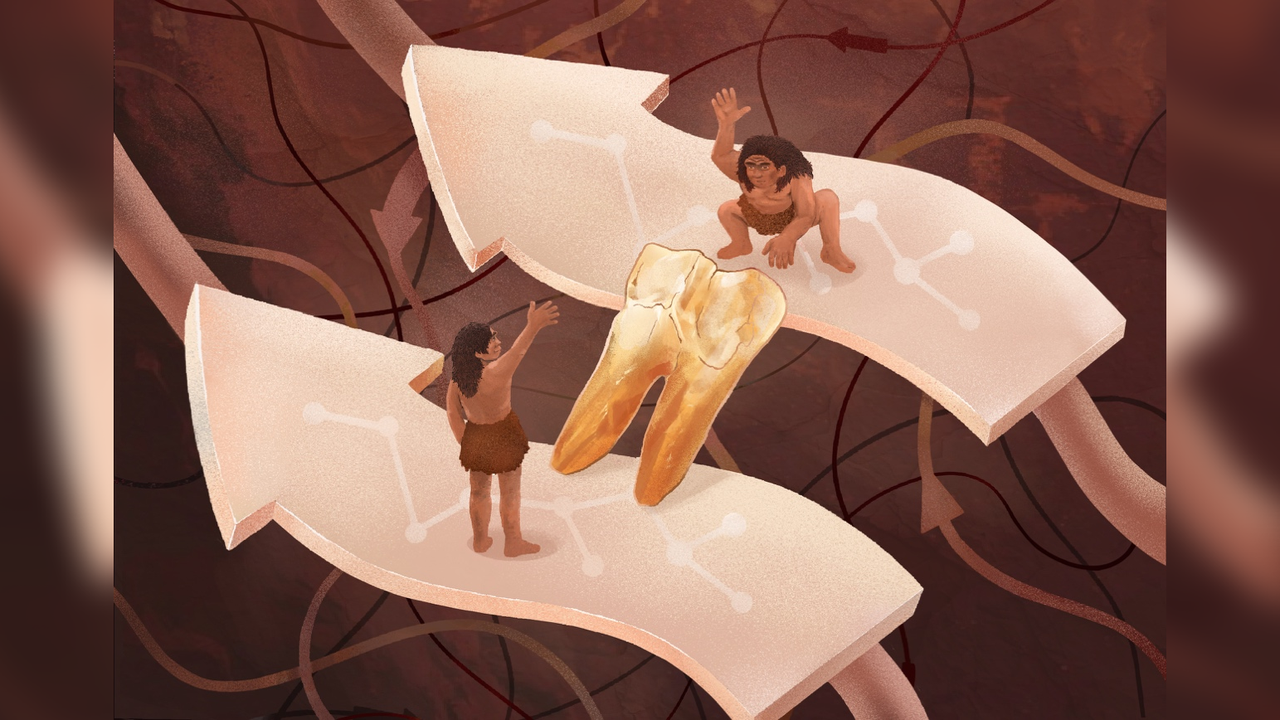
Researchers have sequenced genetic material from Homo erectus for the first time, uncovering direct molecular evidence of how this extinct human species connected to our own lineage. The work involved analyzing DNA from six Homo erectus individuals recovered from sites in China and identified two critical amino acid variants that illuminate our evolutionary history.
The study found one amino acid variant that was unique to Homo erectus, setting this species apart from all other human lineages including Neanderthals and modern humans. More significantly, researchers discovered a second variant that Homo erectus individuals carried and later transmitted to modern humans through Denisovans, an archaic human group that interbred with our ancestors.
Homo erectus roamed Earth for roughly two million years before going extinct around 110,000 years ago. This species was the first human ancestor to leave Africa and colonize Asia, Europe, and beyond. Understanding its genetics has proven difficult because ancient DNA typically degrades over time, making extraction from specimens hundreds of thousands of years old exceptionally challenging.
The sequencing breakthrough came from well-preserved remains recovered in China, where cool conditions and specific soil chemistry helped preserve genetic material better than in many other locations. By analyzing proteins and extracting fragmented DNA, the research team reconstructed enough genetic information to identify these amino acid variants.
The findings demonstrate that Homo erectus left a genetic imprint on modern humans, not directly but through intermediate species like Denisovans. This suggests a complex web of interbreeding and population mixing among archaic human species over hundreds of thousands of years. The specific amino acid variant that passed from Homo erectus to us likely had functional importance, though researchers have not yet determined its precise biological role.
The study adds to growing evidence that modern humans carry genetic legacies from multiple extinct human species. Previous research showed that Neanderthals and Denisovans contributed DNA to