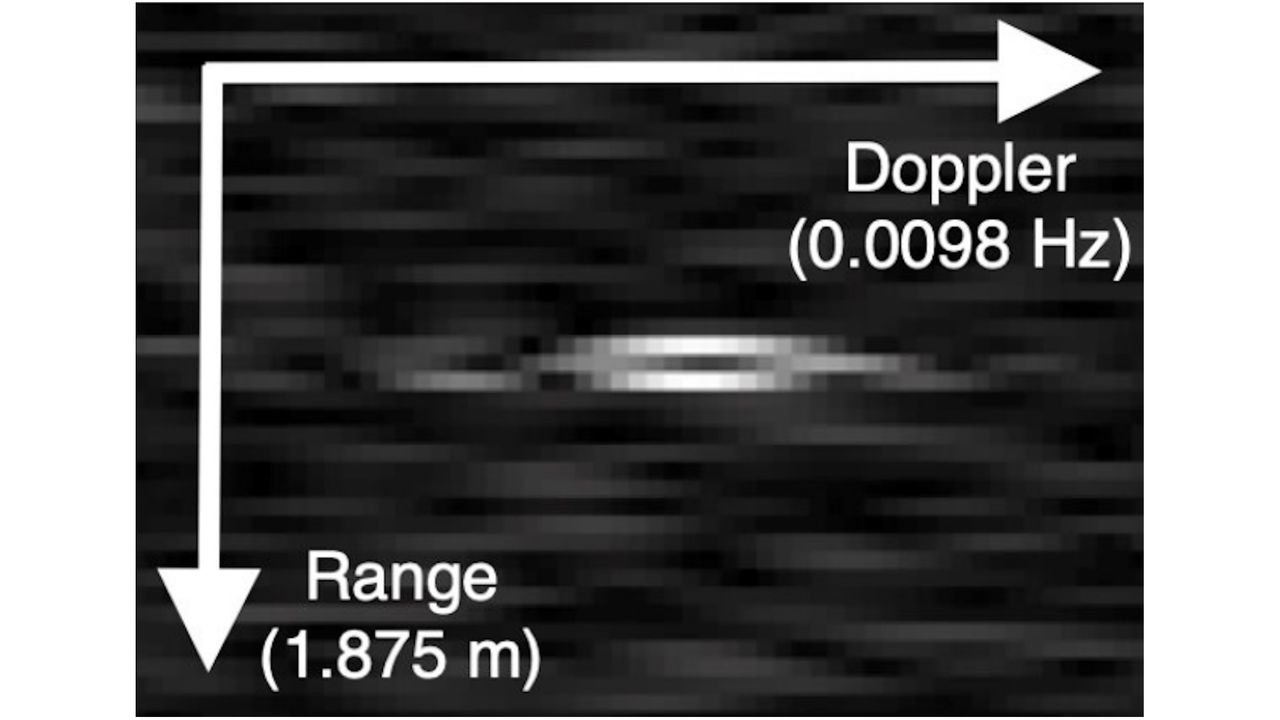
NASA's Artemis 2 mission achieved a tracking milestone when the Robert C. Byrd Green Bank Telescope in West Virginia locked onto the Orion spacecraft as it flew around the moon in April 2025. The facility's astronomers used the 100-meter radio dish to monitor the capsule carrying four astronauts for five consecutive days, collecting high-precision data on the vehicle's trajectory and systems.
The Green Bank Telescope, one of the world's largest fully steerable radio dishes, demonstrated capabilities that extend far beyond its traditional astronomy work. By training its antenna on Orion at lunar distance, operators gathered detailed telemetry about the spacecraft's position and velocity during its circumlunar trajectory. The effort represented a novel application of the facility's observational power.
"There are 4 people in those pixels," researchers noted, underscoring the remarkable achievement of detecting and tracking a human-crewed spacecraft across 238,000 miles of space using radio signals. The precision required to maintain lock on such a distant, moving target highlights the technical sophistication of both the telescope and Orion's communication systems.
The Green Bank Telescope, operated by the National Radio Astronomy Observatory in Pocahontas County, West Virginia, typically focuses on distant galaxies, pulsars, and other cosmic phenomena. Its ability to pivot toward nearby space missions demonstrates the versatility of radio astronomy infrastructure. The five-day tracking window captured Orion during its critical lunar orbit phase, when the spacecraft conducted its primary mission objectives with the crewed crew aboard.
This tracking data complemented NASA's primary Artemis 2 monitoring systems and provided independent verification of Orion's performance. Ground-based radio telescopes offer advantages for deep-space missions by providing redundant tracking capabilities and opportunities for research teams to characterize spacecraft dynamics in ways that complement dedicated mission control systems.
The Artemis