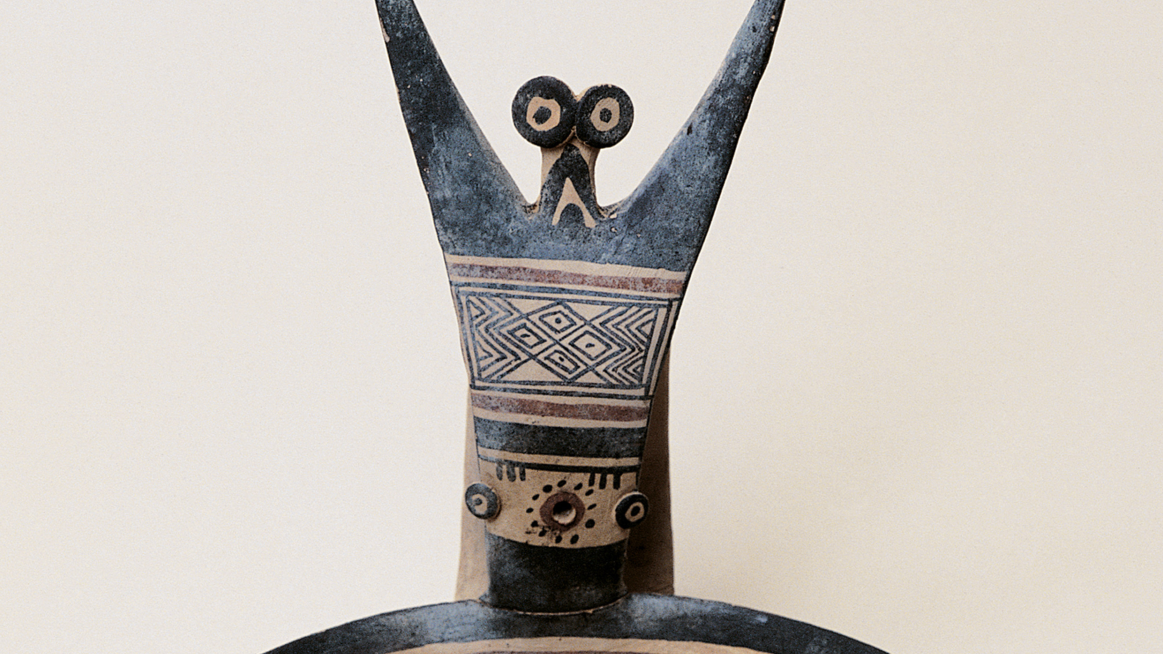
Archaeologists in Italy have identified a 2,700-year-old ceramic cup known as a Daunian kyathos, featuring an unusual face with prominent, bulging eyes that gives the vessel a distinctly animated character. The artifact belongs to the Daunian culture, an ancient population inhabiting the Apulia region of southeastern Italy during the Iron Age.
The kyathos, a type of ladle or mixing cup used in the ancient Mediterranean world, displays craftsmanship typical of Daunian pottery. What makes this particular example remarkable is its expressive face adorning the rim. The exaggerated, wide-set eyes and detailed facial features suggest the vessel was not merely functional but carried cultural or symbolic meaning for its makers and users.
Daunian ceramics, dating to roughly 700 BCE, represent a distinct tradition separate from Greek and Etruscan pottery despite evidence of cultural contact and trade. The Daunians developed their own distinctive aesthetic and techniques, often incorporating anthropomorphic elements into their vessels. Such decorated cups likely served both practical purposes in mixing or serving liquids and ritual or ceremonial functions.
The preservation of this artifact provides researchers with insights into daily life, religious practices, and artistic values of pre-Roman Italian societies. The playful expression and careful execution suggest that even utilitarian objects in ancient Daunian culture received aesthetic attention and personal touches from potters. The face's apparent cheerfulness conveys the maker's personality and cultural priorities.
Modern designers have long drawn inspiration from ancient ceramics, and this kyathos exemplifies why. Its functional form combined with expressive decoration demonstrates how ancient artisans balanced utility with artistic expression. The piece remains housed in an Italian museum, where it continues to captivate viewers centuries after its creation, proving that engaging design transcends millennia.